
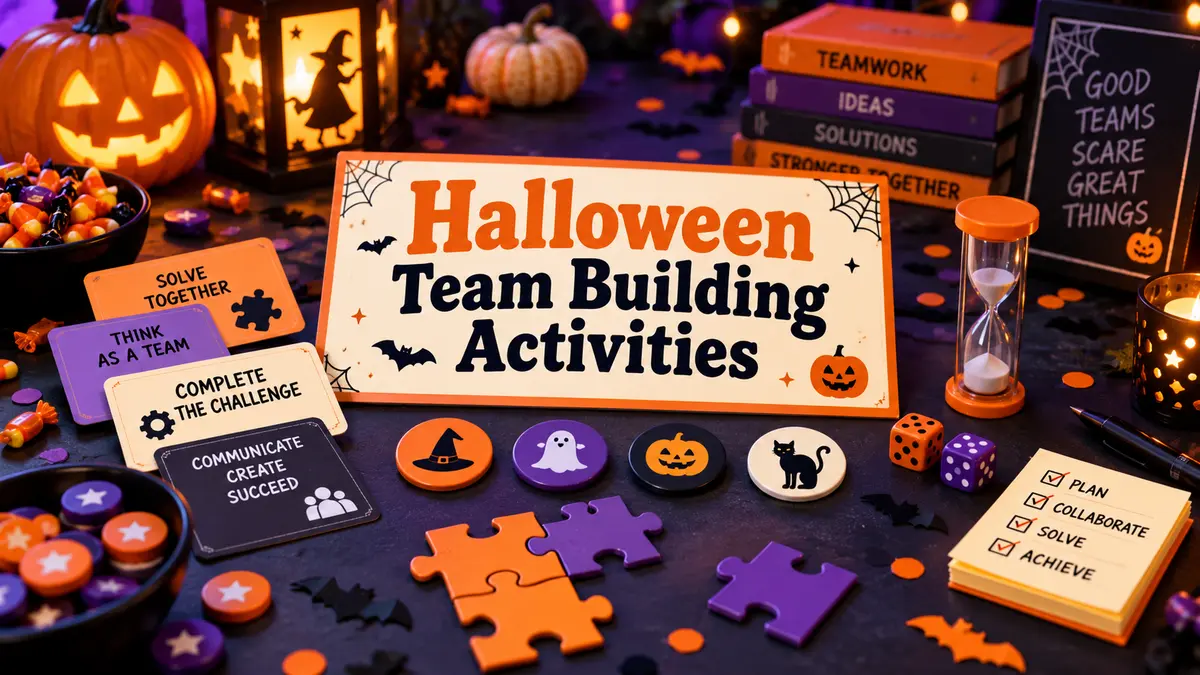
Direct Answer: Halloween team building activities are short office games, creative challenges, and remote-friendly exercises that help coworkers collaborate without forcing costumes or scares. For most teams, choose three activities with different energy levels, allow 30 to 60 minutes, explain that participation is optional, and provide a quiet or seated alternative.
Last reviewed: September 2026
Halloween team building activities can turn a routine October workday into a structured social break. However, corporate Halloween party ideas need different boundaries from private celebrations. The best choices are easy to explain, comfortable for different personalities, and flexible enough for the available room and schedule.
Accordingly, this guide focuses on practical Halloween games for work, including communication challenges, creative activities, and remote options. For family parties or mixed-age celebrations, use the broader guide to Halloween party games for adults, kids, and mixed groups.
The 18 ideas below form a menu rather than one required program. Suggested player ranges, times, and scoring methods are GamingStation planning estimates, not official limits or results from first-hand testing. More group-game formats are available in the Party Games collection.
Halloween Team Building Activities at a Glance
Use these ranges as a planning baseline, then adjust them for the workplace, team, and available time.
| Planning detail | Suggested format |
|---|---|
| Best for | In-person, remote, and hybrid office teams |
| Group size | 4-40 in one session; use parallel groups for larger teams |
| Activities per event | 3-5 |
| Total time | 30 or 60 minutes |
| Teach time | About 1-3 minutes per activity |
| Supplies | Paper, pens, cups, cards, tape, a timer, and optional printed sheets |
| Budget | Free to low-cost for most DIY options |
| Space | Conference room, break room, open office area, or video call |
| Interaction | Low to high, depending on the activity |
| Competition | Optional; cooperative scoring also works |
| Default comfort rule | Costumes, cameras, acting, food, and scares remain optional |
A balanced agenda combines one conversation starter, one collaborative task, and one quiet or creative activity. In addition, keep a low-prep backup ready in case a meeting runs late or a room becomes unavailable.
Choose the Right Activity for the Team
Start with the purpose of the session instead of choosing the loudest game. The following selector helps match an activity to the team and schedule.
| Team need | Strong choices | Typical time | Useful adjustment |
|---|---|---|---|
| Quick warm-up | Spooky This-or-That, Categories Relay | 5-12 minutes | Let people answer from their seats |
| Communication | Haunted Blueprint, Monster Product Pitch | 12-20 minutes | Rotate the speaker or builder |
| Problem-solving | Pumpkin Pattern, Mini Mystery | 12-20 minutes | Offer one hint at a fixed time |
| Creative, low-pressure play | Costume Concept Lab, Paper Pumpkin Gallery | 15-25 minutes | Judge several categories instead of one winner |
| Remote or hybrid session | Background Detective, Emoji Decode | 10-20 minutes | Display every prompt as text |
| Large team | Trivia, Scavenger Hunt, Team Bingo | 20-40 minutes | Divide the group into smaller teams |
Before finalizing office Halloween party ideas or other Halloween games for the office, check the room, noise tolerance, technology, and reset time. Also consider whether the activity depends on acting, personal disclosure, food, physical movement, or a camera. If one requirement may exclude part of the group, offer an equal alternative rather than treating it as a lesser role.
Quick Halloween Icebreakers
These short activities need little preparation and can open a meeting or fill a schedule gap.
- 1. Spooky This-or-That Huddle
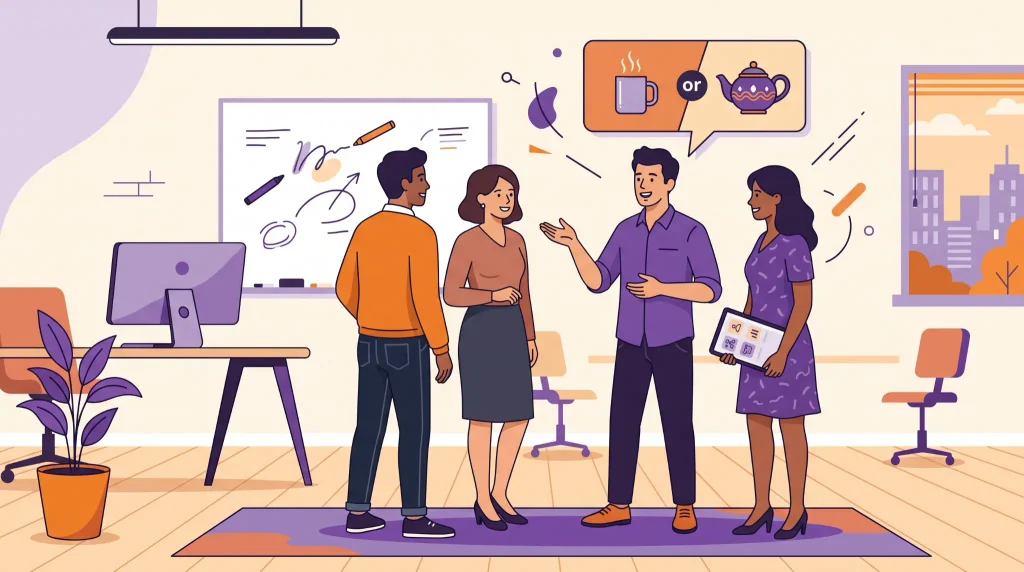
- Quick facts: 4-30 players; 5-10 minutes; no supplies; low complexity.
- How to play: Read a neutral choice, such as haunted library or moonlit maze. Teams choose one option, discuss it for 30 seconds, and share a single reason. Award no points, or give one point for a clear team answer.
- Adaptation: Use colored cards or a chat poll so everyone can respond without moving or speaking alone.
- 2. Halloween Categories Relay
- Quick facts: Teams of 3-6; 8-12 minutes; paper and pens; low complexity.
- How to play: Announce a category such as friendly monsters, orange objects, or costume accessories. Each team writes one answer per member before moving to the next category. A valid, non-repeated answer earns one point.
- Adaptation: Rotate the writer after every category and remove the timer when speed would dominate participation.
- 3. Halloween Common-Ground Grid
- Quick facts: Teams of 3-5; 10 minutes; printed grid or shared document; low interaction pressure.
- How to play: Groups find three seasonal preferences every member shares, such as choosing comedy over horror or pumpkins over ghosts. They record one preference in each grid row. The goal is completion, not personal disclosure.
- Adaptation: Supply a list of safe choices and allow any participant to pass on a prompt.
For more quick fallbacks, choose a work-appropriate option from these Halloween games with no supplies or prep.
Tabletop Collaboration Games
Tabletop games suit conference rooms, smaller offices, and teams that prefer a seated format.
- 4. Halloween Team Trivia
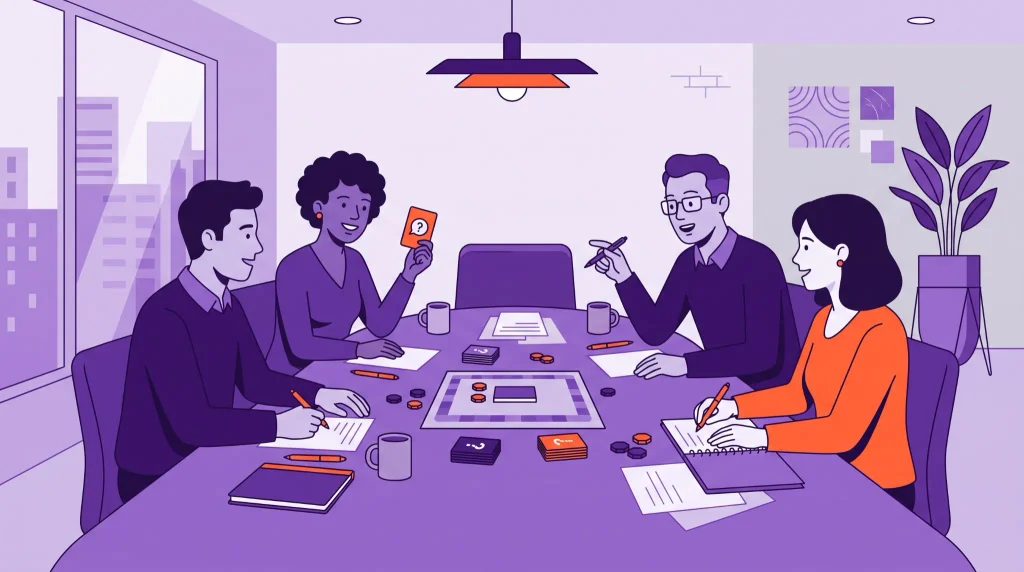
- Quick facts: 4-40 players; 20-30 minutes; questions, answer sheets, and pens; low movement.
- How to play: Form teams of three to six and choose two to four themed rounds. Read every question aloud and display the wording. Each correct answer earns one point, while one unused question settles a tie.
- Adaptation: The complete bank of 120 Halloween trivia questions and answers includes easier, workplace-safe, and printable rounds.
- 5. Haunted Blueprint Build
- Quick facts: Teams of 3-5; 12-15 minutes; paper cups or index cards; medium interaction.
- How to play: One describer views a simple model that builders cannot see. The describer gives verbal directions while teammates copy the structure. Score one point for each correctly placed piece, then rotate roles.
- Adaptation: Keep everyone seated, avoid blindfolds, and provide a large printed model for anyone who needs it.
- 6. Pumpkin Patch Pattern
- Quick facts: Teams of 2-5; 10-15 minutes; colored cards or blocks; low complexity.
- How to play: Show a Halloween color pattern for 15 seconds, cover it, and ask teams to rebuild it. Each correct position earns one point. Increase the pattern by one piece after a successful round.
- Adaptation: Leave the pattern visible or use larger, high-contrast pieces when memory or fine-motor demands create a barrier.
Creative Communication Activities
These activities reward shared ideas without requiring elaborate costumes or artistic skill.
- 7. Two-Sentence Office Horror Stories
- Quick facts: 5-40 players; 12-15 minutes; paper or shared document; low-pressure creativity.
- How to play: Each person or pair writes a non-graphic, two-sentence workplace horror story. Collect entries anonymously, read them aloud, and vote for funniest, cleverest, and most relatable rather than naming one overall winner.
- Adaptation: Let participants submit privately so nobody must perform or reveal authorship.
- 8. Monster Product Pitch
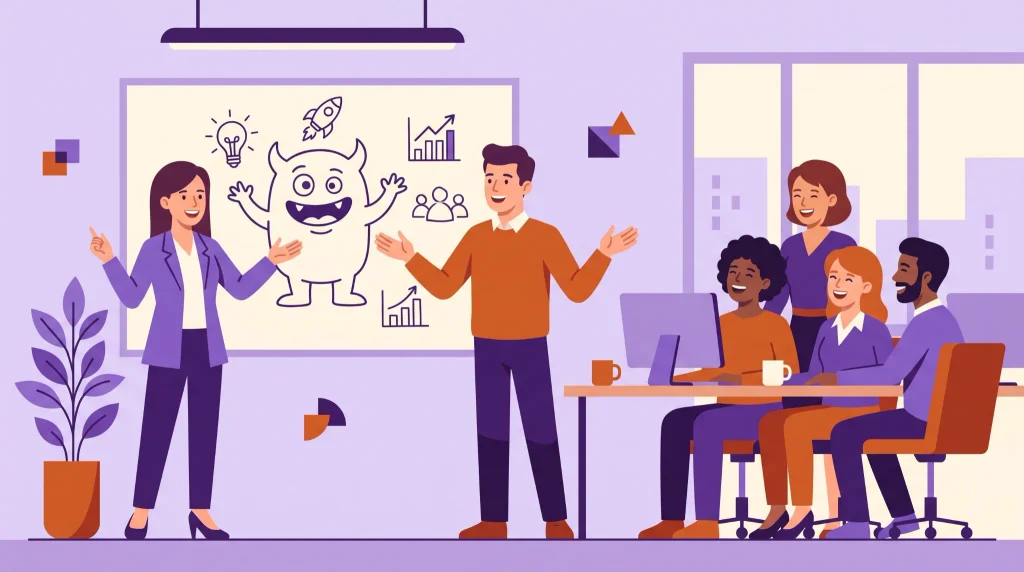
- Quick facts: Teams of 3-6; 15-20 minutes; prompt cards and paper; medium interaction.
- How to play: Give every team one ordinary office object and one fictional monster problem. Teams create a 60-second product pitch explaining how the object solves the problem. Score clarity, creativity, and shared participation equally.
- Adaptation: Accept a poster or written pitch when a team prefers not to present live.
- 9. Costume Concept Lab
- Quick facts: Teams of 3-5; 15-20 minutes; paper and markers; low movement.
- How to play: Ask teams to design a costume for a fictional office mascot using a fixed imaginary budget. The design must include three required items and one accessibility feature. Teams then explain their choices in one minute.
- Adaptation: No one has to wear the design, and judging should reward ideas rather than drawing skill or spending.
Active but Office-Safe Games
Use clear walking lanes and lightweight supplies. When the office lacks open space, switch to the seated versions.
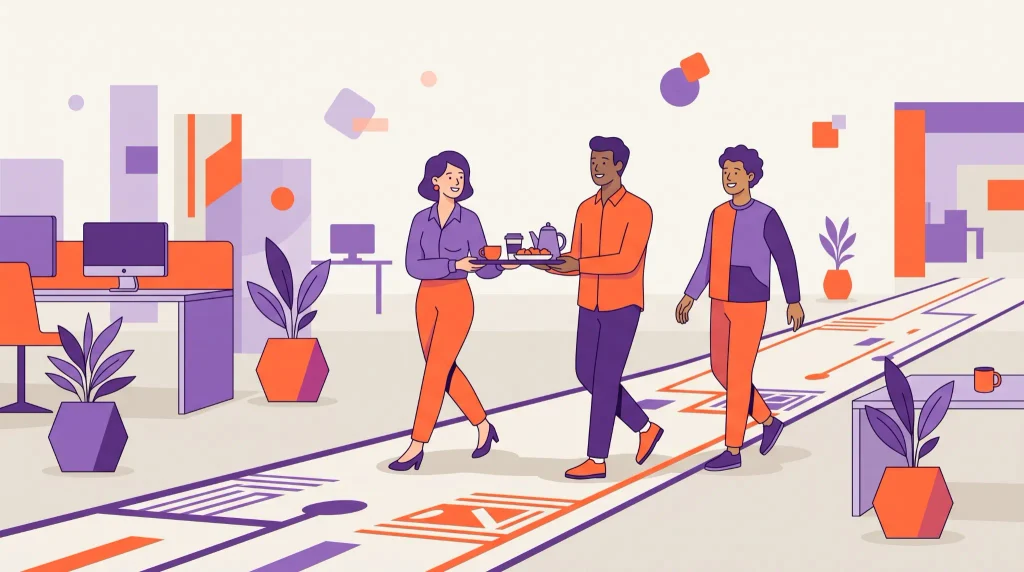
- 10. Desk-Safe Halloween Scavenger Hunt
- Quick facts: Teams of 3-6; 15-20 minutes; clue sheet and pens; medium movement.
- How to play: Give teams eight clues limited to shared or approved spaces. Players walk, record answers, and return before time ends. Personal drawers, restricted rooms, and other employees’ belongings remain off-limits.
- Adaptation: Use photo cards at one table. The broader Halloween scavenger hunt guide provides more clue formats and safety adjustments.
- 11. Ghost Cup Supply Chain
- Quick facts: Teams of 4-6; 10-15 minutes; lightweight cups and trays; medium interaction.
- How to play: Assign picker, carrier, builder, checker, and reset roles. The team transfers cups along a short walking route and builds a marked pattern. Each correct completed pattern earns one point before roles rotate.
- Adaptation: Run the entire chain along a table and pass each cup by hand for a seated version.
- 12. Pumpkin Puzzle Relay
- Quick facts: Teams of 4-8; 12-18 minutes; identical paper puzzles; medium movement.
- How to play: Place puzzle pieces at one end of a marked lane. Teammates take turns walking one piece to the assembly table. The first correct puzzle wins, or teams receive one point per correctly placed piece at the buzzer.
- Adaptation: Pass pieces along a seated row, and use large pieces with clearly different shapes.
For a bigger office, parallel stations work better than one long line. The guide to Halloween party games for large groups explains additional rotation and crowd-management options.
Remote and Hybrid Halloween Activities
Virtual Halloween team building activities should not depend on personal cameras, private home details, or fast typing alone.
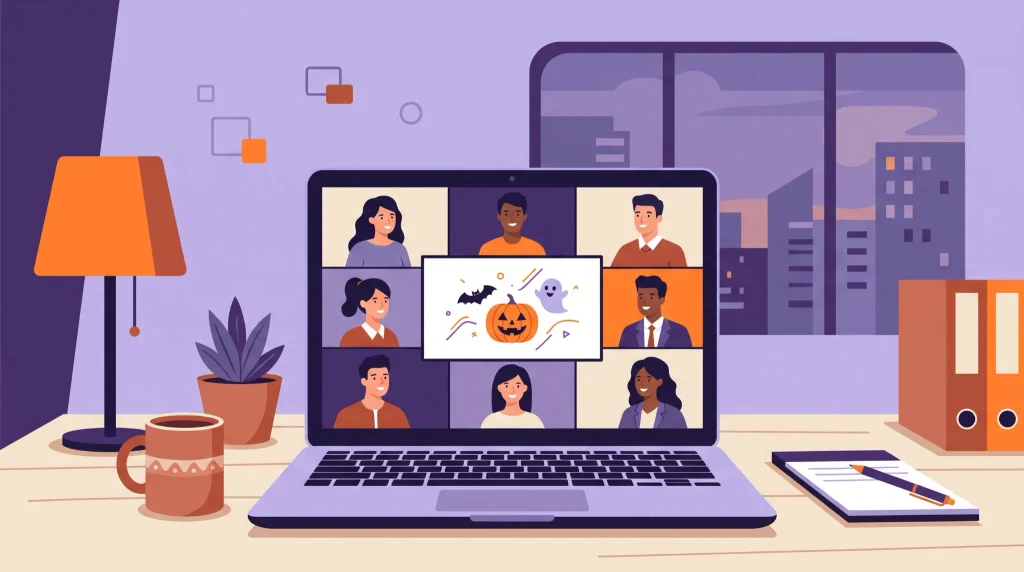
- 13. Virtual Background Detective
- Quick facts: 4-30 players; 10-15 minutes; prepared image and screen sharing; low complexity.
- How to play: Show two supplied Halloween office illustrations with five small differences. Teams list what changed and submit one shared answer. Reveal the images side by side after every group finishes.
- Adaptation: Provide downloadable still images and never require employees to show their homes or turn on cameras.
- 14. Breakout Room Mini Mystery
- Quick facts: Teams of 3-6; 15-20 minutes; four clue cards; medium complexity.
- How to play: Give every team the same short fictional mystery. Members combine clues, eliminate two impossible answers, and submit one explanation before the deadline. Award points for the conclusion and the supporting reasoning.
- Adaptation: Use separate chat channels or table groups when breakout rooms are unavailable.
- 15. Emoji Halloween Decode
- Quick facts: 4-50 players; 10-15 minutes; prepared slides or sheets; low complexity.
- How to play: Display an emoji sequence representing a familiar Halloween character, object, or movie title. Teams write one answer per sequence. Give one point for each match and reveal answers after the full round.
- Adaptation: Add written descriptions because emoji appearance can vary across devices and platforms.
Low-Pressure Activities for the Workday
These office Halloween party ideas can run asynchronously or alongside another event.
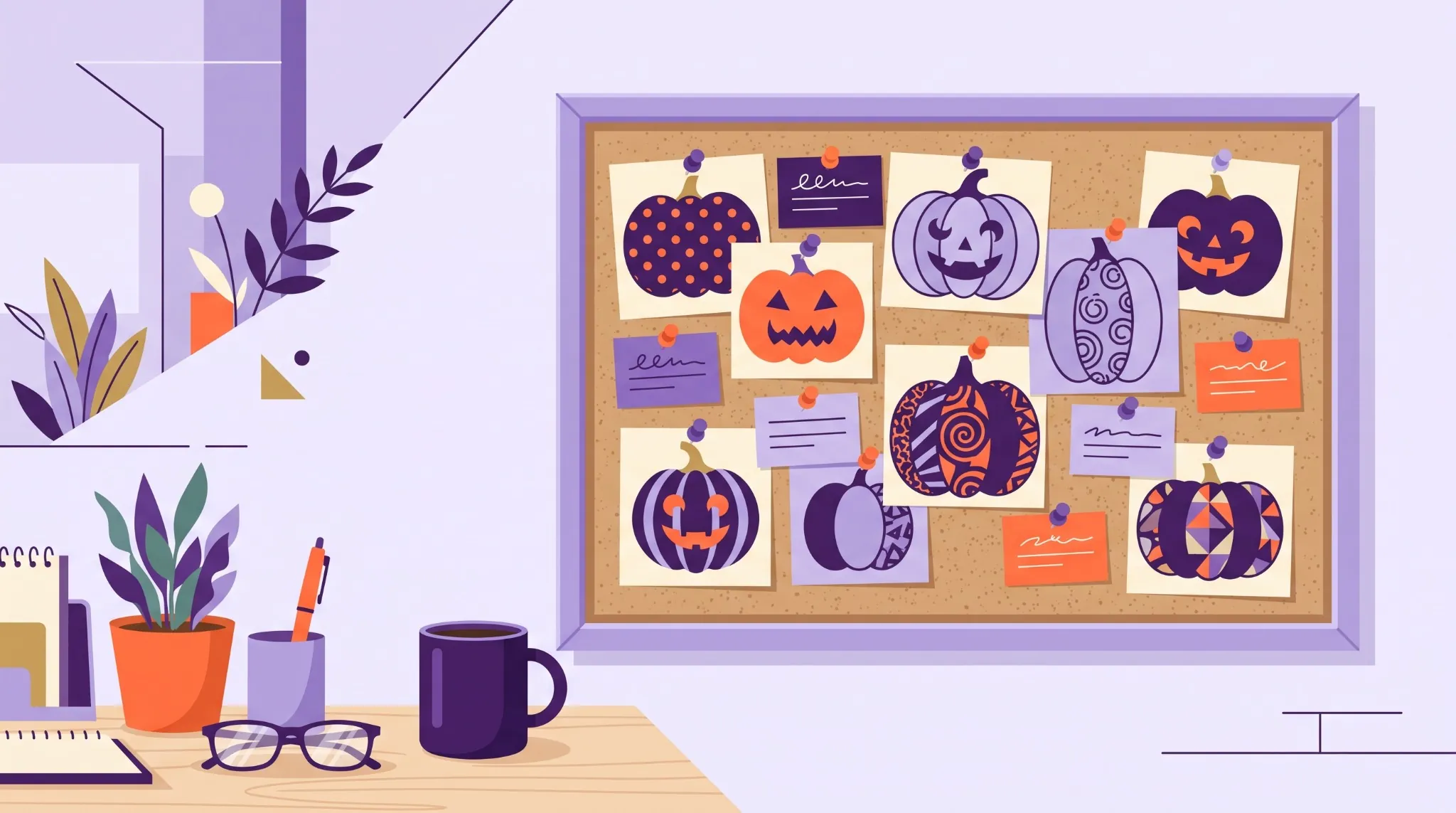
- 16. Paper Pumpkin Gallery
- Quick facts: Any team size; 15-25 minutes or all day; templates and markers; quiet format.
- How to play: Individuals or teams decorate paper pumpkin templates and display them on an approved board. Offer several recognition categories, such as cleverest theme, best teamwork, and strongest use of limited colors.
- Adaptation: Remote employees can annotate the same digital template and submit it without appearing on camera.
- 17. Halloween Team Bingo
- Quick facts: 6-60 players; 20 minutes or a full workday; printed or digital cards; low pressure.
- How to play: Fill cards with neutral tasks such as spotting an orange desk item, answering a trivia prompt, or solving a riddle. The first complete line earns recognition, while a full-card goal can continue throughout the day.
- Adaptation: Avoid squares based on appearance, religion, family status, food, or personal disclosure.
- 18. Halloween Caption Board
- Quick facts: Any team size; 10-20 minutes or asynchronous; supplied illustrations and note cards; low interaction.
- How to play: Post three neutral Halloween office illustrations and invite short captions. Collect entries without names, then recognize funniest, most unexpected, and best team-themed caption.
- Adaptation: Use licensed or original illustrations instead of employee photos, and let remote staff submit through a shared document.
A 30-Minute Office Halloween Agenda
This short plan fits a team meeting or lunch break without rushing the main activity.
| Time | Activity | Facilitator action |
|---|---|---|
| 0-3 minutes | Welcome and comfort options | Explain that participation, costumes, cameras, and speaking roles are optional |
| 3-9 minutes | Spooky This-or-That | Read six choices and invite one team reason per round |
| 9-21 minutes | Haunted Blueprint Build | Demonstrate the model, run two attempts, and rotate roles |
| 21-28 minutes | Emoji Halloween Decode | Display five prompts and collect team answers |
| 28-30 minutes | Recognition and reset | Announce results, thank participants, and collect supplies |
If the meeting starts late, remove the opening game rather than shortening every instruction. One clearly taught collaboration challenge gives the team more value than three rushed activities.
A 60-Minute Office Halloween Agenda
The longer plan changes energy levels and leaves time for setup, scoring, and a short reset.
| Time | Activity | Facilitator action |
|---|---|---|
| 0-5 minutes | Welcome, teams, and boundaries | Explain scoring, alternatives, and the stop signal |
| 5-15 minutes | Halloween Categories Relay | Run three categories and rotate each team’s writer |
| 15-30 minutes | Halloween Team Trivia | Play two short rounds and reveal answers together |
| 30-35 minutes | Break and room check | Clear walkways, refill supplies, and confirm the next rules |
| 35-50 minutes | Desk-Safe Scavenger Hunt | Release teams at staggered times and keep them in approved areas |
| 50-57 minutes | Two-Sentence Office Horror Stories | Read anonymous entries and recognize three categories |
| 57-60 minutes | Results and cleanup | Announce team totals, collect sheets, and restore the space |
For a quieter team, replace the scavenger hunt with Pumpkin Patch Pattern. Conversely, a larger group can run trivia and pattern-building as parallel stations.
Facilitation and Fair Scoring
Choose the scoring method before the event and print it on the facilitator sheet. A cooperative session can count completed tasks, while a tournament can award three points for first place, two for second, and one for third within each activity.
Do not add unrelated raw results. For example, eight trivia answers cannot be compared directly with three completed cup patterns. Instead, rank teams inside each activity and then add the placement points.
Use this hosting sequence:
- First, prepare one labeled supply kit and instruction card for each activity.
- Next, explain the objective, stopping point, and scoring in under three minutes.
- Demonstrate one example without revealing a puzzle answer.
- Assign roles such as facilitator, timer, scorekeeper, and supply resetter.
- Record results immediately and confirm ties before teams move.
- Finally, leave enough time to restore the workspace.
Shared winners are acceptable. Recognition categories also work better than a single champion when creativity and communication matter more than speed.
Workplace Safety, Accessibility, and Comfort
Keep participation visibly optional. Employees should be able to choose a seated task, a non-speaking role, or a different activity without losing their team’s place. Similarly, costumes, personal stories, cameras, food, physical contact, and frightening content should never become requirements.
Before play, remove cords, bags, drinks, and loose decorations from activity areas. Federal workplace rules state that exit routes must remain free and unobstructed and that decorations must not hide exit doors or signs. Therefore, check the route before and after setup using the current eCFR exit-route requirements.
Additional safeguards include:
- Use walking-only rules and lightweight, nonbreakable props.
- Avoid blindfolds, open flames, carving tools, targeted pranks, and surprise touching.
- Display instructions as text instead of relying only on spoken directions.
- Keep sound effects at a comfortable level and announce startling content in advance.
- Ask permission before photographing participants or sharing entries publicly.
- Follow the employer’s venue, technology, privacy, and conduct policies.
When candy or snacks appear, retain original packaging and offer a nonfood alternative. The FDA food-allergy guidance advises people with allergies to read labels and avoid foods containing their allergens.
Common Planning Mistakes
- Scheduling too many activities: Three well-run choices are usually enough for 30 minutes. Extra games can remain backups.
- Rewarding only confident speakers: Rotate roles and accept written, building, timing, or scorekeeping contributions.
- Using personal spaces in a scavenger hunt: Keep clues in shared, approved areas and never search desks, bags, or devices.
- Explaining scoring after play starts: State valid answers, time limits, tie handling, and stopping points before the first round.
- Making costumes or scares mandatory: Offer neutral seasonal themes and allow employees to opt out without public explanation.
- Connecting alcohol to points or penalties: Every activity in this guide works without alcohol, so keep scoring separate from drinks.
Free Printable Halloween Team-Building Host Pack
The printable supplied with this editorial pack contains an office facilitator sheet, a 30-minute agenda, a 60-minute agenda, a team-planning area, and a reusable score sheet. It is designed for U.S. Letter paper with black text, light-gray rules, and limited decorative ink.
Print the facilitator pages at 100% scale. Next, choose one agenda and fill in the team names before the event. Keep the scoring page with the host rather than placing it at a public station.
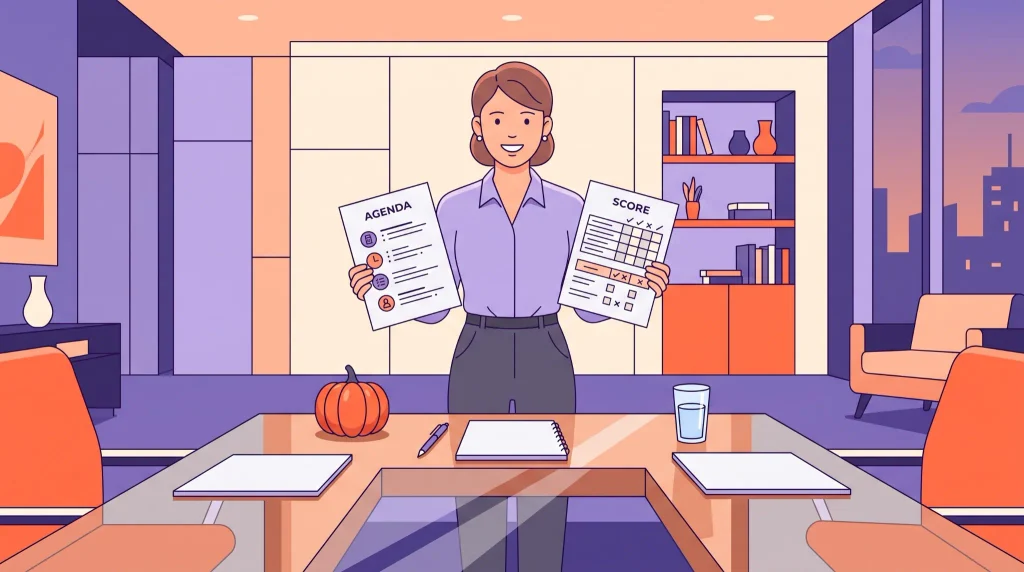
Free PDF • Facilitator sheet • 30/60-minute agendas • Team score sheet
Sources and Editorial Method
This guide presents original GamingStation house formats for workplace use. Suggested group sizes, activity lengths, teach times, scoring methods, and schedules are editorial planning estimates rather than universal official limits. No first-hand game testing, event attendance, or performance result is claimed.
- Electronic Code of Federal Regulations: 29 CFR 1910.37 Exit Routes
- U.S. Food and Drug Administration: Food Allergies
Final Verdict
The strongest Halloween team building activities give coworkers a clear shared task without demanding costumes, scares, physical contact, or personal disclosure. For most office teams, one icebreaker, one collaboration game, and one quiet creative option will fill 30 to 60 minutes.
Choose the agenda that fits the room and working day, assign the facilitator roles, and print only the pages needed. If an activity conflicts with company policy or a participant’s comfort, replace it rather than forcing a themed version.
Frequently Asked Questions
Low-pressure choices such as Halloween Team Trivia, Pumpkin Patch Pattern, Emoji Halloween Decode, and an anonymous Caption Board work well. They create a shared task without requiring costumes, acting, personal stories, or solo performances.
Choose three Halloween team building activities, reserve a 30- or 60-minute block, prepare identical supplies, and assign a facilitator, timer, and scorekeeper. Keep one quiet backup ready if meetings run late.
Spooky This-or-That, Haunted Blueprint Build, Pumpkin Patch Pattern, and Two-Sentence Office Horror Stories suit small teams. Most need only a table, paper, cups, cards, pens, or a shared document.
Virtual Background Detective, Emoji Halloween Decode, and Breakout Room Mini Mystery work well online. Share prompts as text, accept chat responses, and keep cameras optional so remote employees can participate equally.
Yes. Use puzzles, trivia, collaborative building, or creative writing instead of appearance-based contests. Keep costumes, food, cameras, movement, scares, and speaking roles optional, with equivalent seated or quiet alternatives.
Choose seated formats such as Halloween Team Trivia, Pumpkin Patch Pattern, Monster Product Pitch, or Halloween Team Bingo. Avoid relays in tight rooms, and keep every walkway, doorway, and exit clear.
The printable PDF includes a facilitator sheet, preparation and safety checklists, ready-made 30- and 60-minute agendas, an activity planner, host-role assignments, and a reusable score sheet for six teams.
