
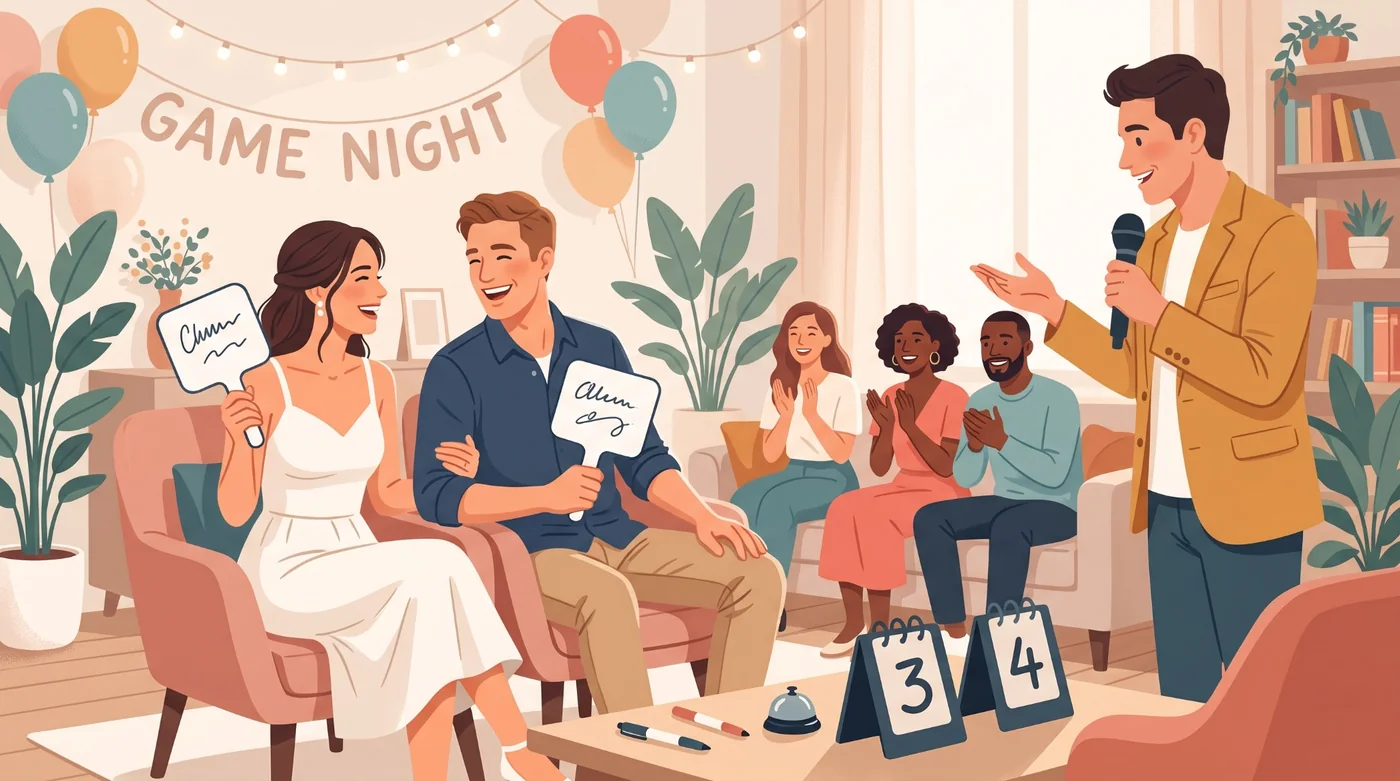
Newlywed game questions are most fun when neither partner can peek at the other’s answer. Ask about a shared memory, a small habit, or a favorite thing. Then reveal the cards together. A matching answer earns a point; a surprising one usually starts a story.
This guide gives you 150 questions to choose from for a wedding shower, family gathering, or casual game night. Start with easy memories. Once everyone is comfortable, add funny prompts and finish with something kind. A ready-made 20-question round near the end saves you from sorting through the whole list.
When a question asks about one person’s preference, that person writes the real answer while their partner predicts it. For a shared memory or a ‘who is more likely’ question, both people answer independently. After that, the host reveals both answers at the same time and gives one point for a match.
The original television format also relies on private predictions. Sony Pictures Television’s overview of The Newlywed Game describes that format; the home version here uses a simple one-point rule.
How to play the Newlywed Game and score each answer
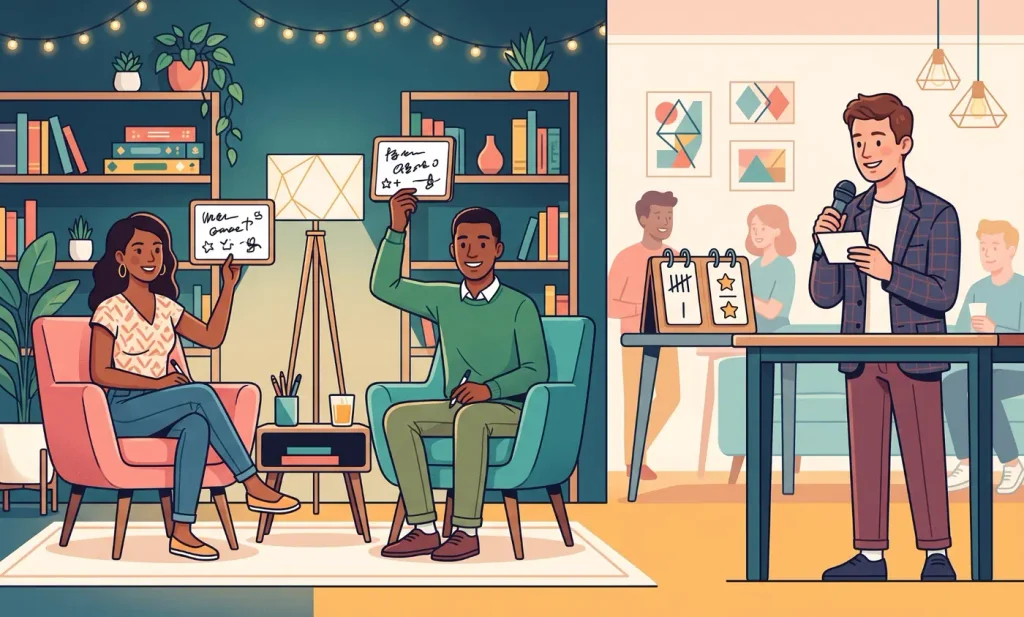
You need two pieces of paper or small boards, pens, and someone to read the questions. One couple can play for fun. Alternatively, several couples can compete. If you are organizing a larger evening, our game night setup checklist can help you plan the space, timing, and supplies.
1. Choose your prompts. Ten questions make a brief round; 20 give you room for stories and surprises. Also, skip any question the couple would rather not answer in front of the group.
2. Choose the answer type. When a question asks about your partner’s favorite thing, that partner writes the real answer while the other predicts it. Switch roles on the next prompt. For a shared event, both people write what they remember. In a “who is more likely” round, both write the same person’s name if they agree.
3. Reveal together. Once the cards are shown, no one can change an answer. Accept reasonable equivalents, such as “movie theater” and the name of that theater.
4. Count one point per match. If there is no clear match, give zero points and enjoy the explanation. In a guest round, compare guest answers with responses collected from the couple before the party.
Example: The host asks, “What dessert would Sam choose?” Sam writes “lemon pie,” while Sam’s partner privately writes “lemon pie.” That earns one point. For “Who would arrive early?”, both write either Sam’s or the other partner’s name; matching names earn the point.
Ask for permission before including personal subjects. At a public party, leave out private finances, past relationships, family disputes, and questions that could put someone on the spot. Instead, swap an unanswered question for another prompt without a penalty.
Easy newlywed game questions: 1-30
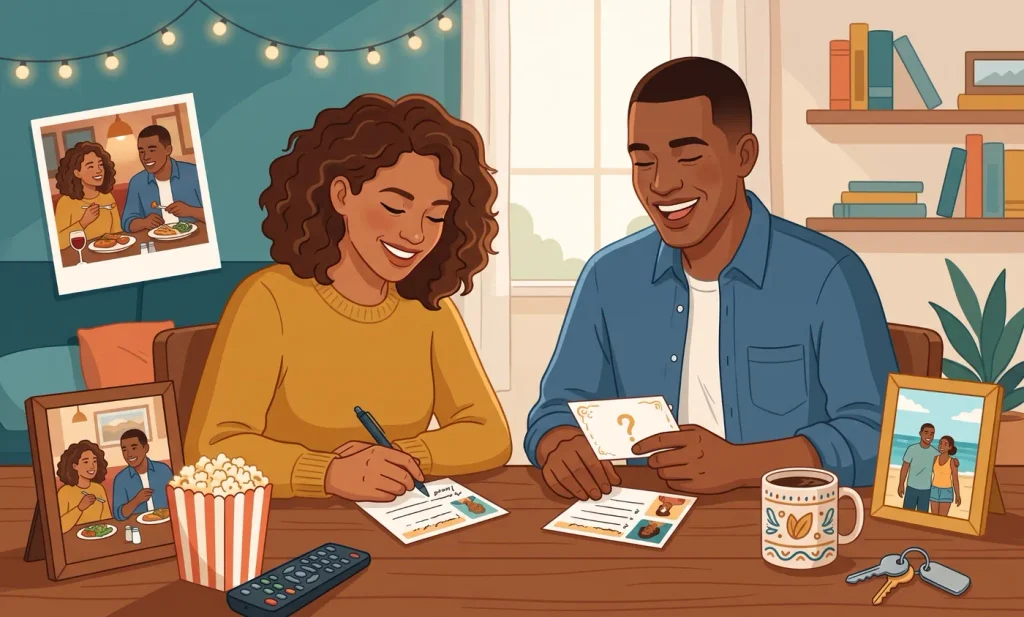
Begin with familiar details. Questions 1-10 cover shared memories. For questions 11-30, have one partner record their own answer while the other predicts it. Then switch roles.
How your story began: 1-10
1. At what place did you first have a real conversation?
2. Which of you suggested spending time together first?
3. What was the first activity you planned as a pair?
4. During that first outing, what did you talk about most?
5. Who sent the first follow-up message?
6. What was the first event you attended together?
7. When you look through your photos, which shared picture is the oldest one you still have?
8. What was the first meal you made or chose together?
9. Which place became a regular stop early on?
10. What was your first shared inside joke about?
Favorite things right now: 11-20
11. Which snack would your partner choose for a movie night?
12. Which restaurant would your partner suggest this weekend?
13. During a road trip, what kind of music would your partner put on?
14. Which season does your partner look forward to most?
15. Which board or card game would your partner pick first?
16. What is your partner’s ideal way to spend a free afternoon?
17. When ordering takeout, which meal does your partner choose most often?
18. What kind of movie will your partner almost always watch?
19. What drink would your partner order on a relaxed evening out?
20. Which spot at home does your partner claim as their favorite?
Little details that stick: 21-30
21. What is the first thing your partner usually does after getting home?
22. Before leaving home, which item does your partner check for?
23. What household sound does your partner notice first?
24. What kind of message makes your partner reply right away?
25. When writing a to-do list, which task does your partner always include?
26. What is your partner’s usual breakfast on a busy day?
27. Where does your partner leave their keys most often?
28. Which app does your partner open when they have a spare minute?
29. When your partner has had a long day, what small treat would cheer them up?
30. What phrase does your partner say so often that friends recognize it?
Funny newlywed game questions: 31-60
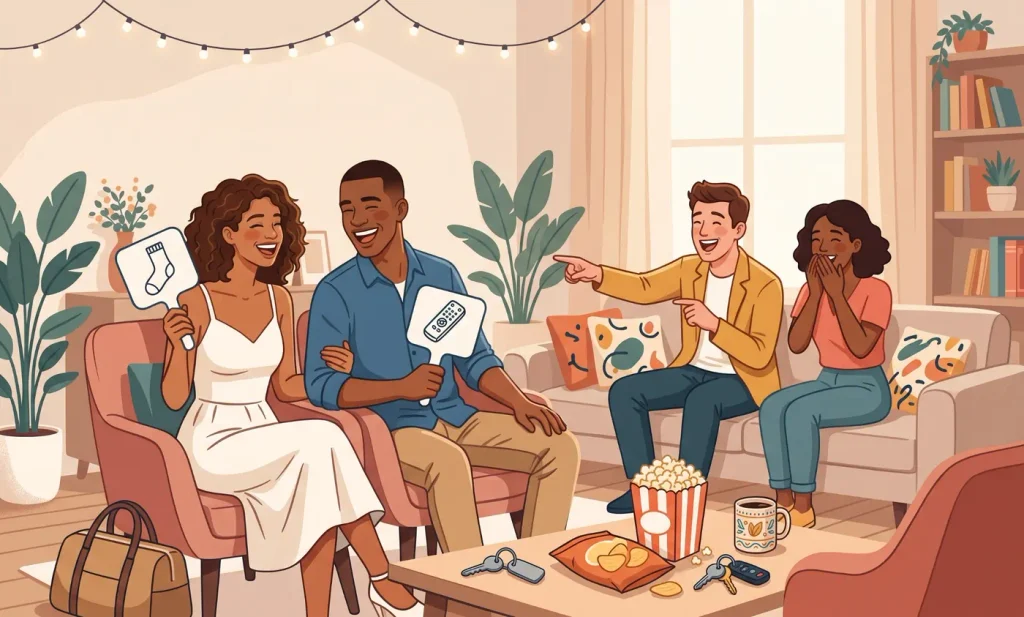
These prompts keep the jokes on ordinary habits and harmless mix-ups. For the “who” questions, both partners write one name. Likewise, for an imaginary scenario, each person names the partner most likely to do it.
At-home comedy: 31-40
31. Who would turn the remote over to look for a missing button?
32. Who is more likely to start a show and fall asleep before the opening credits end?
33. When something funny appears online, who would call the other person into the room to see it?
34. Who is more likely to put an empty box back in the cupboard after finishing it?
35. When clearing out the fridge, who would make a full meal from the leftovers?
36. Who is more likely to narrate what a pet is thinking?
37. When entering the next room, who would forget why they went there?
38. Who is more likely to start tidying and discover an old photo?
39. When a door squeaks, who would insist they could fix it in five minutes?
40. Who is more likely to use every pillow on the sofa?
Getting out the door: 41-50
41. Despite checking the weather, who would still bring the wrong jacket?
42. Who is more likely to remember one last errand at the front door?
43. When heading somewhere familiar, who would take the longer route for the view?
44. Who is more likely to ask where the car is parked?
45. Before heading out, who would stop to greet every familiar face?
46. Who is more likely to carry three things and refuse a second trip?
47. Who would pack a snack for a ten-minute drive?
48. Before everyone leaves, who is more likely to take a photo?
49. Who would change the plan when they notice a new café?
50. Who is more likely to say, “We’re early,” when you are right on time?
If a ridiculous situation happened: 51-60
51. When the neighbor’s dog comes over, who would befriend it first?
52. Who would win a contest to make the best sandwich from five ingredients?
53. Who would volunteer to lead an unplanned group singalong?
54. When a surprise day off arrives, who would get the most excited?
55. Who would invent the funniest name for a new houseplant?
56. Who would finish a puzzle even if they had to hunt for the last piece?
57. When ordering at a restaurant, who would choose the mystery option on the menu?
58. Who would stay calm if a party game suddenly changed rules?
59. During a short trip, who would bring home an unusual souvenir?
60. Who would tell the better story about a minor travel mix-up?
Wedding and bridal shower game questions: 61-90
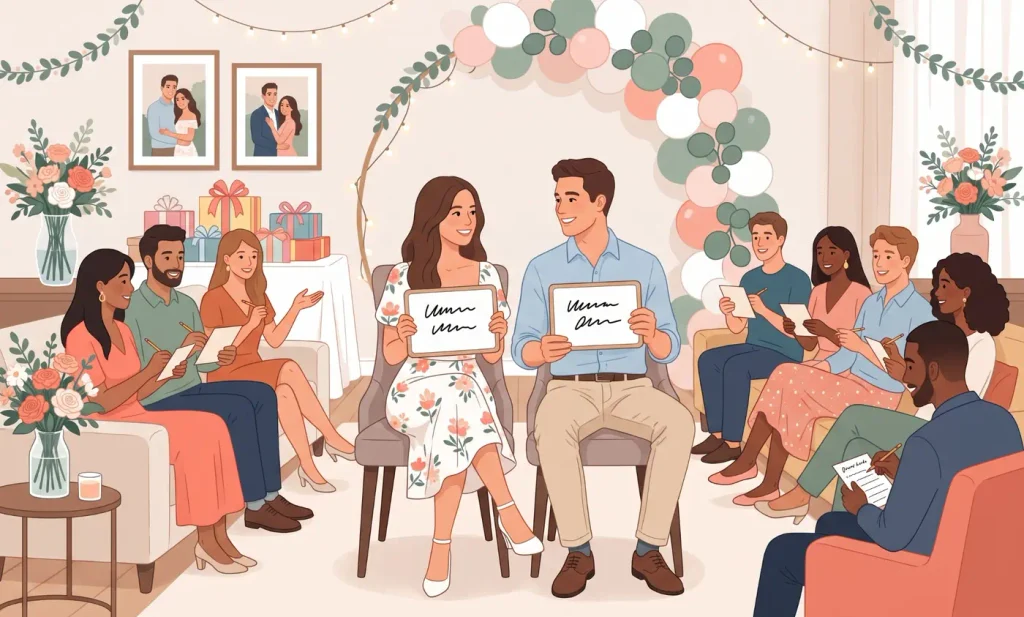
Use the first two groups if they fit the couple’s story. For an engagement party, turn wedding memories into wedding plans. Meanwhile, the last group lets guests play if the host collects the couple’s reference answers in advance. For another guest-focused format, see The Knot’s guide to a “How Well Do You Know the Bride?” game.
Engagement memories: 61-70
61. Where were you when marriage first came up in conversation?
62. Who was the first person you told about your engagement?
63. Which detail from the proposal day do you both remember most clearly?
64. What was the first celebration you planned after the engagement?
65. When you shared the engagement news, which photo from that time did you show friends first?
66. What food did you eat together on the day you got engaged?
67. Who started the wedding-planning list?
68. During planning, what idea for the celebration did you agree on immediately?
69. Which planning decision took the longest to settle?
70. What part of the engagement season still makes you laugh?
Wedding-day details: 71-80
71. What was the first song you heard at the celebration?
72. During the celebration, which part of the day went by faster than expected?
73. Which dish do you both remember from the meal?
74. Who was the first guest to make you laugh during the celebration?
75. Which photo would you choose to describe the day?
76. Afterward, what small detail did you notice for the first time?
77. Which song got the most people moving?
78. What was the last part of the celebration you planned together?
79. Which moment would you happily watch on video again?
80. Once the event was over, what was the first thing you did?
Guests guess the couple’s answers: 81-90
81. Which place would the couple choose for a relaxed weekend?
82. When they have a free evening, what shared activity would the couple choose?
83. Which person is more likely to suggest a new restaurant?
84. What dessert would they agree to share?
85. Which song would they both recognize after one second?
86. Which of their plans usually needs the most preparation?
87. What simple tradition do they enjoy when spending time together?
88. Which game would they bring to a family gathering?
89. What destination appears on both of their wish lists?
90. Which everyday moment would they call their funniest shared memory?
Who is more likely newlywed questions: 91-120
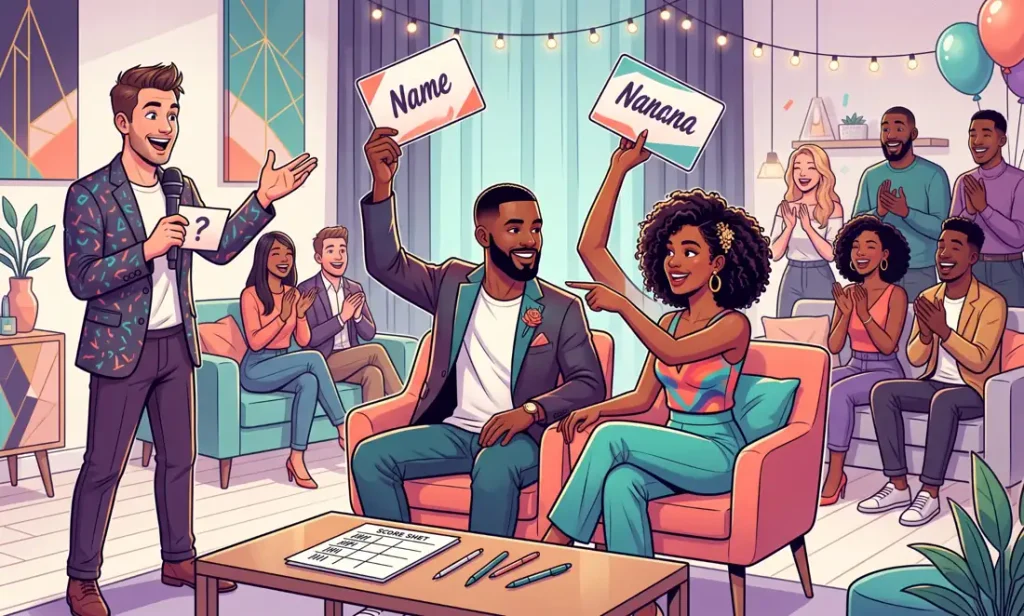
This is the quickest round for a room full of guests. At the same time, each partner points to one name or holds up a name card. Then score only the matches; a surprising disagreement is part of the fun.
At home and on the calendar: 91-100
91. Who is more likely to label a storage box?
92. When a calendar notification appears, who is more likely to forget about it?
93. Who is more likely to start cooking before reading the recipe?
94. During a busy week, who is more likely to keep a plant thriving?
95. Who is more likely to start a deep clean on a quiet afternoon?
96. Who is more likely to remember everyone’s birthday?
97. When sorting deliveries, who is more likely to save a useful cardboard box?
98. Who is more likely to rearrange the living room?
99. Before going to sleep, who is more likely to plan tomorrow?
100. Who is more likely to make a playlist for a routine chore?
Outings and travel: 101-110
101. Before booking a trip, who is more likely to research the destination?
102. Who is more likely to talk to someone new in a line?
103. When planning a trip, who is more likely to spot a scenic detour?
104. Who is more likely to bring a backup phone charger?
105. When choosing a weekend stop, who is more likely to pick a museum over a busy market?
106. Who is more likely to sample a local snack first?
107. When the map is unavailable, who is more likely to remember the route?
108. Who is more likely to suggest taking the train?
109. During a trip, who is more likely to buy gifts for friends?
110. Who is more likely to unpack as soon as they get home?
At a party or game night: 111-120
111. Who is more likely to learn a new game’s rules first?
112. When a group game begins, who is more likely to offer to keep score?
113. Who is more likely to bring extra snacks?
114. When meeting someone new, who is more likely to remember the guest’s name right away?
115. Who is more likely to volunteer for the first turn?
116. Who is more likely to laugh at their own wrong guess?
117. Before everyone leaves, who is more likely to organize a group photo?
118. Who is more likely to explain a game with an example?
119. When the game ends, who is more likely to suggest a rematch?
120. Once the party is over, who is more likely to stay and help tidy up?
Thoughtful couples questions and tie-breakers: 121-150
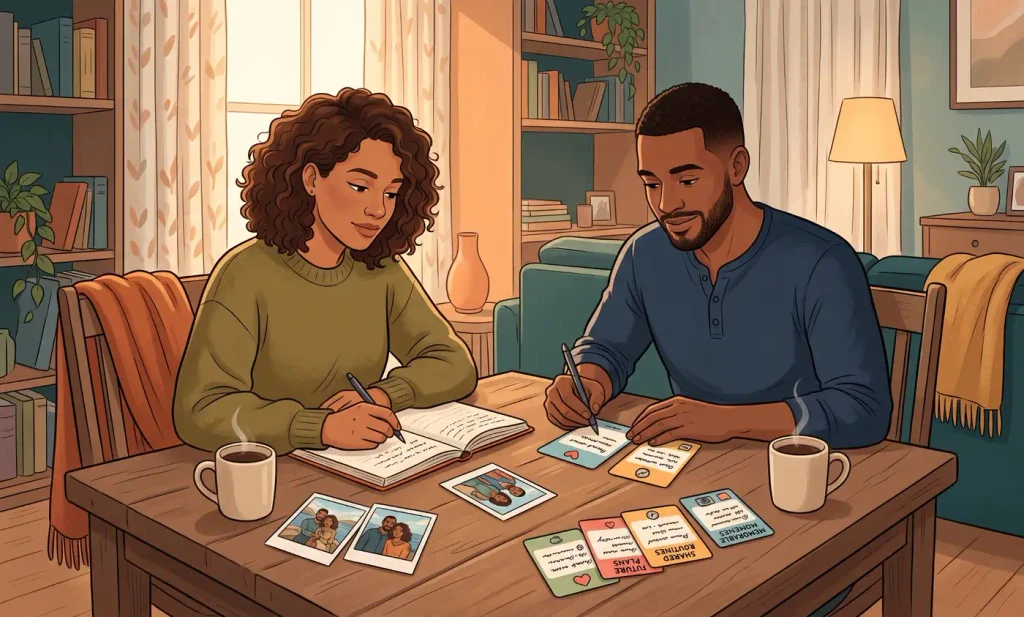
These work best after the room has warmed up. Questions 121–140 ask one person to predict their partner’s answer. The last ten work as quick bonus prompts. In either case, allow an open-ended answer to count when both people clearly mean the same thing.
Small things that matter: 121-130
121. Which ordinary moment from this month would your partner like to repeat?
122. What simple favor does your partner appreciate most?
123. Which shared routine would your partner miss while traveling?
124. What makes your partner feel welcome after a busy day?
125. Which accomplishment is your partner quietly proud of?
126. What is one skill your partner has helped you learn?
127. Which family or friend tradition does your partner value?
128. When your partner needs to relax, what activity would they enjoy doing with you?
129. What is your partner’s favorite kind of surprise?
130. Which photo of the two of you would your partner save first?
Plans and possibilities: 131-140
131. What new place would your partner like to explore together?
132. During a free weekend, which hobby would your partner try?
133. When hosting, what kind of gathering would your partner enjoy?
134. Which small project would your partner start at home?
135. What would your partner choose for a spontaneous day trip?
136. Which skill would your partner like the two of you to learn?
137. What annual tradition would your partner like to begin?
138. Which kind of game night would your partner invite friends to?
139. When planning a short break, what destination would your partner pick?
140. What would your partner like to celebrate a year from now?
Fast tie-breakers: 141-150
141. What is your partner’s current phone wallpaper?
142. When choosing a snack, which fruit would your partner take from the bowl?
143. What time does your partner usually set an alarm for a workday?
144. Which color would your partner choose for a new mug?
145. What was the last game your partner asked to play?
146. What is your partner’s usual order at a café?
147. Which room would your partner choose to redecorate first?
148. What item is most likely to be in your partner’s bag or pocket?
149. When making a last-minute group plan, which friend would your partner call?
150. What single activity would your partner pick for tonight?
A ready-made 20-question Newlywed Game round
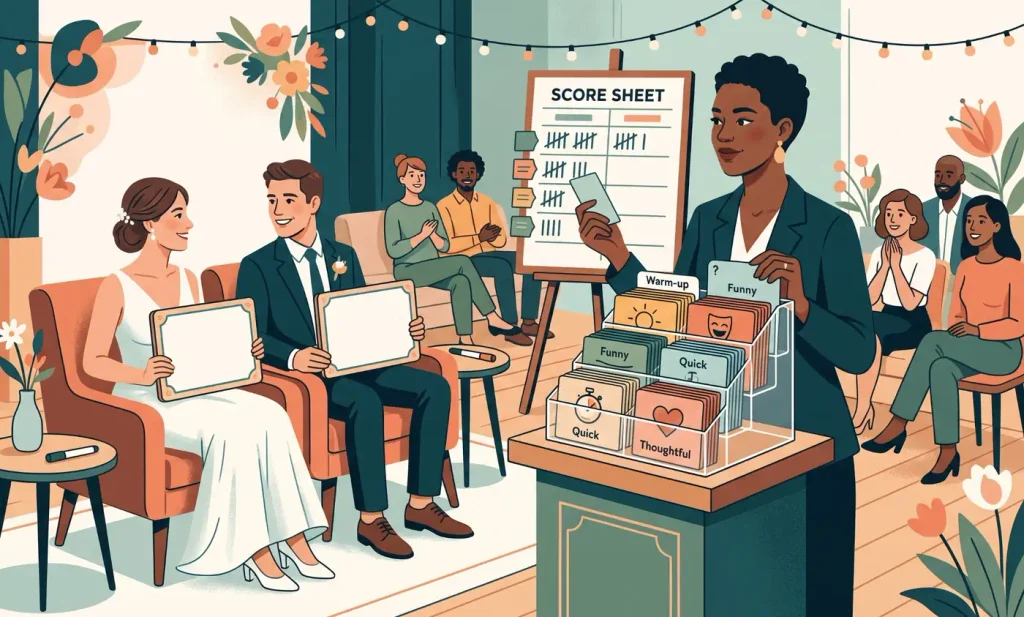
If choosing from 150 feels like too much work, use the question numbers below. Read them in this order so the game begins with easy facts. Then move into funny guesses and finish on a positive note. The numbers refer to the complete prompts above; this avoids printing the same questions twice.
Warm-up: 1, 3, 11, 16. Everyday details: 21, 26, 31, 36. Funny round: 42, 47, 53, 58. Quick name-card round: 91, 96, 111, 116. Finish: 121, 126, 131, 140.
For a shower, swap in 62, 64, 71, and 75 if those memories apply. For a couple who has not married yet, use engagement and guest prompts instead of wedding-day questions. To involve everyone, ask the audience to predict a few answers before the couple reveals theirs.
Download the Free Newlywed Game Host Pack
The six-page printable puts the 20-question host script, an answer sheet, guest-guessing prompts, and a simple scorecard in one place. Print the answer sheet twice. That way, each partner has a copy, while the pack complements the 150-question menu without repeating the entire article.
FREE 6-PAGE PRINTABLE
Newlywed Game Host Pack
Get a ready-to-read 20-question round, partner answer sheets, guest guessing prompts, and a reusable scorecard for an easier game night.
Download the Free Host Pack (PDF)What to change for a family party, a wedding shower, or a quiet game night
Family party: Use memories, favorites, and the funny “who” round. Choose questions all ages can follow. Wedding shower: Use the engagement and guest sections, and record the couple’s answers beforehand. Two-person game night: Skip the host, take turns reading questions, and talk through the surprising answers instead of keeping score.
If the group wants another easy activity afterward, try our charades word generator. For a quieter evening with just two players, browse our two-player board game picks.
Questions hosts often ask
Start with 10 for a short break in a party or 20 for a full round. Allow extra time if guests will tell stories after each reveal. The 150 questions here are a menu to choose from, not a single game to complete in one sitting.
Yes. Ask the couple for reference answers ahead of time, then give guests the prompts in questions 81-90. Each guest earns one point for an answer that matches the couple’s recorded response.
Yes. Engaged couples can replace wedding memories with plans for the event. Long-married couples can use the same prompts or choose more from the everyday and future-focused groups.
Before play, let the host decide whether clear synonyms count. A specific restaurant name and its common nickname can match; two different places cannot. Keep the decision light and consistent.
Skip any topic the couple has not agreed to discuss in public. In a mixed group, everyday preferences, shared memories, and gentle humor are reliable starting points. Let either partner pass and choose another number.
Ready to play? Write down 20 question numbers, prepare two answer cards, and let the first easy question get the conversation moving. You can keep score or simply enjoy the guesses.
