
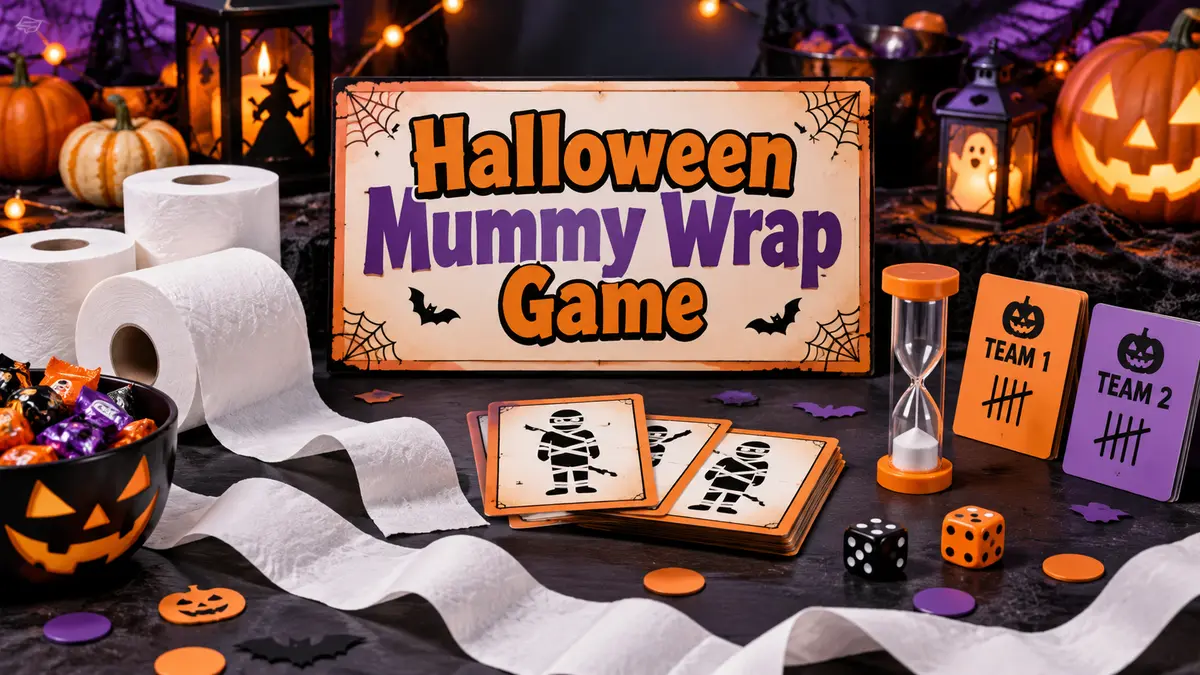
Direct Answer: The Halloween mummy wrap game is a timed team challenge in which players loosely wrap one willing teammate with toilet paper or white paper streamers. Give every team the same amount of paper, keep the face and neck clear, stop after about two minutes, and judge design, coverage, and teamwork instead of speed alone.
Last reviewed: September 2026
The Halloween mummy wrap game turns a few simple supplies into a visual team challenge. It works at family parties, classroom celebrations, youth events, and casual adult gatherings, as long as the host protects breathing, movement, and personal comfort.
This page focuses on one named activity rather than repeating the short description in GamingStation’s broader guide to Halloween party games for adults, kids, and mixed groups. It includes house rules, fair scoring, group variations, cleanup guidance, and a printable host pack. More group activities are available in the Party Games collection.
No company publishes a universal rulebook for this game. Therefore, the player ranges, timing, scoring, and age guidance below are GamingStation planning suggestions rather than official limits or results from first-hand testing.
Halloween Mummy Wrap Game at a Glance
These are flexible house-rule suggestions for one manageable round. Adjust the format to the room, the participants, and the number of adult helpers available.
| Game detail | Suggested format |
|---|---|
| Best for | Families, classrooms, youth groups, fall festivals, and casual team events |
| Players | 4-24 in one heat; use additional heats for a larger crowd |
| Team size | 2-4 players, including one willing mummy |
| Suggested age | About 6 and older with supervision; use the cardboard version for younger children |
| Teach time | About 2-3 minutes |
| Active round | 90 seconds to 2 minutes |
| Total playing time | About 10-20 minutes, including setup, judging, and unwrapping |
| Supplies | Equal paper rolls, timer, score sheet, pen, and cleanup bag |
| Space | Clear, flat, well-lit indoor or outdoor area |
| Interaction | High, with close teamwork |
| Complexity | Low |
| Cleanup | Medium |
For most parties, three or four teams playing at once create enough energy without crowding the room. Meanwhile, a smaller gathering can run one team at a time and compare scores.
Supplies for an Easy Mummy Wrap Game
Start with one identical roll of plain toilet paper or white paper streamer for each team. A second equal roll can be added when teams are larger or the host wants a longer design round. Consistency matters more than the exact brand or sheet count.
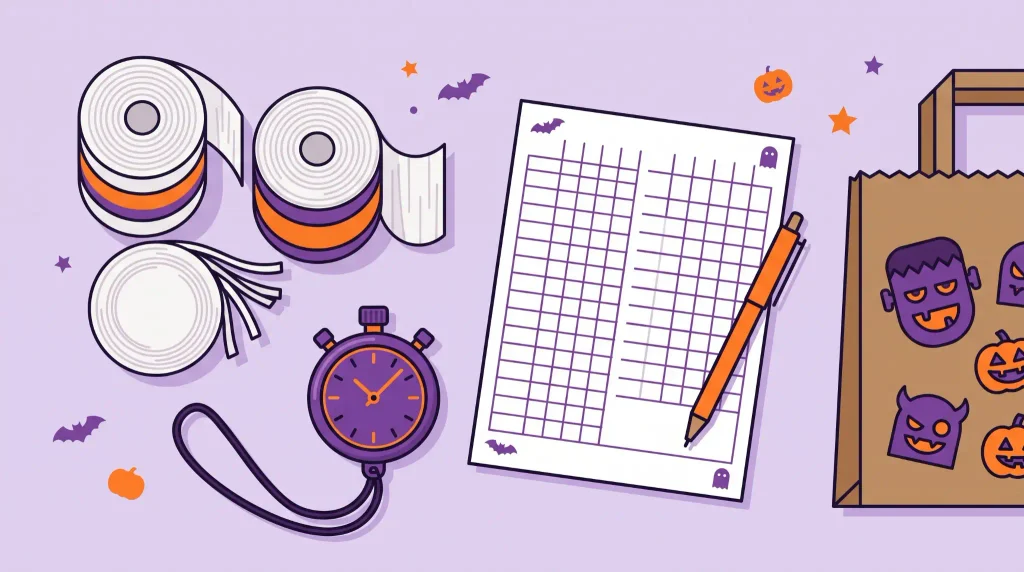
Prepare the following items:
- One equal paper supply for every team
- A phone timer, stopwatch, or visible countdown
- Team labels or numbered station cards
- One printed judging sheet and a pen
- A large bag or box for used paper
- Optional upbeat music at a comfortable volume
Avoid plastic wrap, packing tape, string, elastic cord, staples, and anything that cannot tear easily by hand. In addition, do not tape paper to a participant’s body or clothing. Painter’s tape may be used only for a cardboard-mummy variation, where it never touches a person.
Before buying supplies, check the venue’s cleanup and waste rules. If disposable paper is not suitable, use a reusable cardboard figure with removable paper bands instead.
Set Up the Playing Area
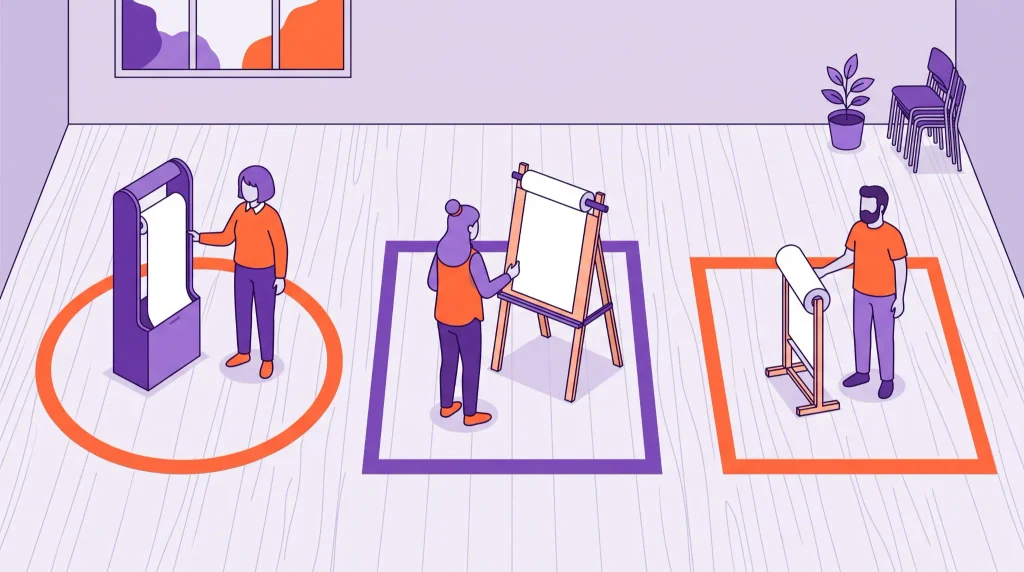
First, clear a flat space where wrappers can walk without meeting furniture, cords, bags, decorations, or another team. Keep every station separated by several comfortable steps rather than placing teams shoulder to shoulder.
Next, build teams of two to four. Each group needs one person who freely agrees to be the mummy. A player who does not want body contact can become a wrapper, timer, judge, scorekeeper, or supply manager instead.
Then, place the same paper supply at every station. Show the group where wrapping may go: over ordinary clothing from the shoulders down, with the face, neck, hands, and feet visible. Arms should remain comfortable, while the legs must be wrapped separately rather than bound together.
Finally, explain the stop signal and demonstrate how the paper should sit loosely. Decide whether the round will last 90 seconds or two minutes, and announce the judging method before anyone starts.
How to Play the Halloween Mummy Wrap Game
Use this fixed-time format for a straightforward toilet paper mummy game:
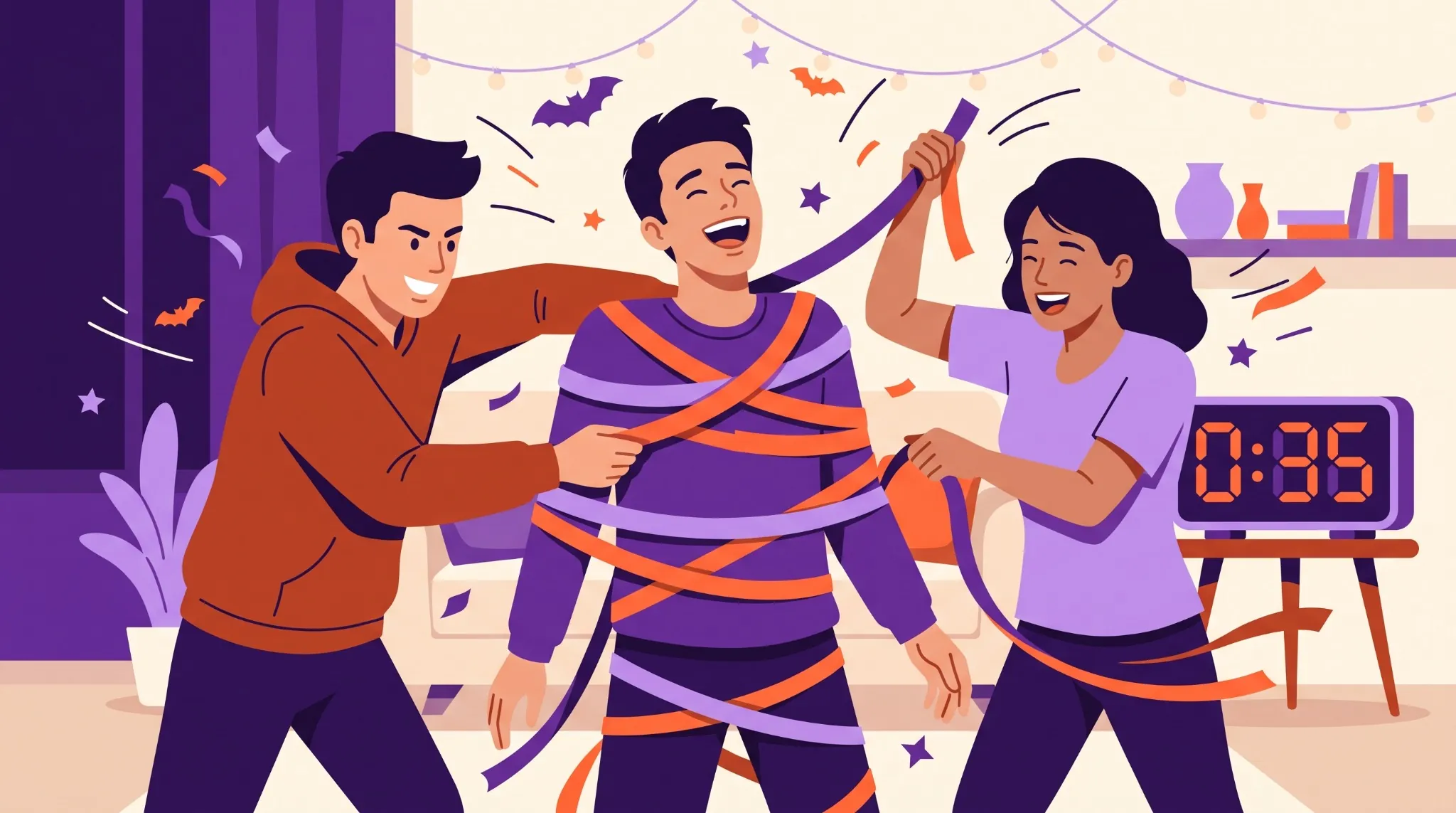
- Divide the players into equal teams and give every team the same paper supply.
- Ask each team to choose a willing mummy and confirm that the player is comfortable before the round begins.
- Place each mummy inside a separate team area with feet apart, hands free, and a stable standing or seated position.
- Start a 90-second or two-minute timer. Wrappers may walk slowly around the mummy while feeding paper over clothing.
- Keep all paper below the shoulders. Leave the face and neck completely clear, and never connect the legs with one tight band.
- If the paper tears, tuck the new end under a loose layer. Do not use tape, pins, or fasteners on the player.
- Stop immediately when the host calls time. The host checks the wrap before judging design, coverage, and teamwork.
- Tear the paper away before the mummy walks, changes position, or leaves the station.
Afterward, rotate roles if the group wants another round. However, ask for a new volunteer each time rather than assuming the previous mummy wants to repeat the role.
Use Fair Scoring Instead of a Speed-Only Race
A fixed deadline is easier to supervise than declaring the first fully wrapped team the winner. It also removes the incentive to pull paper tightly or rush around a participant.
Before points are awarded, every entry must pass a simple safety check: the face and neck are clear, hands and feet remain visible, the paper is loose, and the legs are separate. Pause and correct any problem. An uncorrected wrap should not win.
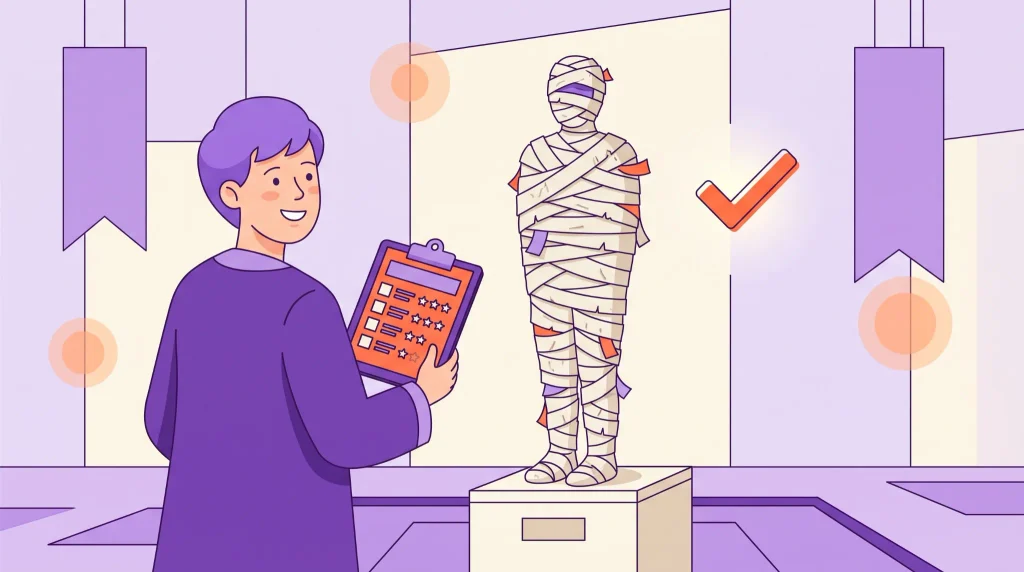
Use this 10-point scorecard:
| Judging criterion | Points |
|---|---|
| Coverage and neatness | 0-3 |
| Mummy design and creativity | 0-3 |
| Teamwork and shared roles | 0-2 |
| Paper control and finished appearance | 0-2 |
| Total | 10 |
Alternatively, skip totals and give several equal awards: Best Design, Best Teamwork, Neatest Wrap, and Funniest Mummy Pose. As a result, more teams receive recognition without making speed the only useful skill.
For a tie, compare teamwork scores first. If those scores also match, let both teams share the win instead of adding a rushed tiebreaker.
Try These Mummy Wrap Game Variations
- Music freeze: Teams wrap while music plays and freeze when it stops. Keep the room fully lit, and never surprise players with sudden darkness.
- One-minute challenge: Shorten the wrapping phase to 60 seconds, then judge the result at the buzzer. The mummy still stays in place until the paper is removed.
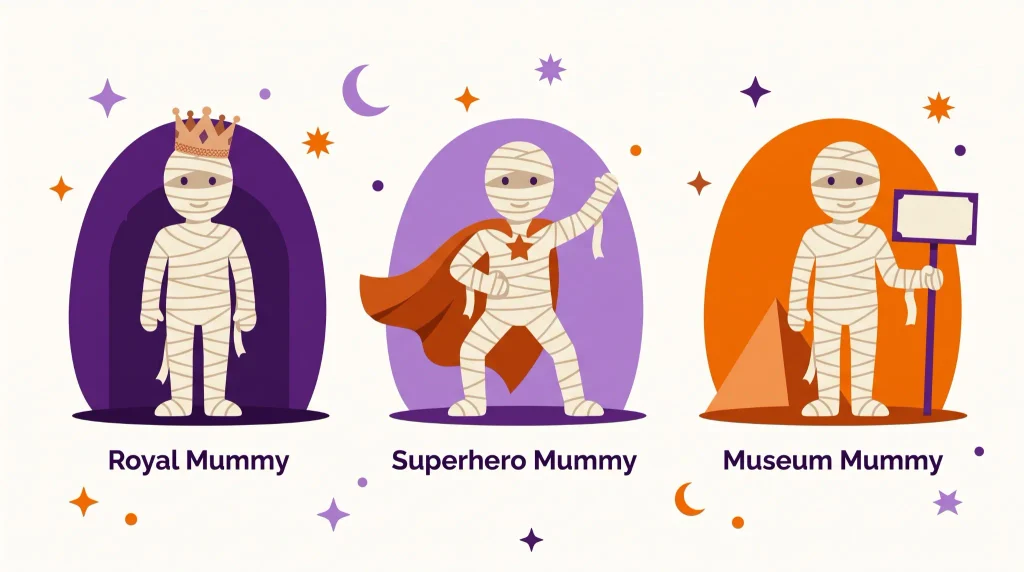
- Design theme: Ask teams to create a royal mummy, sleepy mummy, superhero mummy, or museum mummy. Judge the visual idea rather than how much of the person disappears.
- Dice unlock: Teams roll a die in turns. After reaching the announced number, they collect their paper and begin wrapping. This adds luck but also increases waiting time.
- Cooperative target: Instead of competing, every team tries to earn at least six of ten points. Afterward, the room combines its scores toward one group goal.
- Cardboard mummy: Tape or tuck paper strips around a large cardboard figure. This version removes body contact and makes cleanup easier to control.
- Round-robin heats: Run three or four teams at once, record scores, and rotate new teams into the next heat. Nobody should race across the room while wrapped.
Choose only one added rule. Too many twists can make a simple Halloween mummy game harder to explain than it needs to be.
Adapt the Game for Kids, Adults, and Large Groups
- Younger children: Use a cardboard figure or a seated adult volunteer. Shorten the round, demonstrate one loose layer, and place an adult beside every station.
- Classrooms: Keep teams at assigned tables or marked floor areas. Award points for cooperation, and give non-wrapping jobs to children who prefer less contact.
- Teens and adults: Use the full design scorecard, themed awards, or a two-round format. Keep the activity non-alcoholic and never connect drinks, dares, or embarrassment to scoring.
- Small groups: Let one pair play while the others judge, then rotate roles. A shared score target works better than pretending two teams are necessary.
- Large groups: Run short heats with identical supply kits and one judge per area. GamingStation’s guide to Halloween party games for large groups offers additional formats when a single active station cannot involve the full crowd.
- Mixed mobility: Seat the mummy, assign one person to feed the paper, and let another arrange it. A player can also run the timer or score sheet without taking part in body wrapping.
Whenever age ranges or abilities vary, choose the simplest shared rule rather than creating an advantage for the fastest or tallest players.
Protect Safety, Accessibility, and Comfort

The mummy role must always be optional. Before the round, explain the contact involved and allow a player to switch roles without giving a reason. Likewise, ask before taking or posting photographs.
The Scout Association’s wrapping activity guidance recommends loose wrapping, a clear mouth and nose, separately wrapped legs, equal paper supplies, a clear stop method, and alternative jobs for anyone who does not want to be wrapped. For this GamingStation version, keeping the entire face and neck clear adds an easy visual boundary for hosts.
Use this pregame check:
- Wrap only over normal clothing.
- Keep the face, neck, hands, and feet uncovered.
- Leave the paper loose enough to tear away immediately.
- Never bind arms to the torso or legs to each other.
- Do not run, jump, spin quickly, or walk while wrapped.
- Remove paper before the mummy changes stations.
- Keep the floor clear and the lighting bright.
- Stop at once if the mummy says “stop” or appears uncomfortable.
- Provide a seated, cardboard, judging, or timer role as an equal option.
Because the game uses easily ignited paper, remove candles and other open flames from the area. The U.S. Consumer Product Safety Commission’s Halloween guidance recommends flameless, battery-operated lighting around children and keeping burning candles away from combustible decorations.
Know When to Choose a Different Game
Skip body wrapping when the room is crowded, the floor cannot be cleared, suitable supervision is unavailable, or nobody freely volunteers as the mummy. Also adapt the activity for anyone who dislikes close contact, enclosed sensations, paper texture, or standing still.
A cardboard figure keeps the creative challenge without wrapping a person. Conversely, a group that wants performance without close contact can use Halloween charades and drawing prompts. If the host has no time to buy or clean up paper, choose one of these Halloween games with no supplies instead.
The game should never depend on persuading a reluctant participant. A different activity is the better choice when the only available version ignores the group’s space, comfort, or access needs.
Plan the Reset and Cleanup
Choose a cleanup helper before the timer starts. Once judging ends, every mummy should tear the paper away at the station and place it directly in the prepared collection bag. This prevents loose strips from becoming floor hazards between heats.
Clean, dry paper may be saved for a same-day craft or another prop activity if the venue permits. However, do not return used game paper to a bathroom or assume that local recycling accepts it. Follow the venue’s waste instructions.
For a lower-waste repeat event, make a large cardboard mummy and use removable paper bands, fabric tabs, or hook-and-loop straps attached only to the board. Store the pieces in a labeled envelope with the timer and score sheets. Although that version changes the body-wrapping experience, it is easier to reuse and offers a no-contact option.
Before the next activity begins, inspect the floor, collect small scraps, and move all unused rolls away from candles, heaters, food, and drink tables.
Avoid Common Mummy Wrap Game Mistakes
- Covering the head for a stronger mummy look: Keep the whole face and neck visible. A paper headband or shoulder-level wrap creates the theme without obstructing breathing or vision.
- Rewarding the fastest team: Speed-only rules encourage pulling, crowding, and uneven judging. Instead, use one deadline and score every team after the buzzer.
- Giving teams different supplies: Roll size and paper strength can change the result. Therefore, distribute matching materials or measure equal lengths in advance.
- Letting the mummy join a relay while wrapped: Remove the paper before anyone walks away. The wrapping itself is the challenge; movement is not needed.
- Placing too many teams in one room: Crowded wrappers can collide. Run smaller heats when each team cannot have a clearly separated station.
- Assigning the smallest player as the mummy: Size should not decide the role. Ask for a willing volunteer and rotate only with fresh consent.
- Forgetting a reset plan: Loose paper spreads quickly. Put a collection bag at every station and reserve a minute between rounds for a floor check.
Free Printable Mummy Wrap Game Host Pack
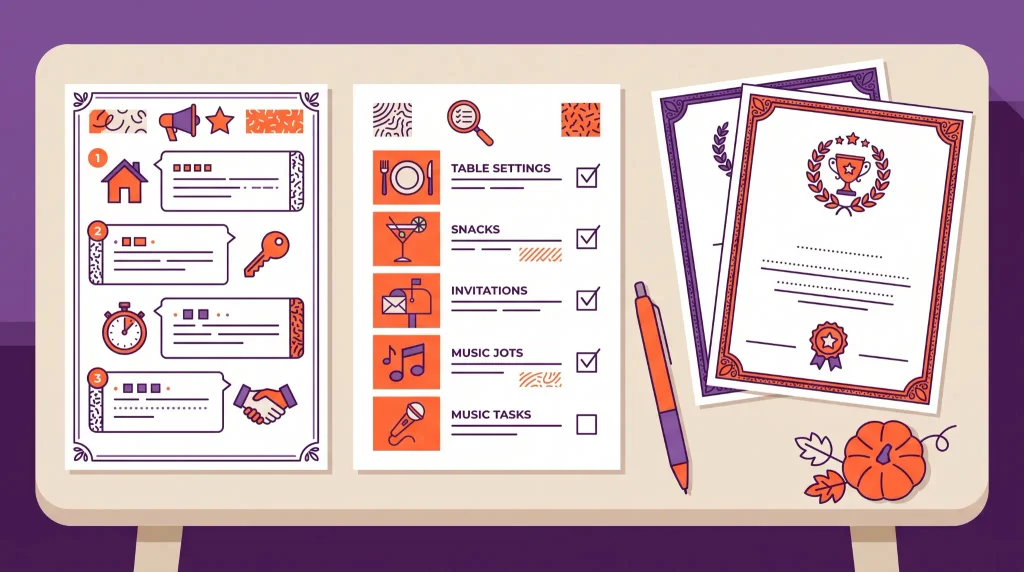
Want to host without checking a phone during every round? Use the printable pack for a one-page rules summary, pregame safety checklist, team labels, a six-team judging sheet, and simple winner certificates.
Print the host pages on U.S. Letter paper at 100% scale. In addition, keep the safety checklist beside the timer and give the judging sheet to one neutral host. The team labels and certificates are optional, so hosts can print only the pages they need.
Sources and Editorial Method
This guide uses a research-based GamingStation house format. No first-hand game testing is claimed. The suggested player range, age guidance, timing, scoring, team sizes, and stopping points are editorial planning suggestions rather than official limits.
U.S. Consumer Product Safety Commission: Halloween Safety Tips
The Scout Association: Play That’s a Wrap
Final Verdict
The best version of the Halloween mummy wrap game uses equal paper supplies, a fixed 90-second or two-minute round, and judging based on design, coverage, and teamwork. Most importantly, a host should keep faces and necks clear, separate the legs, and remove every wrap before anyone moves.
Use the standard version when participants welcome close teamwork and the venue has a clear, well-lit area. Otherwise, switch to a seated mummy, cardboard figure, judging role, or no-contact party game. Print the host pack, choose the scoring method, and explain the safety boundary before handing out the paper.
Frequently Asked Questions
Start with one identical roll per team for a 90-second to two-minute round. Add a second equal roll only for larger teams or longer design rounds. Matching supplies matter more than a particular brand, roll size, or sheet count.
White paper streamers work well, while a cardboard figure offers a reusable, no-contact option. Never wrap a person with plastic wrap, tape, string, elastic cord, staples, or another material that cannot be torn away quickly by hand.
It can work for children around six when they can follow stop directions and adults actively supervise every station. Use loose paper below the shoulders, keep hands and feet free, or choose a seated adult or cardboard mummy for younger groups.
Use one fixed deadline and score each team for coverage, design, teamwork, and paper control. Complete the safety check before awarding points. Avoid making speed the only standard because rushing can encourage tight wrapping, crowding, and uneven results.
Divide guests into teams of two to four, then run three or four teams in separate heats. Give every station identical supplies and enough space. Record scores after each heat, and keep wrapped players stationary until all paper is removed.
Yes. Adults can use a two-minute design round, themed awards, or a cooperative team target. Keep participation voluntary and the activity non-alcoholic. Scoring should reward creativity and teamwork without using embarrassing dares, forced contact, or drinking penalties.
No. The mummy should remain standing or seated inside the team station while wrapped. After judging, tear away every layer before the player walks. This keeps the Halloween mummy wrap game focused on wrapping and removes an unnecessary movement hazard.
Do not pressure anyone into the role. Wrap a large cardboard figure instead, or let participants become wrappers, judges, timers, scorekeepers, or supply managers. A no-contact version preserves the creative challenge without requiring close contact or an enclosed feeling.
