
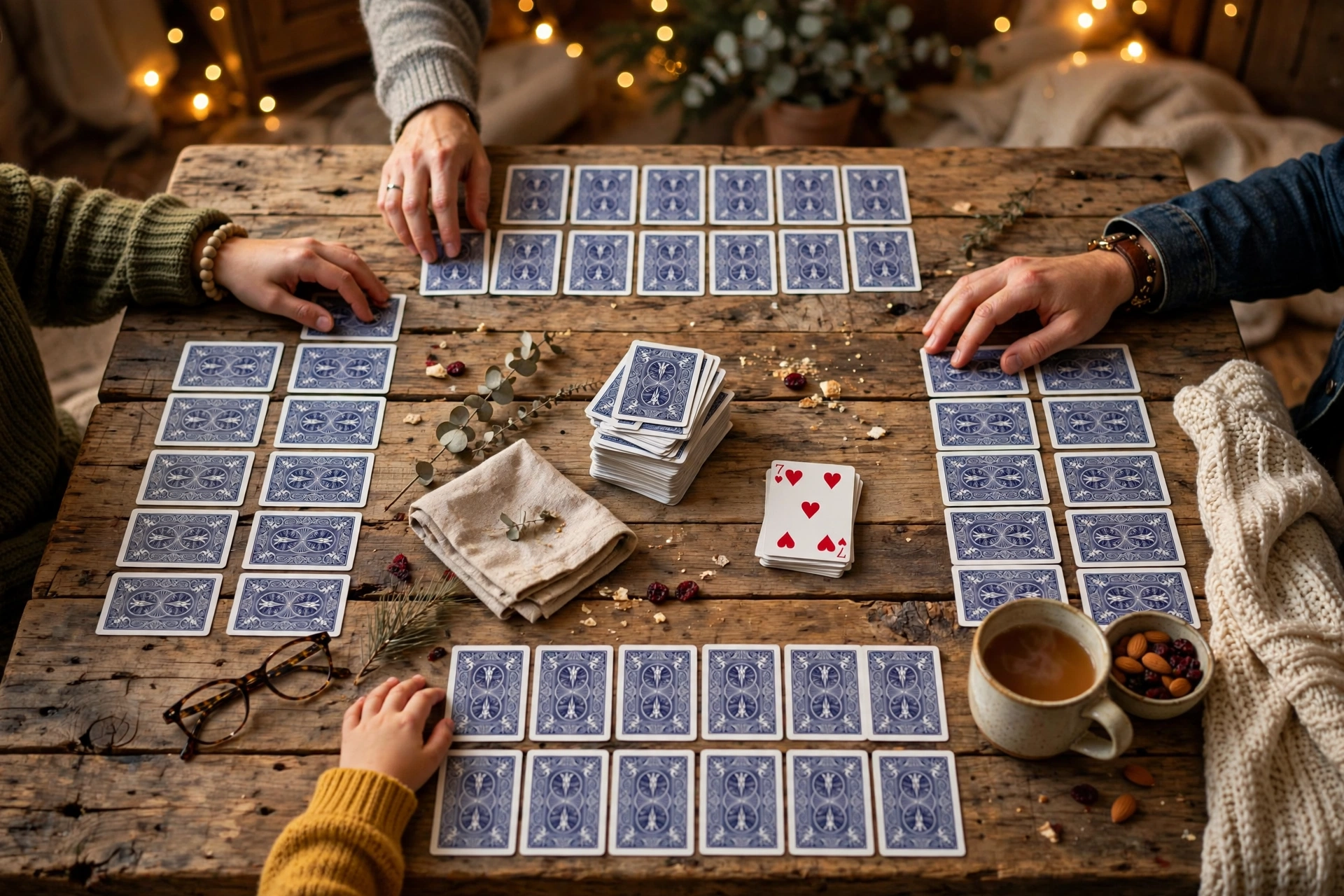
Trash is the card game that asks almost nothing of you: one deck, two or more players, and ten face-down cards each. The first player to flip every card into Ace-to-ten order wins the round, then everyone plays again with the winner on one card fewer. It is the rare game that works for a six-year-old, a grandparent, and a table of competitive adults, and a full game takes about half an hour.
Friday night. The pizza has arrived, half the guests are still parking, and you need something that teaches in two minutes flat. This is that game. This guide covers the full classic rules: the setup, how a turn actually flows, the great wild-card debate (settle it before you deal), multi-round scoring, house rules worth stealing, and the small edges that matter in a game this luck-driven. For the food, timing, and playlist side of the evening, our guide to how to host a game night has you covered.
The whole game in 90 seconds
- Players: 2 or more (best with 2 to 4). One standard 52-card deck; add a second deck for 5 to 6 players.
- Setup: everyone gets 10 cards, face down, in two rows of five. No peeking. The top-left spot is the Ace (1), counting across and down to the 10 at the bottom right.
- Your turn: draw the top card of the draw pile or the discard pile. Ace through 10 goes face up on its numbered spot; flip the card that was underneath and keep chaining while every flipped card has an open spot.
- Wild vs trash: in the most common version, Jacks are wild and Queens and Kings are trash that end your turn. Agree on your version before the first deal.
- Winning: first to fill all ten spots wins the round, then plays the next round with nine cards. The game ends when someone wins the final one-card round.
Jump to a section
What You Need to Play
The shopping list is short, which is half the point. You need one standard 52-card deck for two to four players, and a second deck once the table grows to five or six. A classroom lesson plan for the game lists two to four players with an extra deck added for bigger groups, and a party-game guide agrees on one deck for two to four. In practice, two-player Trash is superb: fast turns, constant tension, and it genuinely belongs on a shortlist of the best two-player board games you can play with a standard deck. Our honest take on group size: two to four is the sweet spot, and past six the wait between your turns starts to drag.
On age, the sources line up nicely. A family blog rates the classic ten-card version for ages six and up and offers a simplified seven-card version for younger kids; a classroom lesson plan lists it for ages seven to adult at about thirty minutes a game; a card retailer puts it at eight and up. The practical rule is simpler: if the kids can count to ten, they can play Trash. You will also want a table with enough elbow room for every player’s grid plus two shared piles in the middle.
Setting Up Your 2×5 Grid
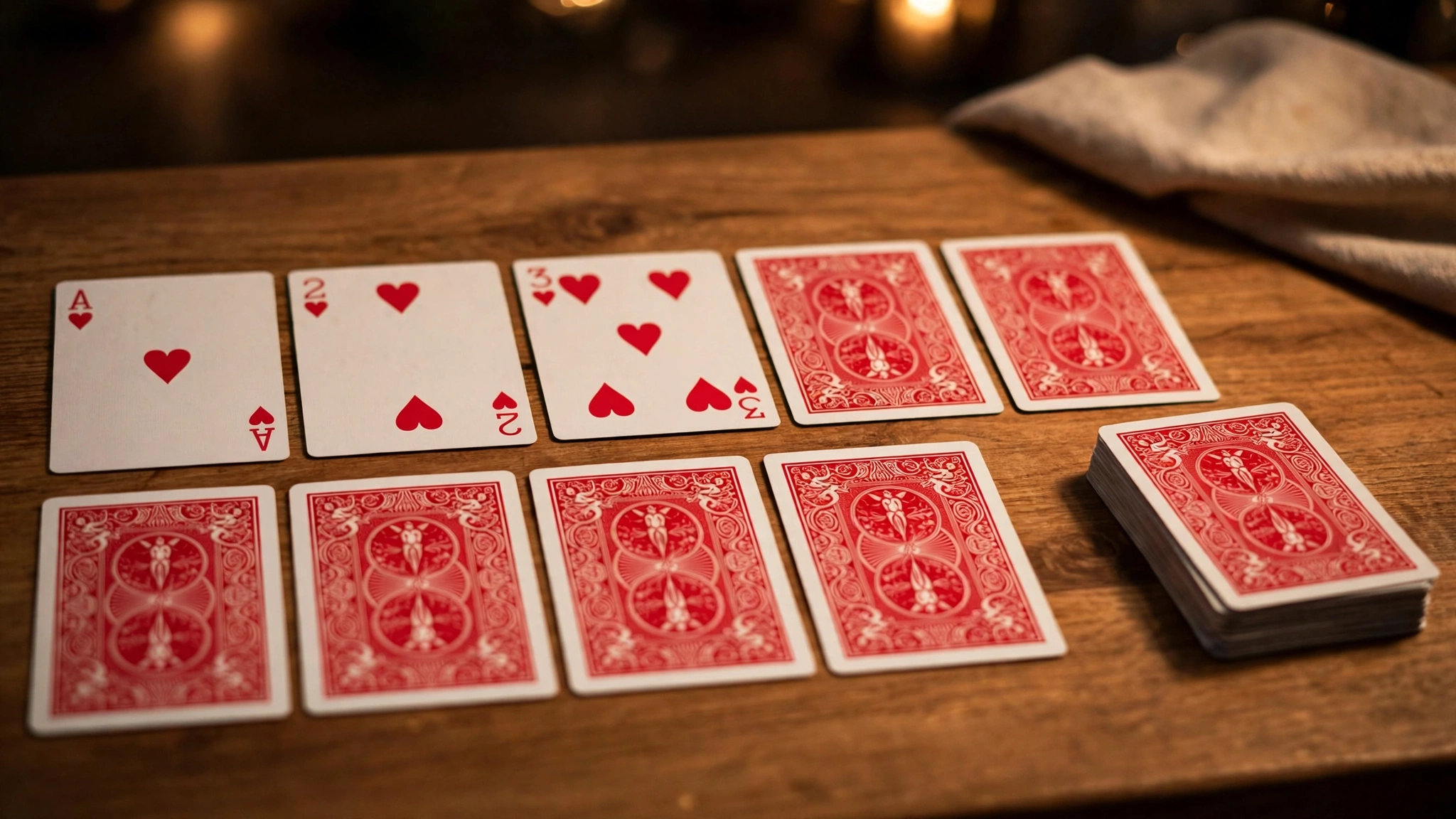
Everyone draws a card from the shuffled deck and the highest card deals; ties redraw. The dealer gives each player ten cards, face down, and nobody looks at them. Arrange your ten in two rows of five. The positions are fixed: the top row is 1 through 5, the bottom row is 6 through 10, with the Ace counting as 1. So the top-left card is the Ace spot and the bottom-right card is the 10 spot. The remaining deck goes face down in the middle as the draw pile, with space beside it for the discard pile. The player to the dealer’s left starts. If Trash is becoming your regular opener, put a fresh deck on your board game night checklist so you are never caught shuffling a sticky deck.
How a Turn Works, Step by Step
A turn in Trash is one decision followed by a chain reaction. Here is the full sequence:
- Draw one card. Take the top card of the draw pile or the top card of the discard pile. On the very first turn of the game the discard pile is empty, so the draw pile is your only option.
- Play it if you can. If it is an Ace through 10 and that numbered spot in your grid is still face down, lay the card face up on its spot.
- Flip what was underneath. Turn over the face-down card that was sitting in that spot. If it is a number you still need, play it to its own spot and flip the card beneath that one.
- Keep chaining. As long as every flipped card has an open numbered spot waiting, the chain continues. Long chains are the best feeling in the game.
- Discard and stop. The moment you flip something unplayable, a trash card or a number whose spot is already filled, lay it face up on the discard pile. Your turn ends and play passes left.
One edge case to agree on: if the draw pile ever runs out mid-game, most tables shuffle the discard pile, leaving its top card in place, to form a fresh draw pile, then keep playing.
Two details separate beginners from people who have played before. First, the discard pile is public information from your second turn onward, so always glance at its top card before you draw; sometimes the card you need is sitting right there. Second, the wild-card swap: if a Jack is holding a spot as a wild and you later draw the real number for that spot, put the number in its place, pick the Jack back up, and keep playing it onto another face-down spot. Your turn continues. One good swap can turn a dead turn into a five-card cascade, and new players miss it constantly.
Wild Cards vs Trash Cards: Pick Your Version Before You Deal
This is the one argument Trash causes. Two families can both swear they play the real rules, and both are right. The game has a genuine regional split over which cards are wild and which are trash, and the only wrong move is discovering the disagreement mid-game. Here are the versions you will actually meet:
| Version | Wild card | Trash (ends your turn) | Where you will see it |
|---|---|---|---|
| The family classic (most common) | Jack | Queen, King | Most family guides; the free online version on Solitaired |
| The King-wild version | King | Jack, Queen | Party-game guides for Garbage |
| The classroom version | King | Jack ends your turn; Queen means draw again | A classroom lesson plan (ages 7 to adult) |
| Joker house rule | Jokers as extra wilds | Same as your base version | Groups that want longer lucky streaks |
Our recommendation: play Jacks wild. It is the version most people learned first, so guests from other families will already know it, and the Jack-swap rule described above gives the game its best moments. The King-wild version plays just as well in practice. What matters is not which you choose but that the whole table agrees before the first card is dealt. Say it out loud: “Jacks wild, Queens and Kings are trash, everyone good?” Ten seconds now saves a real argument on round three. One more wrinkle: a few tables skip wilds entirely, treating Jack, Queen and King all as turn-ending trash. It is a harsher, faster game; fine for adults, rough on kids.
Winning a Round, Then Winning the Game
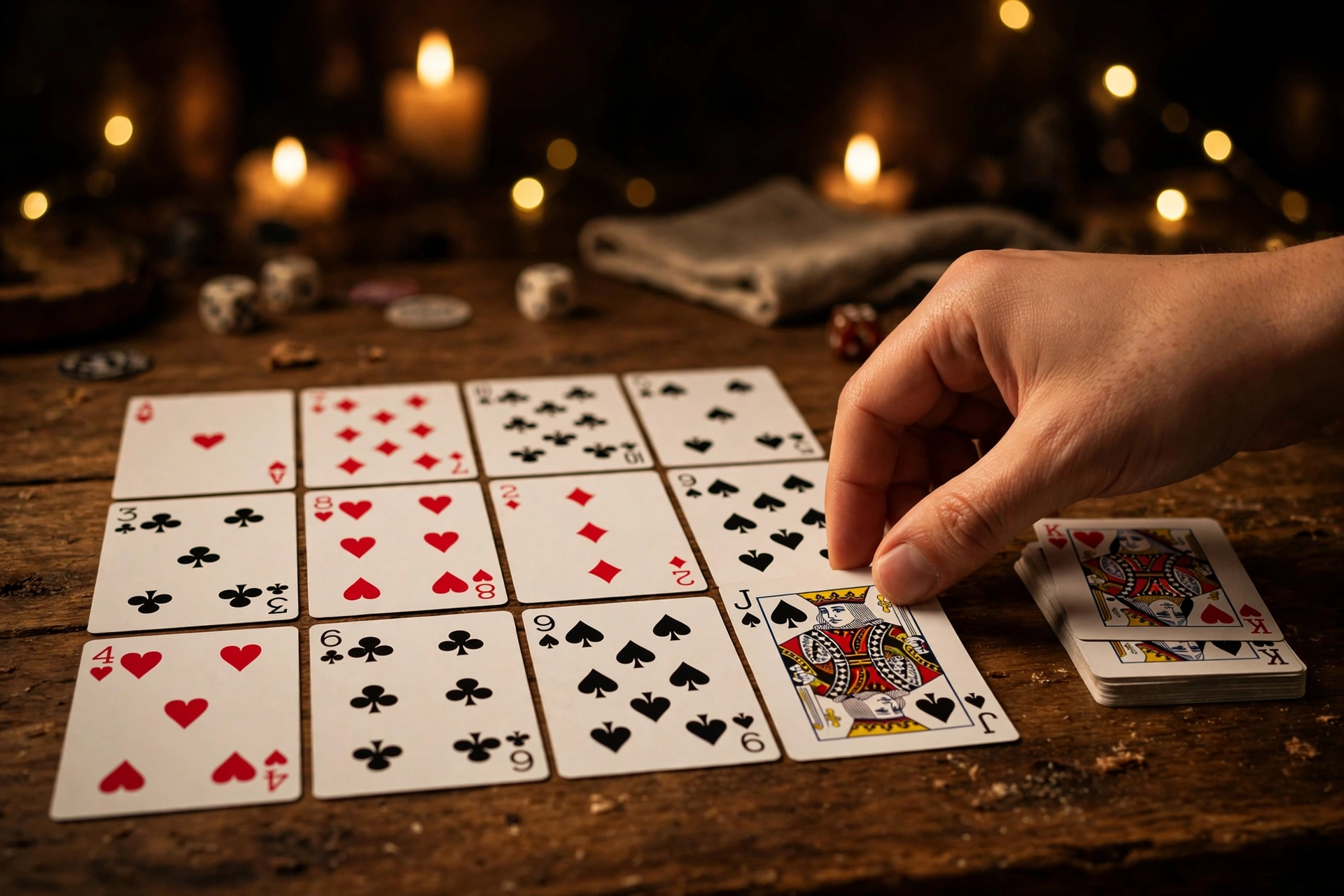
Trash is really two games stacked together: the round you are playing right now, and the slow shrinking contest across rounds. Winning a round is simple: be the first player with all ten spots filled, numbers or wilds. Some tables have the winner shout “Trash!” when it happens, which costs nothing and kids love. Most groups also give every other player one final turn to try to finish their own grid once a round is won; agree on this before you start, because it changes how the end of a round feels.
Then the ladder begins. Everyone who completed their layout gets one fewer card in the next round, while anyone who did not finish stays at ten until they do. So the round winner plays the next round with nine cards (Ace through 9), then eight, then seven, all the way down. The grids shrink, the rounds get faster, and players end up on different-sized layouts, which is half the fun of watching the table. It ends in a one-card showdown: draw an Ace, or a wild, and you win the entire game.
| Round | Cards dealt | Sequence to complete |
|---|---|---|
| 1 | 10 | Ace to 10 |
| 2 | 9 | Ace to 9 |
| Middle rounds | One fewer card each round for everyone who keeps winning | |
| 9 | 2 | Ace, 2 |
| 10 | 1 | Ace (or a wild) wins the whole game |
If your group dislikes the ladder format, there is a popular points alternative: the round winner scores zero, everyone else scores one point per card still face down, and after an agreed number of rounds, or when someone reaches a target like ten points, the lowest total wins. It keeps everyone in every round, which suits mixed-age tables.
5 House Rules Worth Stealing
Trash has been passed between families for decades, and the best tables all run a few tweaks. These five are worth adopting:
- The 7-card kids’ version. Deal seven face-down cards instead of ten; the first to flip all seven wins. A family guide built its whole version of the game around this for younger children, and it is the right call for players who know their numbers but would find ten spots a long haul.
- One last turn. After someone wins a round, every other player gets a final turn to try to finish. It stops the round from ending on a robbery and gives dramatic comebacks a chance.
- Queen means draw again. From the classroom version: instead of ending your turn, a Queen lets you draw another card. It softens the cruelty of the trash cards for younger or newer players.
- Jokers in as wilds. Shuffle the two jokers in as extra wild cards. Games get swingier and the big chain turns get bigger. Remove them again if the luck starts feeling unfair.
- Say “Trash!” on the win. The winner announces it. Silly, free, and weirdly satisfying after a ten-round ladder.
Trash is the rare game that works as a quiet warm-up while guests arrive and as the main event on a low-key night. When the full crew is in and you want something louder, our best party games for adults list takes over from here.
Strategy: 5 Small Edges in a Luck-Heavy Game
Let us be honest first: Trash is mostly luck. No strategy survives a run of Queens. But across a full ten-round ladder, the margins below genuinely add up.
- Save wilds for the gaps. A wild played early is a wild wasted. Wild cards are most valuable covering the last one or two numbers you have not drawn, so park a Jack on a spot and leave it there until the endgame forces your hand.
- Read the discard pile before every draw. It tells you what just became available and, just as usefully, what your opponents did not want. The top card of the discard pile is the only free information in the game; use it.
- Take from the discard pile only when it fills a spot you need. Fishing from it blindly burns your one free look. If the top card does not help you, draw from the stock and keep the mystery.
- Think before you feed the discard pile. The card you throw away becomes the next player’s option. If you can see the player after you needs the card you are about to discard, there is nothing you can do about it, but you can at least avoid handing them a second useful card on your next turn by drawing from the stock instead of flipping more of your grid unnecessarily. Small, but real.
- Always finish the chain. New players end their turn the moment they see a bad card instead of checking whether the flipped card underneath plays somewhere. Flip first, resolve everything, discard last. And remember the Jack swap: a wild sitting in the wrong spot is a turn waiting to happen.
Trash Card Game FAQs
How many cards do you deal in Trash?
Ten cards to each player, all face down, arranged in two rows of five. Use one standard deck for two to four players and add a second deck when the table grows to five or six.
What is wild in the Trash card game?
It depends on the version, which is exactly why you should agree before dealing. In the most common version, Jacks are wild and Queens and Kings end your turn. In another widespread version, Kings are wild and Jacks and Queens are trash. Both are legitimate; the table just needs to pick one.
Can you play Trash with 2 players?
Yes, and it may be the game’s best format. Two-player Trash uses a single deck, turns come fast, and every draw matters. See our best two-player board games roundup for more duels worth learning.
How do you win at Trash?
Win a round by flipping all ten of your cards into Ace-to-ten order. Then survive the shrinking ladder: each round you win, your next layout gets one card smaller, down to a final one-card round where drawing an Ace (or a wild) wins the whole game.
What age is Trash good for?
If a child can count to ten, they can play the classic game; family guides generally rate it for ages six and up, with a simplified seven-card version for younger kids. A classroom lesson plan lists it for ages seven to adult at about thirty minutes per game.
Can you play Trash online?
Yes. Solitaired has a free browser version of Trash using the Jack-wild rules, which is a handy way to learn the flow before teaching your table.
Sources
Rules cross-checked against Solitaired’s Trash rules and free online game, the family guide How to Play Trash (or Garbage), PlayPartyGame’s Garbage rules, a classroom lesson plan for the Garbage card game, and PlayingCardDecks’ Trash game rules. All links verified live on 5 October 2026.
