

President is a shedding card game for 4 to 8 players with one rule that changes everything: your finishing position follows you into the next round. Shed all your cards first and you become the President. Get stuck holding cards last and you become the Scum. Between rounds, the Scum hands their two best cards to the President, who returns two cards they do not want. That single trade turns a simple get-rid-of-your-cards game into a little class system, complete with comebacks, grudges, and the most satisfying dethroning in card games.
It is a natural fit for a game night: one standard deck, nothing to buy, rules that take about two minutes to teach, and a full session of several rounds runs roughly 30 minutes. This guide covers the complete classic game: the ranks and what each one does, dealing, how a round flows trick by trick, the card trade between rounds, the genuine rule disagreements you should settle before the first deal, and real strategy for climbing out of the Scum seat. For the food, timing, and guest-flow side of the evening, our guide to how to host a game night has you covered.
President in 60 seconds
- Players: 4 to 8 is the sweet spot (playable from 3 up). One standard 52-card deck; shuffle in a second deck for 6 or more players.
- The deal: deal out the whole deck, one card at a time, clockwise. Uneven hands are fine.
- The play: the 3 of clubs leads the first round. Each player must beat the last play with the same number of higher cards, or pass. When everyone passes in a row, the pile clears and whoever played last leads again.
- The ranks: first player out of cards becomes President, second becomes Vice President, last one holding cards becomes Scum. Everyone in between is a Citizen.
- The trade: before the next round, the Scum gives their two best cards to the President, who returns any two cards they do not want.
- Winning: play as many rounds as the table wants, or keep score: the President earns 2 points per round, the Vice President 1, and the first player to 11 points wins the game.
On this page
- The ranks: who becomes what
- What you need, and how to deal
- How a round plays, step by step
- Card values: the pecking order
- The card trade between rounds
- One thing to agree on: who starts the next round
- 6 house rules to settle before you deal
- Strategy: climbing out of the gutter
- One game, many names
- President card game FAQs
- Sources
The ranks: who becomes what
Most card games end when someone goes out. President starts there. Your finishing position in each round becomes your title for the next one, and the titles carry real mechanical weight. Here is the standard hierarchy, from top to bottom:
| Rank | Earned by | What it means next round |
|---|---|---|
| President | First player out of cards | Receives the Scum’s two best cards; gives back any two unwanted cards |
| Vice President | Second player out | Second-best seat; in larger games, trades cards with the second-to-last player |
| Citizen | Everyone in between | No trade, no penalty; the safe middle |
| High Scum | Second-to-last out (bigger tables) | Trades with the Vice President in games of 7 or more |
| Scum | Last player holding cards | Gives two best cards to the President; receives two unwanted cards back |
Bigger tables add more titles, some use Speaker of the House for third place, but the mechanic never changes: the top of the table gets stronger each round and the bottom gets weaker. That is what makes a comeback from Scum to President in a single round the most satisfying play in the game. The titles sound harsh, and the last-place one is where groups usually rename things (see One game, many names below). Mechanically, only the trade matters.
What you need, and how to deal
The equipment list is one line: a standard 52-card deck. Four to eight players is where the hierarchy has room to breathe, though the game works from three up. With six or more at the table, shuffle in a second deck so hands stay a reasonable size; a card retailer’s guide to the game recommends exactly this cutoff. A full session of several rounds runs about 30 minutes, which makes President a strong opener or closer for an evening. If you are planning the whole night around it, our board game night checklist covers the table space and seating that card games need.
Shuffle and deal the entire deck one card at a time, clockwise, until it is gone. Some players will end up with one card more than others, and that is fine. One nice touch from an experienced guide: when the deal comes out uneven, start dealing from the lowest-ranked player so the President ends up with the fewest cards. The deal rotates each round, though some tables make the Scum deal the next hand as part of the job.
Jokers are a pre-game decision, not a rule. Most family versions leave them out of the deck entirely. Versions that include them usually rank the joker above everything as an automatic pile-winner. Either way is legitimate; just decide before the first deal, because a joker played onto a pair is either the best play in the game or not legal at all, depending on your table.
How a round plays, step by step
A round of President is a loop of one question, asked clockwise until nobody can answer: can you beat what is on the pile? The full sequence:
- The 3 of clubs leads. In the first round, whoever holds the 3 of clubs plays it to the middle. (For later rounds, see who starts the next round; traditions genuinely differ.)
- Beat it or pass. Going clockwise, each player must either play the same number of cards at a higher rank, or pass. A single 7 is beaten by a single 8 or higher; a pair of 7s needs a higher pair. Passing never locks you out: you sit out the trick and jump back in on your next turn.
- Sets stay matched. If someone leads a pair, everyone answers with pairs. Most modern guides are explicit that a single card, however high, cannot beat a pair. Some older versions let more cards beat fewer cards. This is a real regional split, so pick your version before you deal.
- The pile clears. When every remaining player passes in a row, the pile is swept away and whoever played last leads the next trick with any single card or set they like. Winning a trick is powerful because you get to choose the next battlefield.
- Going out. The moment you play your last card, you are done for the round and play continues without you. The round ends when one player is left holding cards. Finish order decides the ranks for the next round.
Card values: the pecking order
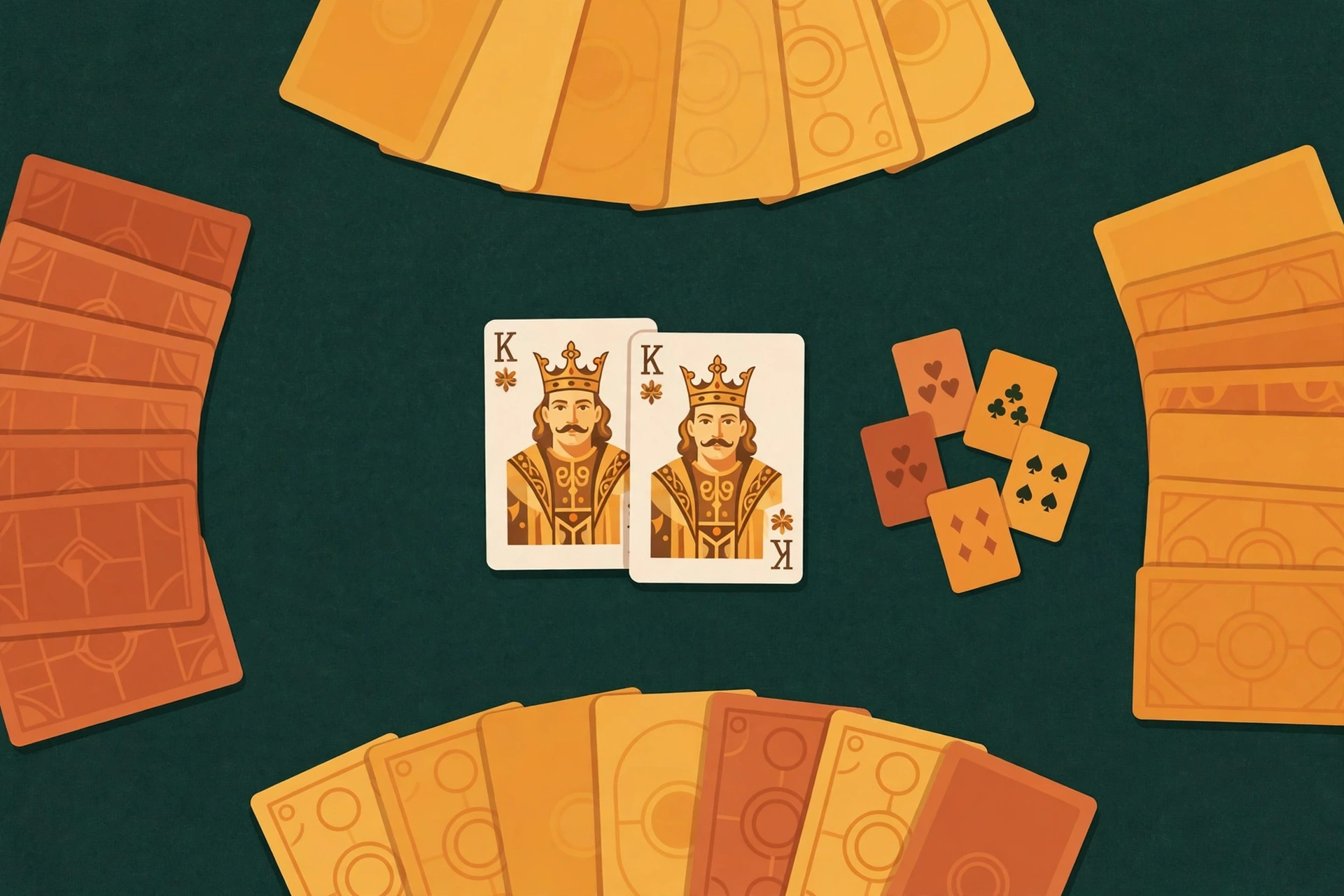
President uses a fixed ladder with no suits and no trump. Memorize it once and you will never need to look it up again:
| High to low | 2 | A | K | Q | J | 10 | 9 | 8 | 7 | 6 | 5 | 4 | 3 |
|---|---|---|---|---|---|---|---|---|---|---|---|---|---|
| Notes | Highest single card; often clears the pile | The face cards: strong, but beatable | Number cards; 3s are the lowest in the game, which is why the 3 of clubs starts round one | ||||||||||
The 2 sits at the top of the ladder in every version of the game, and most tables give it an extra power: playing a 2 clears the pile (more on the exact effect in house rules). If your table plays with jokers, the common version ranks them above everything, even the 2, and a single joker can be played onto pairs and triples to win the trick outright.
The card trade between rounds
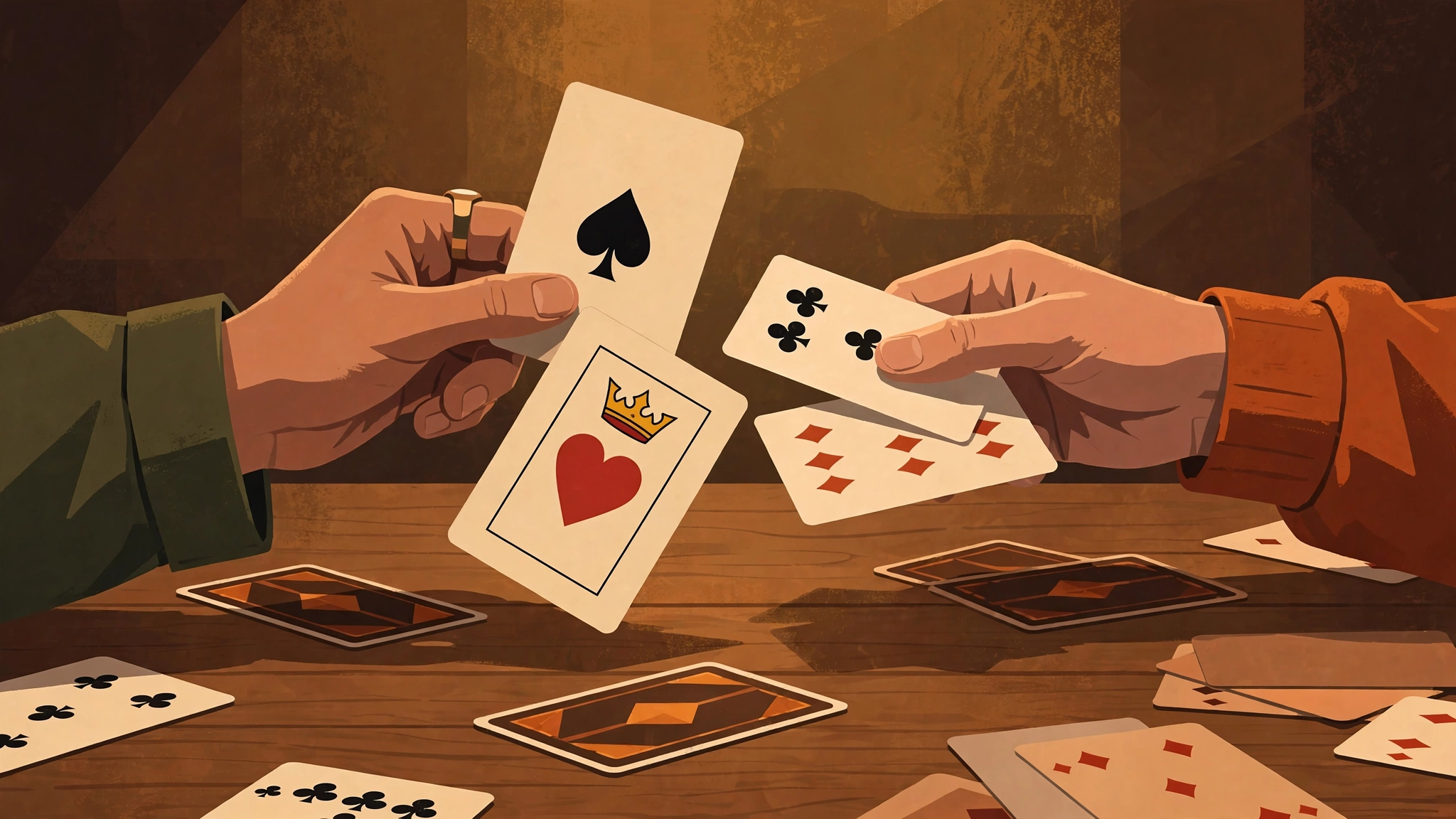
This is the mechanic that makes President more than a shedding game. Before the next round is dealt, the Scum hands their two best cards to the President, face up, and the President hands back any two cards they do not want. In bigger games the Vice President and the second-to-last player make a smaller trade the same way. The rich get richer on purpose: it is the engine that turns one lucky round into a real advantage, and it is why dethroning the President feels like an event instead of a dice roll.
The size of the trade is the most common disagreement in the game. The two-card trade is the most widely published version, described the same way by multiple independent guides. A popular shorter version trades just one card each way. Neither is wrong, but the table has to pick one before the first deal and stick with it for the session, because the trade shapes every strategic decision in the game.
One thing to agree on: who starts the next round
Ask four guides who leads the second round and you get three different answers. Two published versions have the President play first, which rewards winning and keeps the hierarchy meaningful. One has the Scum deal and start, which gives the bottom of the table a small head start. Another has the last-place player deal while the President leads. All of them are real traditions played at real tables.
Our take: let the President lead the next round. It is the most common version, it rewards the win, and it keeps the power fantasy that makes the game fun intact. But the honest answer is that whatever your table chooses matters less than choosing it out loud before round one. Mid-game arguments about this rule are the only thing that can slow President down.
6 house rules to settle before you deal
President’s rules are folk rules, which means every table inherits a slightly different game. None of the six below is wrong. Every one of them should be decided before the first deal, out loud, with everyone nodding.
- Jokers: in or out, and where they rank. Out is the family standard. In, they are usually the highest card in the game. There is no middle ground worth arguing about mid-game.
- What 2s do. Nearly every table agrees a 2 clears the pile. The split is what happens next: some tables end your turn there, others let you lead a fresh card immediately. Both versions are published. Pick one.
- Set clears. Some tables sweep the pile when all four cards of a rank hit the table in a single turn. Others clear it when a player goes out on a set of three or more, and give that player another turn on the spot. Loud, fun, and absolutely a pre-game decision.
- Strategic passing. Most modern tables let you pass even when you could legally play, and that permission is where the real strategy lives. A minority of tables play must-beat-if-you-can. Say which one you are before round one.
- The revolution round. A beloved chaos variant, sometimes called Communism or Socialism: for one round the trade reverses and the President hands their best cards to the Scum. Play it when someone has been President three rounds running and the table needs hope.
- The last-card penalty. Some tables automatically demote anyone who finishes their hand on a 2 or a joker to Scum, whatever the actual finish order was. Cruel, memorable, and worth knowing about before it happens to you.
You do not need to write any of this down. Just say it once before the first deal: jokers, twos, set clears, passing, revolution, last-card penalty. Thirty seconds now, zero arguments later. Groups that want stakes usually keep them silly rather than serious: the Scum refills the snack bowl or deals the next hand.
Strategy: climbing out of the gutter
President looks like pure luck because the deal is pure luck. The rounds are not. Five ideas that survive contact with real tables:
- Dump your low cards early. Threes through sixes never win a trick late in a round. Spend them while the pile is cheap instead of nursing them into your last five cards.
- Save your 2s for the moment that matters. A 2 clears any pile, so burning one to win a trick of fours is the classic beginner mistake. Hold it for the trick that actually strands someone, or for your own escape when the pile gets scary.
- Keep pairs together until late. Pairs get harder to beat as the round thins out and high cards get spent. A pair of queens in the last few tricks is often simply unbeatable.
- Pass on purpose. Passing is free and never locks you out of the round. Let two rivals burn their high cards fighting each other over a trick of nines, then walk through the wreckage with your own high cards intact.
- Play the trade, not just the round. As President, your two returned cards should obviously be your two worst, but think one step further: never return cards that complete the Scum’s pairs. As Scum, your best defense is to not be Scum: shed aggressively, even if it means spending a good card earlier than feels comfortable.
The honest trade-off: none of this beats a bad deal. President rewards the player who loses well, stays out of last place, and strikes when the cards finally cooperate. If you enjoy the beat-or-pass muscle this game trains, our Hearts guide works the same instincts with tricks instead of piles.
One game, many names
Depending on where you learned it, this game is called Scum, Asshole, Kings, Janitor, or Kings and Bums, and the last-place title changes with the name. This guide uses President and Scum because they are the most widely printed names and they keep the game playable at a family table. If your group prefers a different name, use it; the rules do not care. One practical note: pick the name before you teach the game to kids, because un-teaching a playground name is harder than teaching the rules. If your table likes its card games loud, our best party games for adults roundup has the follow-up acts for later in the night; if the group would rather answer questions than shed cards, our best trivia board games list points the other way.
President card game FAQs
How many players do you need for President?
Three can play, but four to eight is where the hierarchy has room to breathe. With six or more at the table, shuffle in a second deck so hands stay a reasonable size and rounds do not drag.
Do you play President with jokers?
Usually not. Most printed versions of the rules leave the jokers out of the deck. If your table wants them in, the common version ranks jokers above everything as instant pile-winners. Decide before the first deal, not during it.
What happens if the deal comes out uneven?
Nothing bad. Some players hold one card more than others and the game plays fine. For fairness, start the deal from the lowest-ranked player so the President ends up with the fewest cards when the counts do not divide evenly.
Can you pass even when you could legally play?
At most tables, yes, and it is one of the game’s best strategic tools: passing lets rivals burn their high cards on each other. A minority of tables play must-beat-if-you-can, so confirm which version you are playing before round one.
Who starts the next round, the President or the Scum?
Traditions genuinely differ: most published versions have the President lead, some have the Scum deal and start, and some split the duties. We recommend the President leads, since it rewards winning. Whatever you choose, agree on it before the first round.
Is President the same game as Scum?
Yes. Scum is simply the most common alternate name, alongside Kings, Janitor, Kings and Bums, and one ruder name we will leave to your group chat. The rules are the same game under all of them.
How long does a game of President take?
A single round takes a few minutes; a satisfying session of four to six rounds runs about half an hour. It is short enough to open the evening and good enough to become the whole evening. For another quick card game that fills the same slot, our Trash guide plays in about the same time with a completely different feel.
Sources
Rules cross-checked against The Tech Edvocate’s President guide, Group Games 101’s President rules, Gibson Games’ how-to-play President, and A Little Bit Human’s President quick-start. All links verified live on 6 October 2026.
