
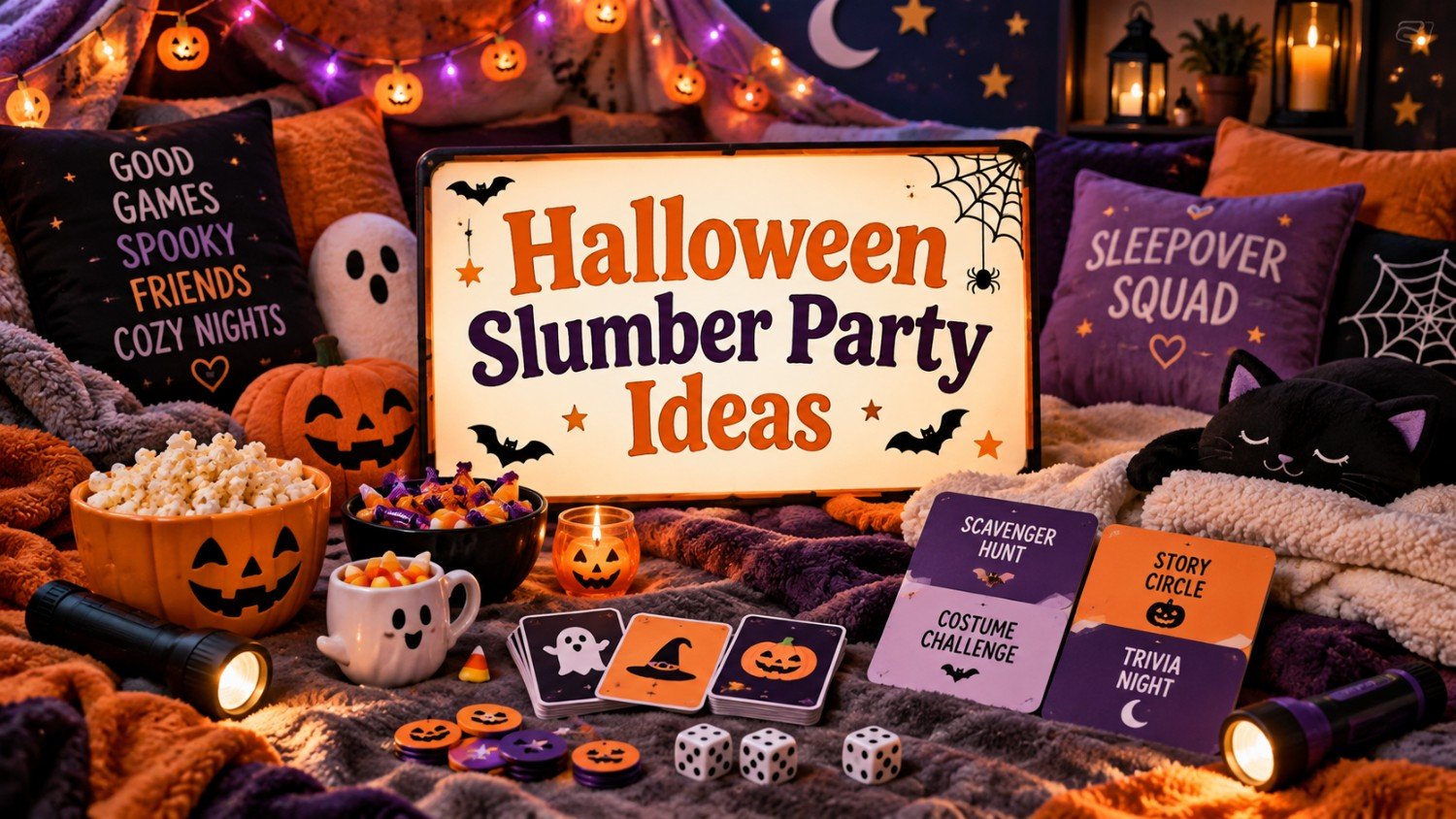
Direct Answer: The best Halloween slumber party ideas combine one active game, one creative activity, an age-appropriate movie, and a calm wind-down before bed. Set the scare level with parents in advance, keep participation optional, label snacks, prepare individual sleeping spaces, and follow a simple evening-to-morning schedule so guests always know what happens next.
Last reviewed: September 2026
A Halloween slumber party gives kids more time to enjoy costumes, games, movies, stories, and friends without squeezing everything into a short gathering. However, an overnight event needs more planning than an ordinary Halloween party.
This guide contains 20 Halloween sleepover ideas for school-age children and tweens. It covers themes, games, quiet activities, sleeping arrangements, parent communication, and an adaptable overnight schedule. Ages and guest counts are planning suggestions rather than universal limits because every child and household is different.
For a wider selection of activities, compare the Halloween party games guide. You can also browse the Party Games category for year-round group games.
Halloween Slumber Party at a Glance
The following ranges are flexible GamingStation planning estimates. Adjust them around the guests, available adults, room size, and household rules.
| Planning detail | Suggested starting point |
|---|---|
| Best suited to | School-age kids and tweens |
| Suggested age | Approximately 7–14 |
| Manageable guest count | About 4–8 overnight guests |
| Location | Familiar indoor sleeping and activity areas |
| Activity mix | One active, one creative, and one quiet game |
| Preparation | Invitations, parent details, supplies, sleeping spaces, and schedule |
| Scare level | Friendly, mildly spooky, or suspenseful |
| Main stopping point | Agreed lights-out or quiet-time routine |
| Morning plan | Breakfast, one quiet activity, packing, and pickup |
| Alternative format | A late-over that ends before bedtime |
Younger children who enjoy parties but are not ready to sleep away from home can attend the evening activities and leave at a prearranged time.
Choose the Right Guest Count and Scare Level
A smaller guest list is usually easier to supervise overnight. Count the available sleeping spaces, bathroom access, adult supervision, transportation needs, and each child’s familiarity with the home before deciding how many invitations to send.
Next, choose one clearly stated scare level:
- Friendly: Smiling ghosts, pumpkins, black cats, silly monsters, and gentle mysteries.
- Mildly spooky: Dim battery lights, harmless suspense, mystery clues, and playful ghost stories.
- Suspenseful: Older-tween mysteries and carefully approved movies without targeted pranks or graphic content.
Do not advertise a friendly party and introduce frightening surprises later. Guests should know whether costumes, darkness, suspense, or spooky stories are involved. Additionally, offer an easy way to skip any activity without losing access to the rest of the party.
What to Confirm Before Sending Invitations
Parents need enough information to decide whether the event suits their child. Include the following details in the invitation or follow-up message:
- Drop-off and pickup times
- Full address and host contact number
- Names of supervising adults
- General sleeping arrangement
- Planned scare level
- Proposed movie choices
- Whether costumes are optional
- Food and drinks being served
- Pets or other household considerations
- What each guest should bring
- Photo and video policy
- A plan for early pickup
Ask privately about allergies, dietary restrictions, relevant support needs, and anything that may affect overnight comfort. Collect only information needed to host the event, keep it away from other guests, and dispose of temporary forms responsibly afterward.
Friendly Halloween Slumber Party Themes
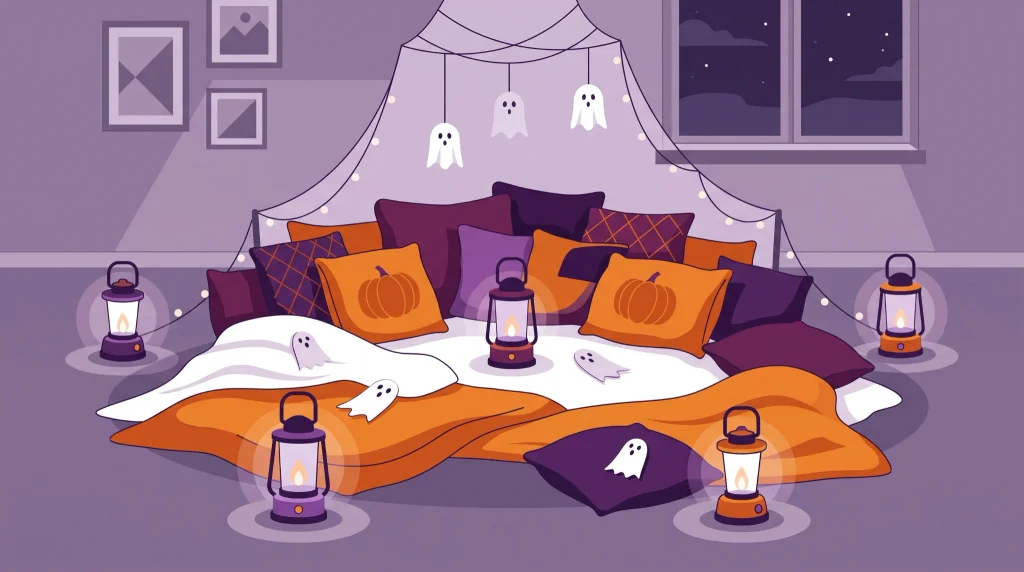
1. Friendly Ghost Campout
Use white, orange, and cream decorations, paper ghosts, cozy blankets, and battery-operated lanterns. Activities can include ghost charades, a quiet story circle, and a paper-ghost scavenger hunt.
This theme suits children who enjoy Halloween but dislike intense scares. Keep ghost faces funny or curious rather than threatening.
2. Witch Academy
Turn each activity into a pretend class. Guests might complete potion-code puzzles, design a broom on paper, solve a spell-word scramble, and earn stamps on an academy card.
Use ordinary drinks and craft materials rather than unidentified “potions.” Moreover, avoid ingredients, face products, or messy mixtures unless every parent has approved them.
3. Pumpkin Patch Pajama Party
Combine orange decorations, plaid blankets, paper leaves, pumpkin drawing, and gentle fall games. Real pumpkin carving is unnecessary; paper pumpkins and washable markers create less mess during an indoor overnight event.
This theme also works well for a party that is seasonal rather than scary.
Spookier Themes for Older Kids and Tweens
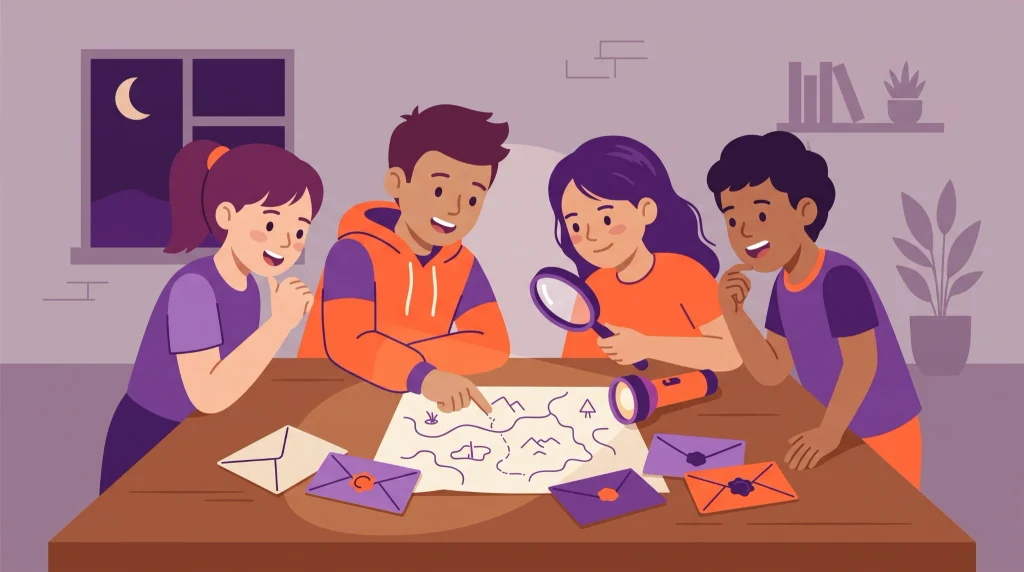
4. Mystery Mansion
Build the evening around a fictional missing object, coded notes, map clues, and sealed envelopes. Guests work together to solve the mystery before movie time.
Keep the story fictional and harmless. Fake emergencies, intruder stories, locked doors, or clues involving private rooms should never become part of the game.
5. Monster Movie Night
Choose one approved film and match the activities to its general theme. A friendly monster movie could inspire a drawing relay, trivia round, costume-design challenge, and movie bingo.
Parents should receive the proposed title before the party. Check both the rating and its descriptors through the MPA Ratings Guide, since children of the same age may react differently to suspense, language, or frightening scenes.
Easy Arrival and Icebreaker Games
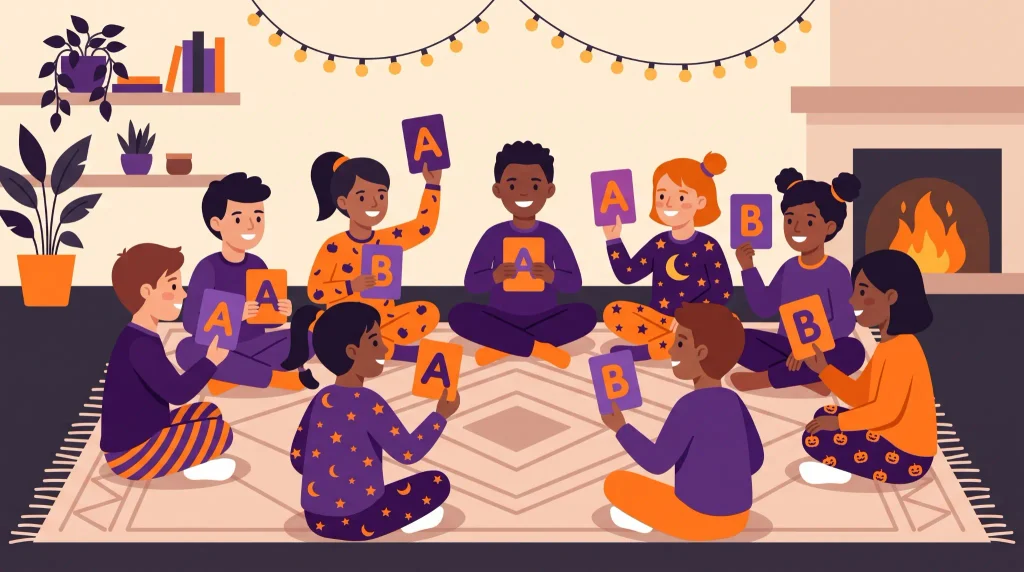
6. Halloween Would You Rather
Best for: Any guest count
Time: About 10–15 minutes
Supplies: Question cards or a host list
Read choices such as “Would you rather explore a pumpkin patch or a friendly haunted library?” Guests answer by raising an A or B card. Afterward, invite one or two short explanations.
This game helps guests settle in while late arrivals join. Select additional age-appropriate prompts from Halloween Would You Rather questions.
7. Monster Charades
Best for: Four or more players
Time: About 15–20 minutes
Supplies: Prompt cards, bowl, and timer
A player silently acts out a harmless Halloween scene while the group guesses. Rotate performers after every prompt, regardless of whether anyone solves it.
Partner acting, drawing, timing, and scorekeeping should be available alternatives. The Halloween charades prompt bank contains easy characters, actions, and scenes.
8. Pajama Name Game
Each guest combines a Halloween word with their initials or favorite color to create a temporary party nickname. Examples include Purple Pumpkin, Midnight Mummy, or Silver Spider.
Write the names on table cards rather than clothing. Finish after everyone has introduced their name and explained the choice.
Mystery and Team Challenges
9. Indoor Halloween Scavenger Hunt
Best for: Pairs or small teams
Time: About 15–25 minutes
Supplies: Clue cards and answer sheets
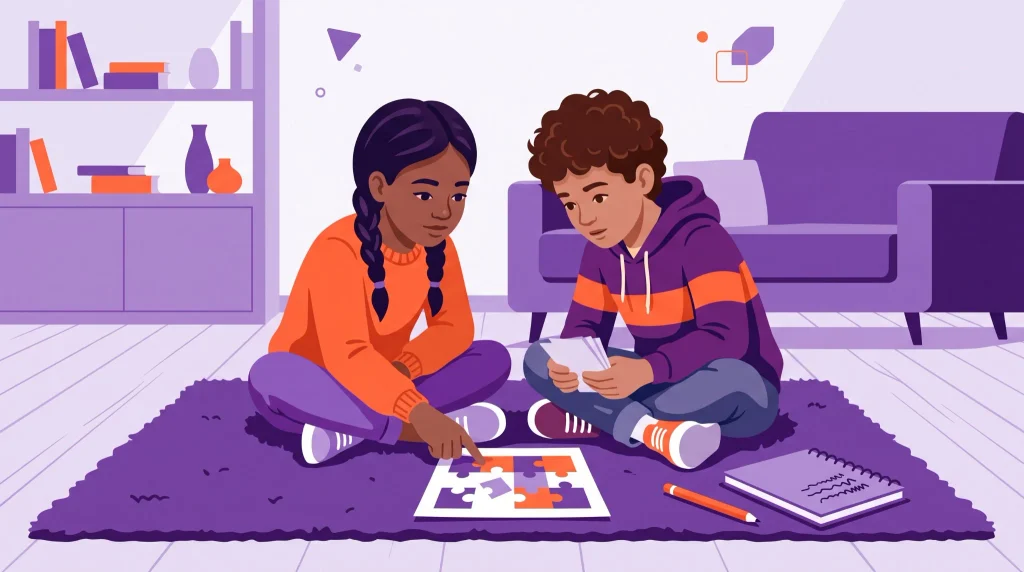
Hide numbered paper symbols in approved shared spaces. Players record each symbol instead of collecting it. Set clear boundaries around bedrooms, drawers, medicine storage, stairs, exits, and personal belongings.
For ready-to-use clue formats, adapt the indoor options from the Halloween scavenger hunt guide.
10. Mystery Envelope Challenge
Prepare four envelopes containing a word scramble, picture clue, simple code, and final location puzzle. Teams solve one envelope before receiving the next.
Every clue should be solvable using information supplied in the game. If players become stuck, allow one hint rather than leaving the activity unfinished.
11. Flashlight Shadow Guess
Place an ordinary object behind a light-colored sheet and shine a stationary flashlight toward it. Guests view the shadow and write down their guesses.
Keep the room bright enough for safe movement. Players should remain seated while the host changes objects, and flashlights should never point toward anyone’s eyes.
Creative Halloween Activities
12. Costume Concept Challenge
Teams draw a character card and a setting card, such as “vampire” and “space station.” They have ten minutes to design a costume on paper and prepare a short pitch.
No guest needs to model or wear the design. If points are used, judge how clearly the idea combines both prompts rather than commenting on appearance or clothing budgets.
13. Monster Drawing Relay
The first player draws a head and folds the paper to hide most of it. Later players add a body, arms, legs, and accessories without viewing the complete creature.
Unfold the drawings together after everyone contributes. Since the reveal creates the payoff, scoring is optional.
14. Paper Pumpkin Studio
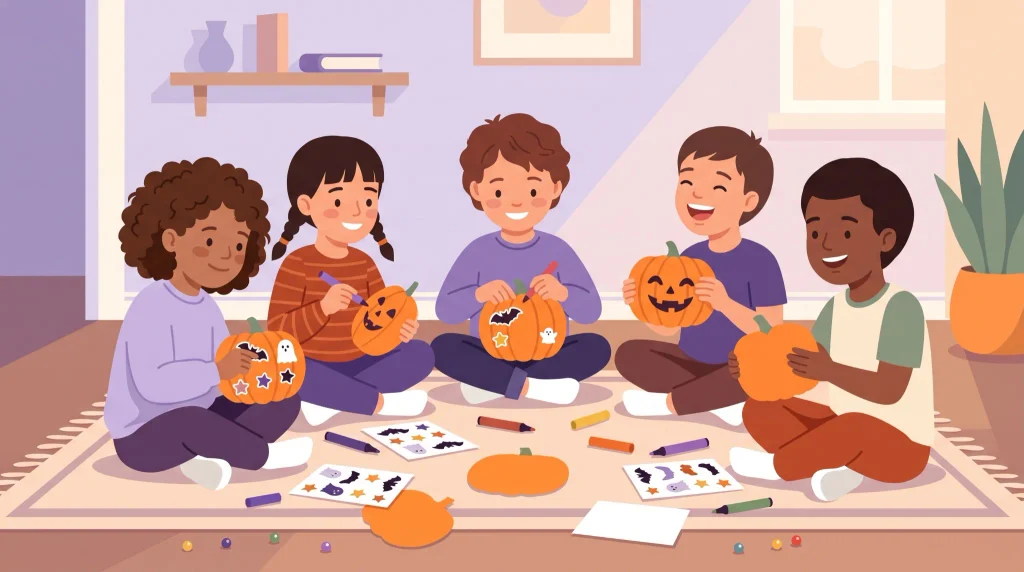
Provide paper pumpkin outlines, markers, stickers, and reusable stencils. Guests design funny, mysterious, or patterned pumpkins without knives or carving tools.
Create a display instead of ranking the artwork. Alternatively, let each artist write one positive observation about another design.
Quiet Games Before Bed
15. Halloween Bingo
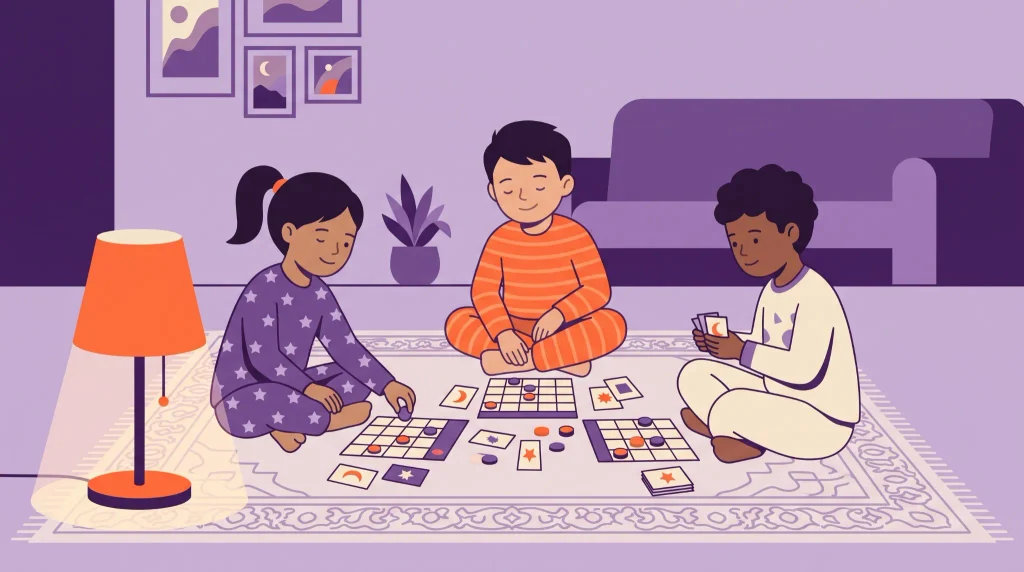
Prepare cards containing Halloween pictures or words. The host draws one calling card at a time and shows it as well as reading it aloud.
Paper squares make easier markers than candy. Once someone completes the first pattern, continue toward another pattern so early winners stay involved.
16. Two-Sentence Spooky Story
One guest begins a story with two sentences, then the next person adds two more. Continue for two complete rounds or until the group reaches a natural ending.
Set the tone as funny, mysterious, or mildly spooky before starting. Guests may contribute an illustration or sound effect instead of speaking.
17. Quiet Story Card Circle
Place location, character, and object cards in three separate piles. A player draws one of each and tells a short story connecting them.
Allow a pass or partner option. Most importantly, avoid stories designed to target, embarrass, or deliberately frighten another guest after bedtime.
Movie-Night and Morning Ideas
18. Movie Ballot and Movie Bingo
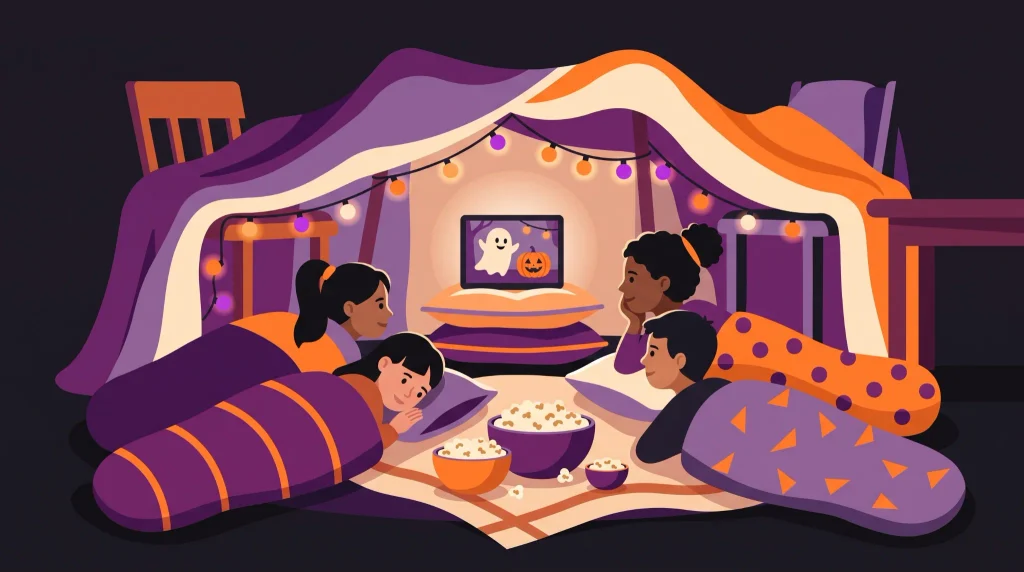
Offer two or three parent-approved choices and let guests vote anonymously. The host should settle ties rather than pressuring anyone to defend a preference.
During the movie, guests can mark general events such as “a mysterious noise,” “someone opens a door,” or “a character finds a clue.” Avoid cards that spoil the ending.
19. Optional Pajama Photo Booth
Create a simple backdrop with paper bats, pumpkins, or stars. Guests may use handheld signs or pose beside friends who have agreed to join.
Participation should remain optional. Do not photograph sleeping guests, and never share images publicly without the permission required by each family.
20. Morning Monster Memory
Display ten Halloween objects or picture cards for 30 seconds. Cover them, then ask guests to list or draw what they remember.
This calm morning activity can run while breakfast is prepared or belongings are packed. End after one or two rounds rather than starting another long competition shortly before pickup.
Sample Evening-to-Morning Schedule
This schedule is an editorial template, not a required timetable. Adjust meals, quiet time, and lights-out with the invited families.
| Time | Suggested activity |
|---|---|
| 5:30 p.m. | Arrival, bags, sleeping-space labels, and Pajama Name Game |
| 6:00 p.m. | Meal and review of the evening plan |
| 6:45 p.m. | Charades, trivia, or indoor scavenger hunt |
| 7:30 p.m. | Costume Concept Challenge or Monster Drawing Relay |
| 8:15 p.m. | Break and movie setup |
| 8:30 p.m. | Parent-approved movie and optional bingo |
| 10:00 p.m. | Bathroom, pajamas, water, and device check-in |
| 10:20 p.m. | Quiet story game or Halloween Would You Rather |
| Agreed time | Lights-out or quiet individual activity |
| Morning | Breakfast, Monster Memory, packing, and pickup |
Avoid filling every minute. Unstructured conversation and settling-in time are normal parts of a sleepover.
Halloween Late-Over Alternative
A late-over includes the party experience without requiring guests to sleep away from home. It works well for younger children, first-time guests, families who prefer no overnight events, or homes without enough suitable sleeping space.
A simple format could run from approximately 5:30 to 10:00 p.m.:
- Arrival and icebreaker
- Meal
- One active game
- One creative activity
- Movie or bingo
- Final quiet game
- Scheduled pickup
State clearly that it is a late-over rather than a sleepover. As a result, parents and guests arrive with the correct expectations.
Prepare the Sleeping Area
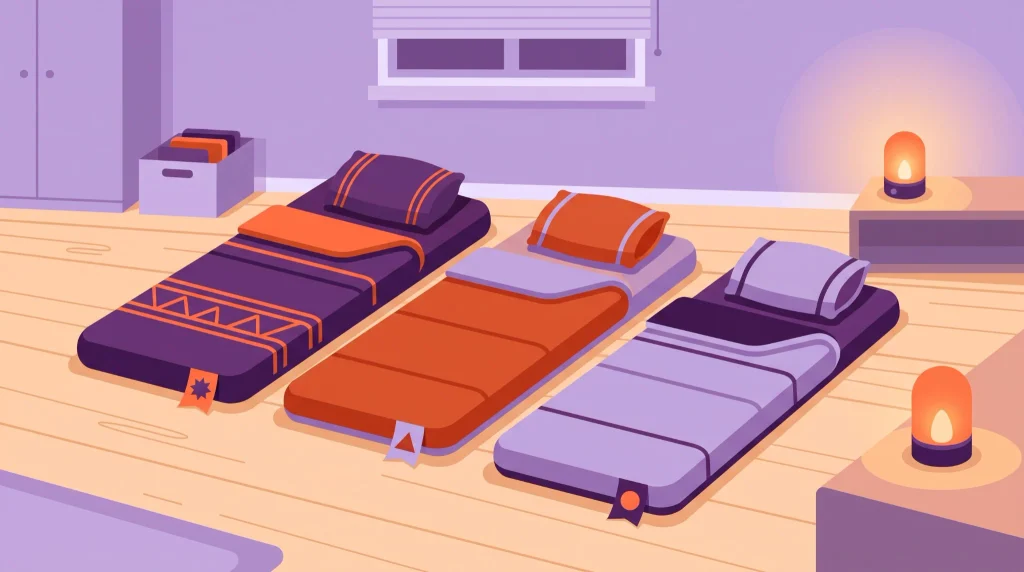
Assign every guest a clear sleeping space before the party starts. Labels on sleeping bags or floor mats prevent arguments later and keep personal belongings organized.
The room should include:
- A clear path to the bathroom and exit
- A gentle night-light
- Accessible drinking water
- A defined place for bags and shoes
- Comfortable room temperature
- Space between faces and walkways
- An adult who remains reachable
- A location for quiet wakeful guests
Keep heaters, cords, open flames, fragile decorations, and active games away from sleeping areas. In addition, do not turn closets, unfinished rooms, attics, or locked spaces into surprise sleeping locations.
Food, Allergies, and Guest Comfort
Ask parents about food allergies and dietary restrictions before purchasing supplies. Keep ingredient packaging available, label serving dishes, and avoid presenting an unlabeled homemade item as automatically suitable for every guest.
The FDA identifies nine major food allergens and explains how packaged foods declare them on labels. Review the agency’s current food-allergy information while planning snacks.
Food should not be used as a punishment, dare, mystery-box object, or speed challenge. Moreover, offer water and at least one parent-approved option each guest can eat.
Comfort planning also includes noise, temperature, lighting, pets, bathroom access, and sleeping preferences. A child should be able to request help or early pickup without being teased.
Safety, Privacy, and Overnight Boundaries
An overnight party needs clear boundaries before the first activity begins.
- Keep exits, stairs, hallways, and bathroom routes unobstructed.
- Use battery-operated lights instead of candles near children, costumes, bedding, and paper decorations. The U.S. Consumer Product Safety Commission warns about fire risks from candles and loose costume materials.
- Prohibit running indoors, surprise touching, locked-door games, and outdoor wandering after dark.
- Keep medicines, tools, cleaning products, matches, and private household areas inaccessible.
- Follow each parent’s written instructions for relevant medical or support needs.
- Let guests pass on costumes, movies, photos, storytelling, or performance games.
- Do not record pranks, sleeping guests, emotional reactions, or private conversations.
- Keep phones and online posting within the rules agreed with parents.
- Arrange an early-pickup plan before the event.
Avoid frightening rituals, fake emergencies, or games claiming that something supernatural will happen. Playful suspense is easier to stop; fear created after lights-out may affect the entire night.
Common Halloween Sleepover Mistakes
Planning too many activities. Guests need time to eat, talk, change clothes, and settle down. Therefore, three main activities plus one backup are normally enough.
Starting the movie too late. A long movie can push every quiet routine backward. Check its running time before finalizing the schedule.
Increasing the scare level without permission. A guest who likes Halloween decorations may still dislike horror movies, darkness, jump scares, or ghost stories.
Leaving sleeping arrangements undecided. Assign spaces early instead of asking tired guests to negotiate at bedtime.
Using surprise foods. Ingredient labels and parent information should guide the menu, not assumptions about what children usually eat.
Ignoring early-pickup requests. Homesickness is not a failed party. Keep the parent contact sheet available and handle pickup quietly.
Posting photos automatically. Attendance does not equal permission to publish someone’s image.
Free Printable Halloween Slumber Party Host Pack
Want to plan the evening without rebuilding every form? The printable host pack should include a party checklist, parent information sheet, scare-level preferences, guest comfort notes, evening-to-morning schedule, movie ballot, game planner, sleeping-space chart, and morning cleanup list.
Free PDF • 10 printable planning pages • Print at 100% scale
Sources and Editorial Method
This guide treats a Halloween sleepover as a flexible home-party format rather than an activity with one universal publisher or official rulebook. Consequently, age ranges, guest counts, activity times, schedules, and stopping points are GamingStation editorial planning estimates.
No first-hand party testing, event attendance, or measured outcome is claimed. Movie, allergy, and Halloween fire-safety guidance was checked against these sources:
- MPA Film Ratings Guide
- U.S. Food and Drug Administration: Food Allergies
- U.S. Consumer Product Safety Commission: Halloween Safety
Final Verdict
The most manageable Halloween slumber party combines one clear theme, three main activities, an approved movie, and a calm bedtime routine. Friendly Ghost Campout and Pumpkin Patch Pajama Party suit gentler celebrations, while Mystery Mansion gives older children more problem-solving without requiring intense horror.
Confirm the scare level, food, film, sleeping arrangement, photos, and pickup plan with parents before the event. If overnight readiness is uncertain, use the late-over schedule and end the celebration at a planned evening pickup time.
Frequently Asked Questions
Choose a balanced mix of active games, creative activities, snacks, and quiet entertainment. Halloween charades, trivia, an indoor scavenger hunt, movie voting, and simple crafts work well without making the night overly scary.
Invite only as many children as the available space and responsible adults can comfortably manage. Smaller groups of four to eight guests usually make sleeping arrangements, food planning, supervision, and activity transitions easier.
Agree on a scare level with families beforehand. Avoid surprise touching, intense decorations, and unapproved movies. Additionally, provide a well-lit quiet area where guests can take a break without having to explain themselves.
Offer a late-over option that includes games, food, and the movie before a scheduled pickup. Parents should also provide an early-pickup contact so any uncomfortable or homesick guest can leave without embarrassment.
Ask guests to bring pajamas, bedding, toiletries, clean clothes, and any approved personal essentials. Costumes can be optional. Meanwhile, the host should provide water, extra blankets, night-lights, and clearly assigned sleeping spaces.
The printable pack includes a preparation checklist, parent information sheet, safety plan, overnight schedule, game planner, movie ballot, food planner, sleeping-space worksheet, belongings check, pickup checklist, and morning cleanup page.
