
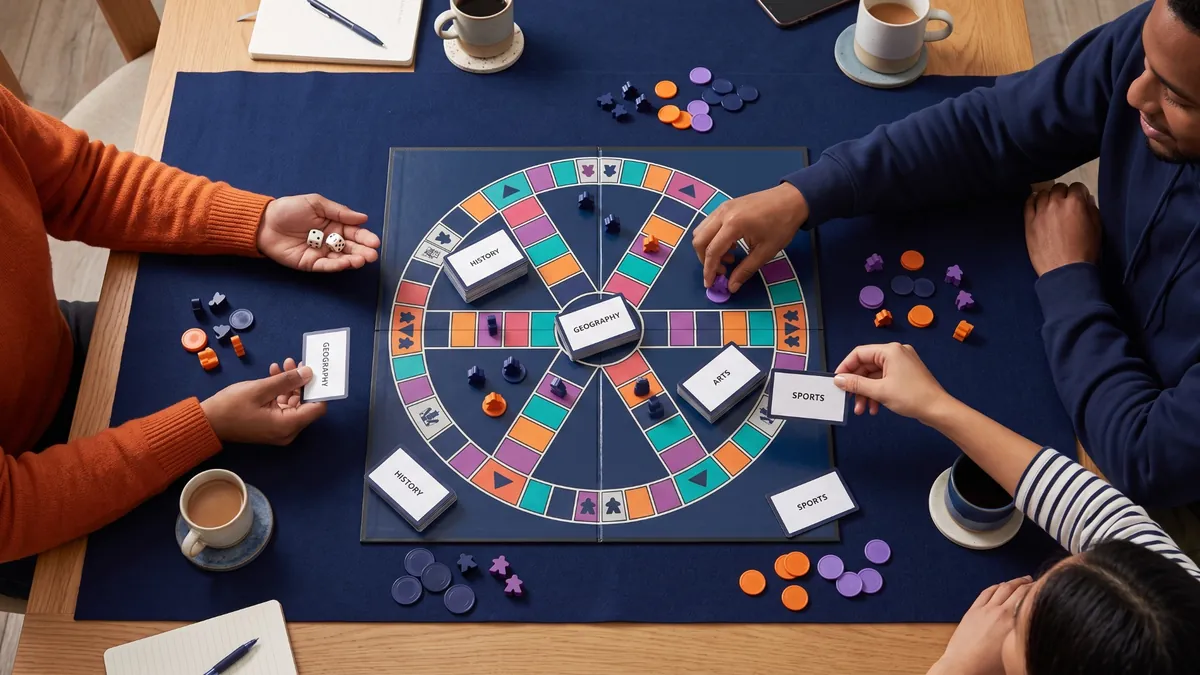
A trivia game can bring everyone around the table, but the right box depends on who is playing. If your group enjoys testing facts, choose Trivial Pursuit Classic. If children and adults need questions at different levels, Outsmarted adjusts the difficulty. For people who prefer clues and quick guesses, Smart Ass and Linkee make the questions feel more like a group activity.
This guide compares six tabletop trivia games by how they play, the people they suit and the practical details worth checking before game night. It includes one card game because it serves the same purpose at the table, although it does not have a board.
Find your game in one minute
| Game | Best fit | What players do | Check before playing |
|---|---|---|---|
| Trivial Pursuit Classic | Traditional quiz fans | Answer questions and collect category wedges | Official age guidance is 16+ |
| Outsmarted | Families with mixed ages | Use a board and app for age-adjusted questions | A compatible device and the companion app are needed |
| Smart Ass | Lively groups | Guess an answer as clues are read aloud | The shout-out style can be noisy |
| Linkee | People who like word connections | Identify the common link between four answers | Questions may rely on familiar cultural references |
| Drop Trivia | Short, hands-on sessions | Arrange given answers in the right order | The electronic tower needs three AAA batteries |
| I Should Have Known That! | Small, casual groups | Answer everyday questions on cards | It is a card game, not a board game |
Player age and component details below come from the publishers’ linked pages. Editions and regional releases can vary, so check the box you plan to use.
The six games and what makes each one work
Trivial Pursuit Classic: the familiar board game
Choose Trivial Pursuit Classic when the main attraction is answering general-knowledge questions. Players move around a board and work through six categories. Hasbro lists 2,400 questions, a 2–6 player range and an age recommendation of 16+ for this edition.
The category wheel gives each correct answer a visible goal. As a result, a group that likes longer contests has something to chase beyond the next question. However, the experience depends heavily on how comfortable everyone is with the question topics. If your table includes younger players or people who dislike direct recall, start with another pick.
Best for: A group that actively wants a classic knowledge test.
Outsmarted: different question levels at one table
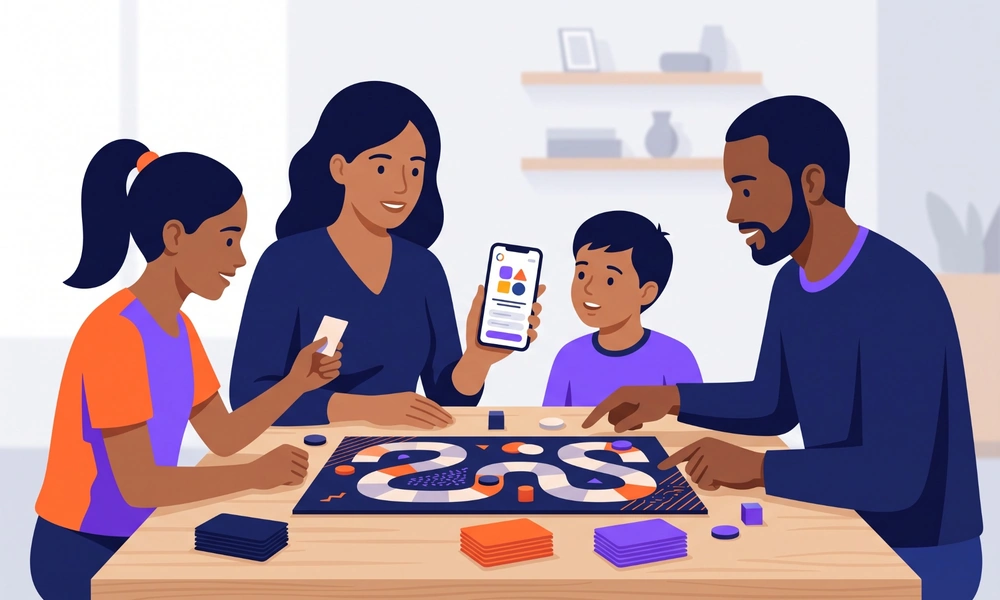
Outsmarted combines a physical board with a companion app. Its publisher says players can select junior, teen or adult question levels; the app then adjusts questions for each player. It supports 2–6 players or teams, and the publisher says teams can bring the total to 24 people.
That makes it a practical family choice when the youngest player would struggle with the same questions given to an adult. The app can also bring in remote players. Before choosing it, confirm that the host has a compatible device, internet access for setup and the game’s physical license key. The publisher notes that some extra question categories may cost more, so the included categories are the sensible place to start.
Best for: Mixed-age groups that are happy to use a screen alongside the board.
Smart Ass: a quick answer can beat a long think
In Smart Ass, players hear a series of clues and can call out an answer before every clue has been read. University Games lists eight clues per question, 2–6 players and ages 12+. The board gives successful guesses a visible result as players move toward the finish.
Because everyone listens at once, there is less waiting for an individual turn. A clue may trigger a guess from someone who would hesitate over a standard quiz question. Still, this pick suits a group that enjoys speaking up; a quieter gathering might prefer a written or team-based format.
Best for: Friends or families who enjoy a lively table.
Linkee: solve the connection instead of each fact

Linkee gives players four questions, then asks what the answers have in common. A player may miss one fact and still work out the shared idea from the others. The publisher describes the aim as finding that link, rather than simply collecting points for isolated answers.
This makes Linkee useful when the table likes discussion and word associations. Some links will click instantly; others take a little back-and-forth. Since editions may differ by region, look at the particular box’s player and age guidance before buying or hosting.
Best for: People who would rather spot a pattern than recite facts.
Drop Trivia: put the answers in order
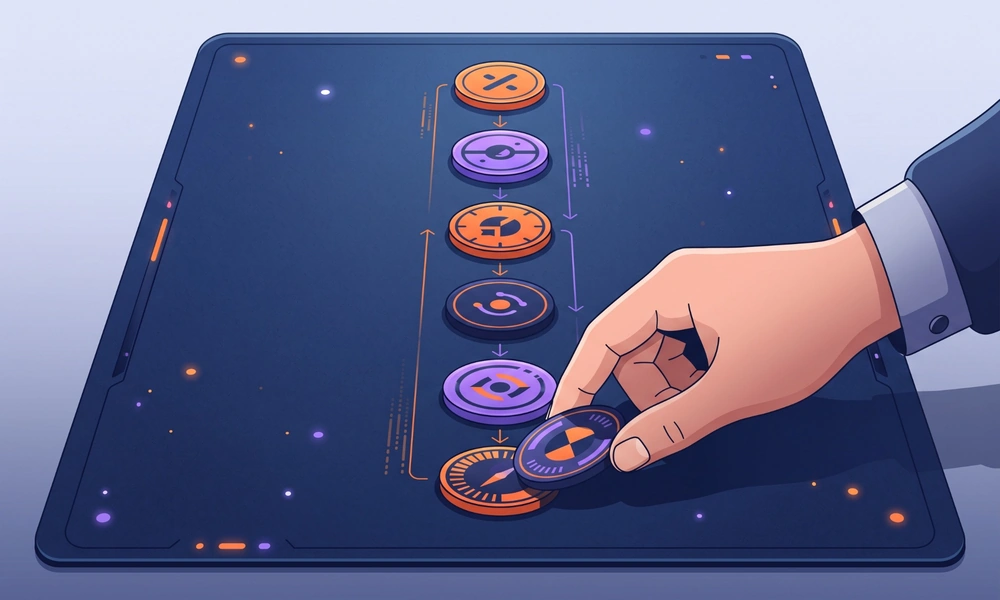
Drop Trivia starts with the possible answers already in front of you. Players place six pucks into an electronic tower to put them in the correct order. Hasbro lists 2 or more players, ages 13+ and three AAA batteries for the tower.
Ranking gives everyone a way into the question, even if nobody knows an exact date or number. For example, you might know which item came first while remaining unsure about the middle of the list. That partial knowledge makes a round easier to discuss. Check the batteries before guests arrive, because the tower is part of the game.
Best for: A short session with people who enjoy sorting and comparing clues.
I Should Have Known That!: everyday knowledge on cards
The I Should Have Known That! box contains more than 400 everyday trivia questions, according to Hygge Games. Its scoring turns a wrong answer into a deduction, which gives familiar questions a playful twist. The publisher lists ages 14+ and two or more players.
There is no board to set up. You can bring out the cards when a group wants a quick round without making a full evening of it. This tabletop trivia card game also works as an alternative when the board games above do not suit the time available.
Best for: A small group that wants casual questions and little setup.
How to choose for the people at your table

Start with the youngest player’s age and the publisher’s guidance for the exact edition. Next, decide whether the group wants to answer from memory or reason from clues. Trivial Pursuit centers on recall, while Linkee asks for a connection and Drop Trivia gives you answers to organize.
Think about the room, too. Smart Ass is fun when people like calling out answers, but it may interrupt conversation at a quieter dinner. Outsmarted gives mixed-age players different question levels, although the app adds a setup step. For an evening with two people, compare the official player range with the pair-focused options in our two-player board games guide.
Finally, plan for the actual group size. A 2-6 player label does not mean an eight-person group should squeeze in individual turns. Teams can keep more people involved, especially with a format that lets each side discuss the same question. Our board game night checklist covers seating, timing, a backup game and the small setup details that are easy to miss.
Make a trivia night work without changing the game rules
Read the publisher’s rules before your guests arrive, then explain the goal and one sample turn. If the box has cards or an app, have them ready on the table. Keep the official scoring for the main game so that everyone knows how to win.
If you want an informal warm-up first, ask each team to invent one original question with an answer they can verify. Teams can swap questions and play a single practice round. Afterwards, put those cards aside and start the boxed game under its own rules. For a separate party quiz, our Halloween trivia questions offer a themed alternative with a different format.
The printable below helps a host record teams, rounds and final totals for a custom quiz or informal warm-up. For a boxed game, use its official score system; the sheet is only a record when it fits that game’s rules.
Download the free trivia night score sheet
Write down up to four team names, track five rounds and note any answer that needs checking later. The one-page sheet leaves room for a host’s final score and next-game idea. It does not reproduce questions from any commercial game.
Download the free trivia night score sheet
Track up to four teams across five rounds, note an answer to check later, and keep your next-game idea in one place.
Download the score sheet (PDF)Frequently asked questions
Outsmarted is a useful option because its app adjusts question difficulty for junior, teen and adult players. Check the age suitability of any additional category before adding it to a mixed-age game.
Trivial Pursuit Classic, Smart Ass and Linkee use physical components without a companion app. If you only need cards, I Should Have Known That! is another screen-free choice.
Try Linkee for shared connections or Drop Trivia for ranking answers that everyone can see. Both give players something to reason through when the exact fact does not come to mind.
No. I Should Have Known That! is included here as a clearly labeled card-game alternative because it can fill the same role at a game night. Choose one of the first five picks if a physical board or play surface is essential.
