


Latest Spin-off Games:
Looking at the next part of this topic, the real value of games in 2026 is not only scale. In a huge franchise with over 1,000 creatures, a select few become popular, iconic, or even weird enough to lead a spin-off game. That is why these spin-offs still matter, even when main series releases take most of the spotlight.
The smartest titles do not always depend on a full roster of players. Some work better when one specific Pokémon carries the entire experience. I have seen this clearly while playing over the past few days, and I can safely say that this design choice has a strong, unique appeal.
That appeal comes from variety. One game is about solving crimes. Another is about building an island paradise. Another turns taking a nap into the main idea. These formats let beloved mascots and unlikely heroes step out of the tall grass and into the spotlight.
For many fans, that is where the best memories live. My plan for the foreseeable future is simple: keep committing more time to these side adventures, because Pokémon Mystery Dungeon: Explorers of Sky is still my all-time favorite spin-off.
Right behind it, my top 3 also includes Pokémon XD: Gale of Darkness and Pokémon Ranger, with Honorable mentions going to Pokémon Stadium. What also keeps this area fresh is how some newer and older titles avoid relying on a second full roster.
Instead, a second specific Pokémon focus can shape a second entire experience with a second unique appeal. The same is true when a game returns to an island paradise, solving crimes, or taking a nap, because even familiar ideas still fit beloved mascots and unlikely heroes in fresh ways.
Snorlax – Pokemon Sleep
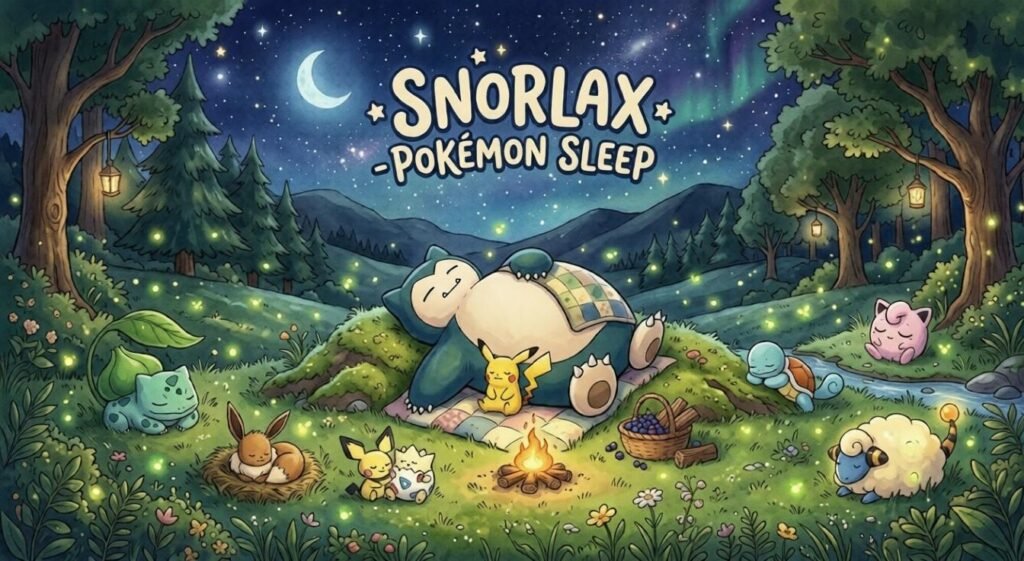
After the wider intro, the next angle is easy to see: Pokemon Sleep proves a spin-off can win by doing less, not more. Released in 2023, this mobile app puts Snorlax front and center as the mascot and core gameplay driver. Its primary mechanic is sleeping, which sounds unusual, but it fits a famously drowsy Pokémon with a starring role that works naturally.
For players, the loop starts with real-world sleep tracked on a phone. Each morning, they wake and see various Pokemon gathered around Snorlax from the night before. Through feeding berries and cooked meals, the game builds Drowsy Power, which attracts rarer Pokemon and new sleep styles to catalogue.
From a design view, it is brilliantly on-brand because Snorlax’s entire identity is tied to eating and napping. Its strength grows as the player maintains healthy sleep habits, creating an oddly wholesome feedback loop. In simple terms, take better care of yourself, and Snorlax thrives too, which is why this wellness app stands apart from a traditional game.
Magikarp – Magikarp Jump
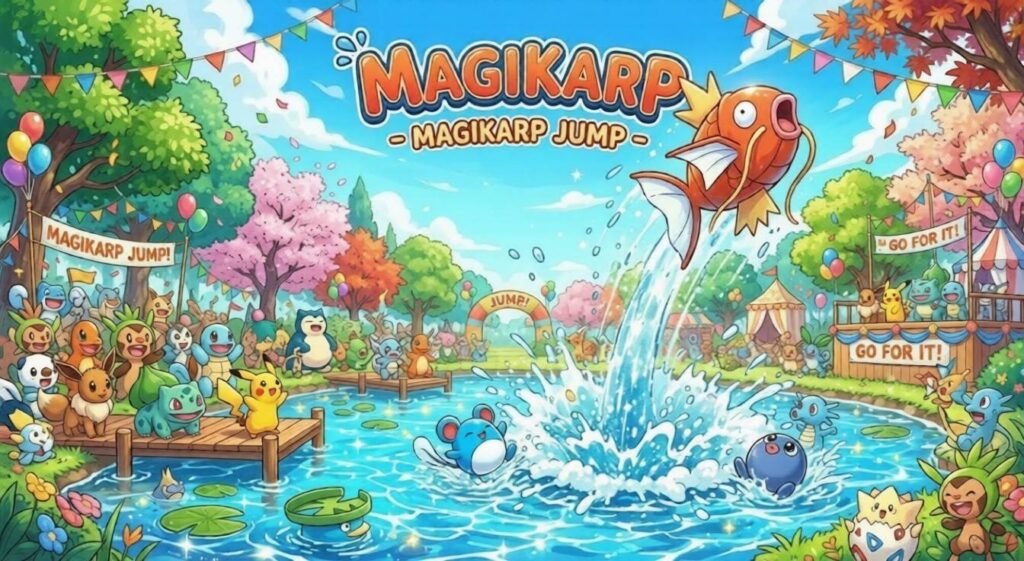
After the sleep-focused first pick, the next game takes a much stranger path. Magikarp Jump turns Magikarp from a lovable punchline into the star of a compelling spin-off. In a long-running franchise, it felt like a matter of time before someone built a whole game around the old joke.
Released on mobile in 2017, the idea sounds silly at first. This is the useless fish that flops around until it evolves into Gyarados, a far more terrifying force. That contrast gives the game its instant charm and makes the setup feel special.
The loop is very easy to understand, which is why many players still remember it. You spend your time raising new generations, training each one to jump high, and trying to win league competitions. As a design choice, that simple focus works because the game commits fully to its own absurdity.
You feed your fish, guide it through little exercises, and enter it into jumping contests against rival Magikarp. The steady climb through different leagues gives the game a clean rhythm. From my own testing of older side titles, that clean structure is often what keeps a light idea fun.
What really lifts the game is its use of random events. Some are helpful, while others are hilariously tragic. The best-known one has Pidgeotto swooping down and carrying your prized Magikarp away forever, which sounds harsh but fits the tone perfectly.
That is why this simple idle game still stands out in 2026. It turns a pathetic Pokémon into an unlikely champion and proves that not every hit needs a legendary on the box. Sometimes a dream is enough, especially when that dream belongs to a bouncing fish.
Mewtwo – Pokken Tournament
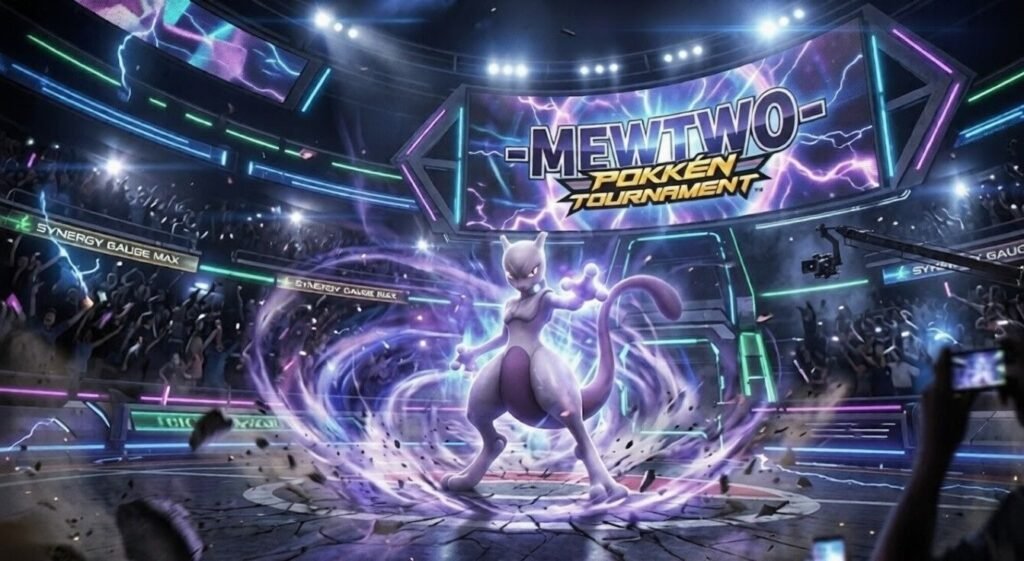
After lighter ideas in the first part, this next pick goes for pressure and conflict. Pokken Tournament shows how Pokémon can move beyond adventure and into a full-blown fighting game without losing its identity. For a long-running franchise, using Mewtwo here feels like a natural fit because it has always been one of its most imposing figures.
What makes this entry stand out is how it brings Pokémon battles into the arena fighting genre with confidence. The roster offers a wide range of fighters, so players get action and variety at the same time. From my own time with it, that mix still feels sharp in the competitive fighting game space.
The real hook, though, is the story mode. It centers on Shadow Mewtwo, a mysterious, corrupted version of the Genetic Pokemon that uses a strange dark synergy stone. As the central antagonist, this big bad becomes the final boss and the narrative linchpin of the single-player campaign.
That setup gives the game more than spectacle. Players uncover the source of its corruption and ultimately try to free it, which gives the role real purpose. This arc plays perfectly with established lore, framing Mewtwo as a powerful, tortured creation still wrestling with larger forces and fading control. That extra presence adds narrative weight that the game might have lacked otherwise.
Espeon And Umbreon – Pokemon Colosseum
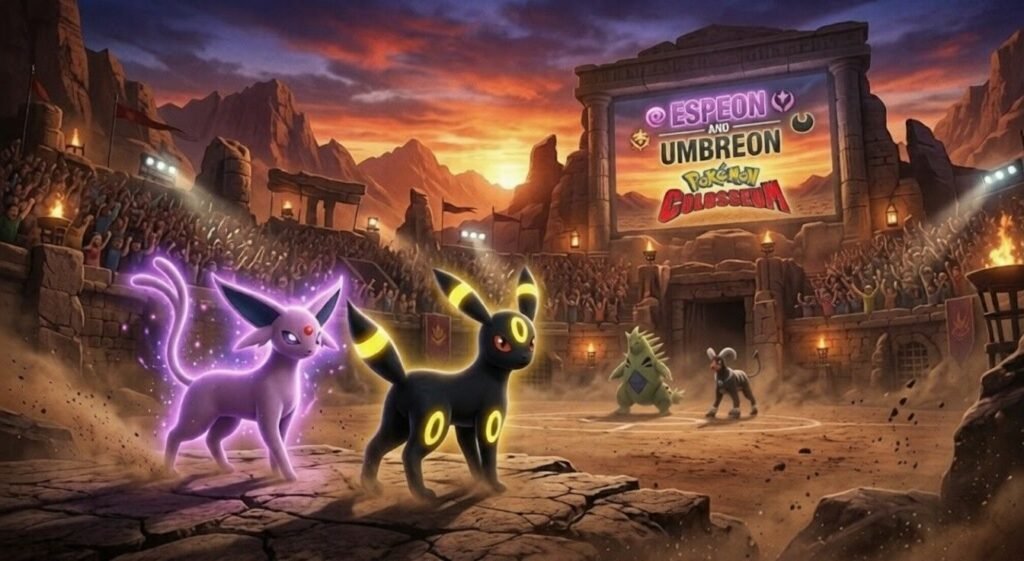
After the earlier picks showed odd ideas and bold formats, this section shifts to a darker kind of classic. Pokemon Colosseum still stands out because it felt like a radical departure from the main series when it launched on GameCube in 2003. For many players, that change was clear right away.
You do not play a bright-eyed kid starting a journey through tall grass. You play as Wes, a former member of a criminal organization in the desert region of Orre. Instead of the usual trio of starters, the game opens with two fully evolved Eeveelutions, Espeon and Umbreon, and that was a bold choice.
That opening choice sets the tone for the entire game. These are not just your first Pokemon. They are partners in a grittier, morally complex story than the series usually tells. From a design view, I still think that decision gives the opening hours more weight than most intros in the genre.
The structure also smartly changes the rules. There are no wild Pokemon encounters, so players must snag Shadow Pokemon from other trainers, then work to purify them. In that setup, Espeon and Umbreon become the constant anchors of your team across a darker narrative.
That is why their significance lasts. They are not just a starter Pokemon substitute or simple tools for battle. They feel like real companions beside Wes, and that gives Pokemon Colosseum the heart of a genuine redemption story.
Eevee – Pokemon: Let’s Go, Eevee!
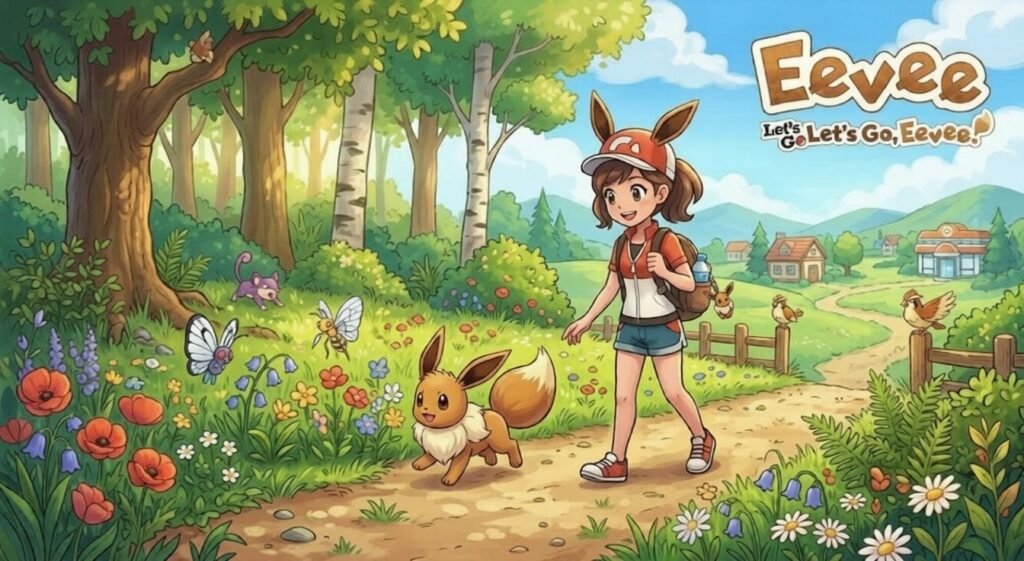
After the darker pull of the first pick, this next game works more softly and smartly. Pokemon: Let’s Go, Eevee! shows how a long-running franchise can lift one of its most popular Pokemon without forcing a big change. From a design view, it gives Eevee true top billing as a version mascot on equal footing with Pikachu.
Released alongside Let’s Go, Pikachu! in 2018, it reimagined the Kanto region with a clear focus. Your partner Eevee sits on the player’s head, can’t evolve, and still feels complete. That choice reframed regular Eevee from a stepping stone into a Pokemon worth celebrating in its own right.
That is why this entry stands out even after all these years. Eevee has the unique ability to evolve into multiple different forms, and those many evolutions usually define its image. Here, the character stays special, stays expressive, stays affectionate, and grows into something truly powerful without requiring a final form.
In play, it also feels carefully built. This partner Eevee learns exclusive moves that no regular Eevee can use, with special moves covering multiple types as a clever nod to its evolutionary potential. As someone who studies character-led design, I see this as a savvy bit of franchise management: steadily growing popularity, an own version, a mainline-adjacent game, and a place that cemented its status as the second mascot.
Lugia – Pokemon XD: Gale Of Darkness
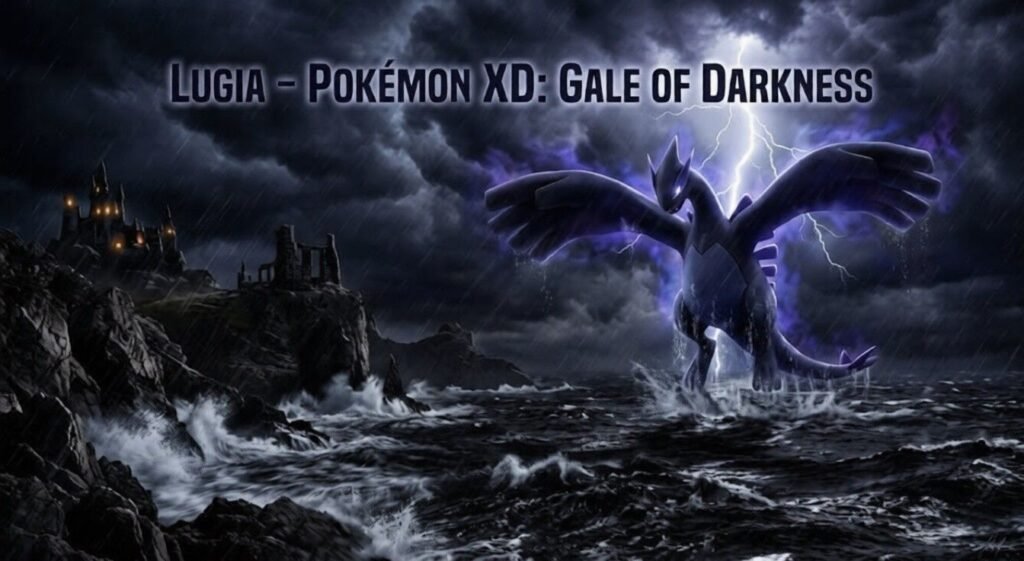
After the softer picks in the first part, this next entry moves into a darker space. Pokemon XD: Gale of Darkness is one of those underappreciated games that the franchise is still remembered for. On GameCube, its setting in the arid Orre region gave the whole game a rough and different feel.
What really made it a striking feature was Shadow Lugia, also known as XD001. This corrupted version of a legendary Pokemon becomes the central antagonist and later the ultimate prize. Even now, it feels visually unforgettable because of its dark, armoured redesign and its genuinely menacing look beside Lugia’s usual serene appearance.
From a design view, the unique Shadow Pokémon mechanics do most of the heavy lifting. The entire plot follows the villainous organization Cipher and its attempts to create the ultimate Shadow Pokemon. That idea matters because its heart is completely closed and can never be purified, which raises the stakes from the start.
For players, the pull comes from always working toward the moment they can finally confront and capture it. After that, the real challenge begins with the painstaking process of opening its heart. I still think that loop gave this Pokemon game one of its most memorable story arcs and a dramatic role for Lugia that went far beyond a simple box legendary.
Ditto – Pokemon Pokopia
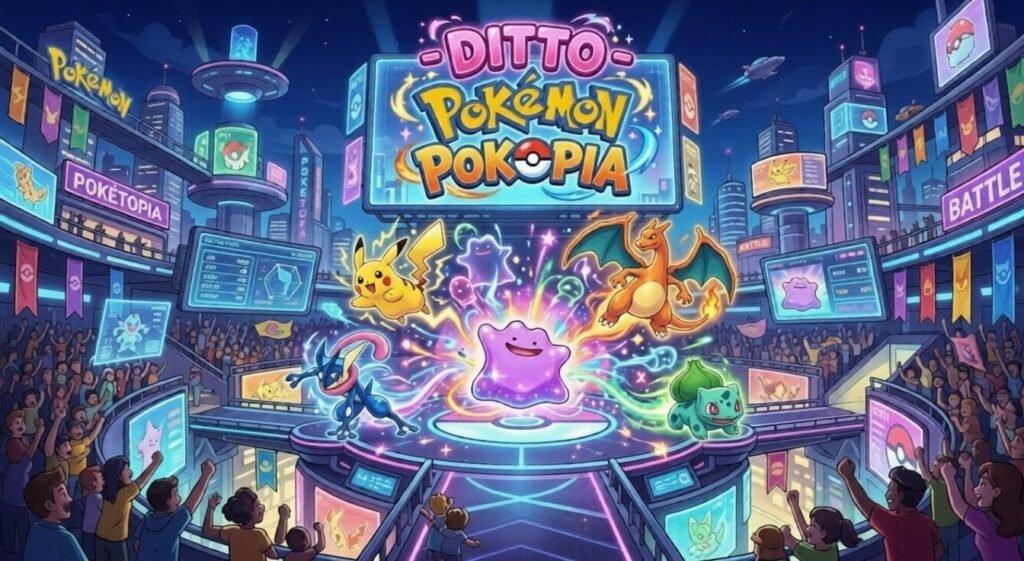
After the stronger and darker picks earlier, this section changes the mood on purpose. Pokemon Pokopia stands out because it treats a strange idea with real care. As a life simulation spin-off in the wider series, it gives Ditto a lead role that feels fresh.
That works because Ditto has always been a blobby, shape-shifting Pokemon many players linked to a breeding tool first. In Pokopia, it is transformed into a human and starts cultivating a desolate landscape into a thriving paradise populated by Pokémon. From a design view, that is an inspired choice for a protagonist.
Its signature ability to transform gives the game a natural narrative hook. A Pokémon imitating a person to build a world for other Pokemon is instantly charming and a bit slightly surreal. I like how that simple setup stays easy to follow but still feels original.
It also helps that the project was co-developed by Game Freak and Omega Force, a team with Dragon Quest Builders fame. At the time of writing, it currently holds the distinction of being the highest-rated Pokemon game on Metacritic. That comes after years in which Ditto was overlooked in favor of flashier creatures.
What makes the game memorable is how it puts Ditto in the spotlight it deserves. This little blob was clearly hiding a masterpiece the whole time, and after spending time with its systems, I can see why that reading feels earned.
Pikachu – Detective Pikachu, Hey You Pikachu, And More
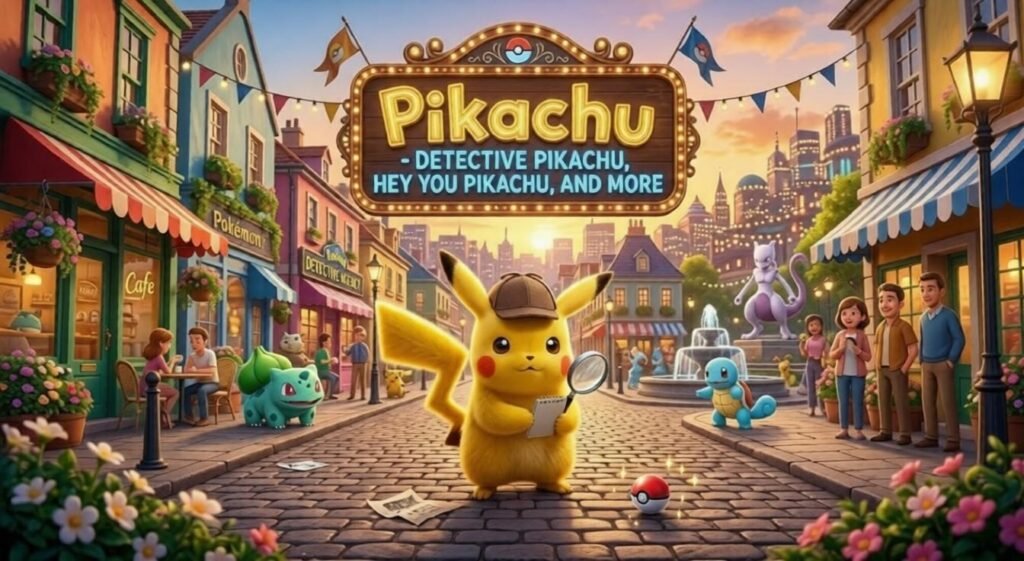
After the earlier picks showed how one idea can shape a whole side game, this section looks at the one face that has done it more than anyone else. Pikachu has starred in so many spin-offs that it is not even close. In the wider Pokemon franchise, the electric mascot has a spin-off resume that still feels staggering in 2026.
The older examples explain why that history matters. Hey You, Pikachu! on the N64 was a virtual pet game where players could talk through a microphone peripheral. At the time, that felt like a wild experiment, but it also showed how far this character could stretch.
That idea led to Pokemon Channel on GameCube, a spiritual successor built around casting Pikachu as your companion while you watched in-game TV shows. Then Pokemon Dash on the DS turned the little yellow mouse into a racer in a racing game. From a design view, I still find that sheer variety remarkable.
The modern shift came with the Detective Pikachu series, which reimagined Pikachu as a gruff, coffee-swilling private investigator who solves mysteries beside a human partner. It is a premise that sounds strange, yet it lands as perfect once you see it in action. That version even spawned a blockbuster live-action film with Ryan Reynolds.
What ties all of this together is how each game finds a completely different angle on Pikachu’s appeal. It has worked as a detective, a racer, and the flagship partner in Pokemon: Let’s Go, Pikachu!. That range keeps proving Pikachu is versatile enough to carry almost anything on this list.
While many other monsters get one shot at the spotlight, Pikachu keeps being given the keys to the series over and over again. In my experience, very few mascots hold up across so many formats, but Pikachu has delivered every time. That long spin-off career is the real reason this subsection still matters.
Gaming Overview Table
| Game | Type | Overview |
| Pokemon Sleep | Wellness app | Sleep tracking with Snorlax as the main focus. |
| Magikarp Jump | Idle game | Train Magikarp to jump and win leagues. |
| Pokken Tournament | Fighting game | Arena battles with Shadow Mewtwo as a key threat. |
| Pokemon Colosseum | RPG | A darker story where both are your main partners. |
| Pokemon: Let’s Go, Eevee! | Adventure | A Kanto game built around partner Eevee. |
| Pokemon XD: Gale Of Darkness | RPG | Shadow Lugia drives a darker Orre storyline. |
| Pokemon Pokopia | Life sim | Ditto builds a paradise in a strange, charming world. |
| Detective Pikachu, Hey You Pikachu, And More | Mixed | Pikachu leads many spin-offs in very different styles. |
FAQ’s
Q. What is this blog about?
Ans: It covers the Best Pokémon Spin-Off Games in 2026 and highlights what makes each game stand out.
Q. Why do Pokémon spin-off games still matter in 2026?
Ans: They bring fresh ideas, unique gameplay, and give different Pokémon a chance to lead.
Q. Which game in the blog focuses on sleep?
Ans: Pokemon Sleep is the sleep-focused game, with Snorlax as the main feature.
Q. Which spin-off turns a weak Pokémon into the star?
Ans: Magikarp Jump does that by making Magikarp the center of the whole game.
Q. Which game is best for fighting game fans?
Ans: Pokken Tournament is the best pick for players who enjoy action and arena battles.
Q. Which spin-off has a darker story?
Ans: Pokemon Colosseum and Pokemon XD: Gale of Darkness both have darker and more serious stories.
Q. Why is Eevee important in Pokemon: Let’s Go, Eevee!?
Ans: The game gives Eevee mascot-level importance and makes it strong without evolution.
Q. What makes Pokemon Pokopia different?
Ans: It uses Ditto in a life simulation setting and mixes charm with a strange, creative idea.
Q. Which Pokémon has the biggest spin-off history in the blog?
Ans: Pikachu has the biggest spin-off history with games in many different styles.
Q. Which spin-off game is named as an all-time favorite in the blog?
Ans: Pokémon Mystery Dungeon: Explorers of Sky is named as the all-time favorite spin-off.
