
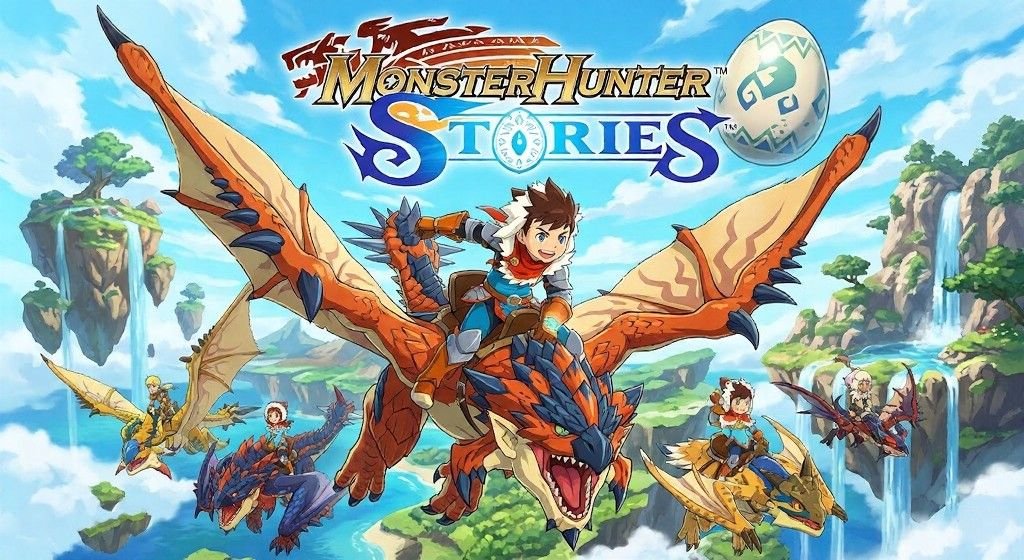
Coming back to Monster Hunter Stories in 2026 feels fresh in a quiet way. This role-playing video game still shows the craft of Capcom and Marvelous. I first tried it on Nintendo 3DS, and that old spinoff charm still holds. It stands apart from the main series with a softer gameplay focus.
You step in as a Rider instead of a Hunter, which shifts the tone. The turn-based battle system is simple but thoughtful. I still enjoy hatching eggs and raising monsters. The feeling of battling with them using kinship techniques stays memorable.
There is quite a depth in customization abilities and appearance. I noticed small design choices that aged well since the Japan release in October 2016. It later reached North America, Europe, and Australia in September 2017. Those release waves helped it grow slowly.
The mobile version I tested after December still runs smoothly in 2018 builds. Its reach became worldwide, and features like Amiibo figures added fun extras. I also checked the anime tie-in, Ride On, which expands the feel of the world.
Looking ahead to sequel ideas like Wings Ruin and even 2021, I see why it lasts. It is not just nostalgia; it is careful design. Playing it now, I value its calm pace and identity more than ever.
Let’s Talk About “Monster Hunter Stories”:
Gameplay
After the basics, the real pull of Monster Hunter Stories shows in its gameplay structure. Compared to previous titles in the series, the player feels more involved. Taking the role of a Rider who befriends monsters adds a softer layer. Even stealing eggs and hatching them feels meaningful over time.
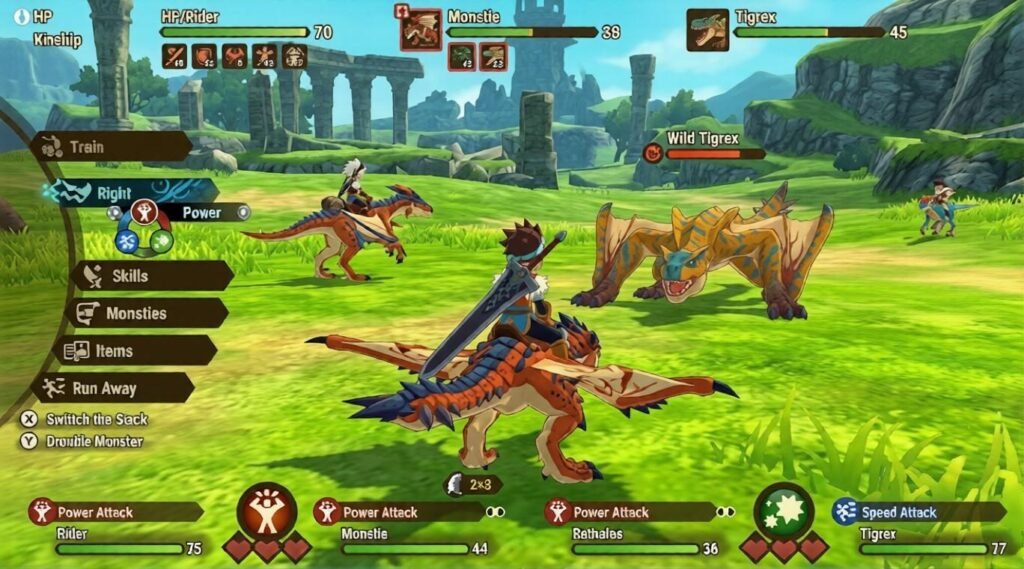
You build an ability to name each companion, called Monsties, and ride them across the overworld. Moving through environments, you explore, encounter threats in the field, and prepare for battles. Each battle lets you collect useful items or return to nests for more rewards.
The traditional turn-based system still holds up well today. Choosing between attacks like Power, Speed, and Technical adds a quick strategy. A tense Head-to-Head moment can flip a fight. Landing a Double Attack with the right timing feels especially rewarding.
Progression is steady with experience and points earned after fights. Optional subquests give more reasons to stay engaged. I often switch weapons like the Great Sword, Shield, or Hammer to test styles. That flexibility keeps each session feeling slightly different.
Plot
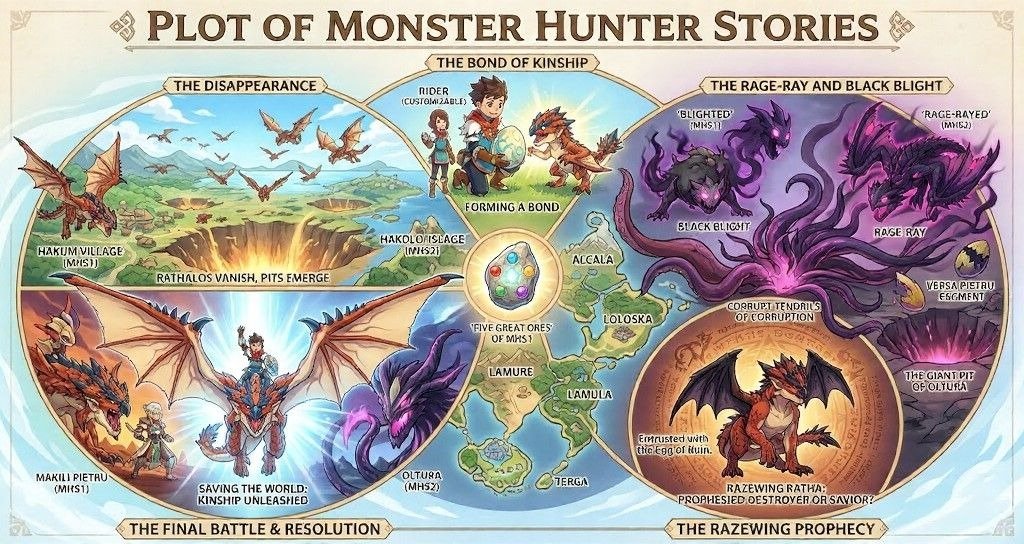
The game opens by letting the player shape the main character, even choosing gender. Early on, friends like Cheval and Lilia join the search for a monster egg. In a quiet nest, it hatches into a Rathalos that quickly bonds with the protagonist. They name it Ratha, and that moment still feels personal.
Back in Hakum Village, things turn dark when a Nargacuga with a strange sickness appears. The Black Blight spreads and attacks, pushing Ratha to defend everyone. That scene hits harder now, even after a full year of story buildup. It sets the emotional tone early.
Later, the Rite of Kinship and the power of Ore and crystal change the path forward. Becoming a Rider feels earned, especially with Navirou, the sharp-talking felyne. As you travel, you tame creatures and hear of the Royal Scriveners. Meanwhile, Cheval and his Rathian chase revenge in a different way.
The conflict grows with Doctor Manelger, whose artificial work in a hidden laboratory feels unsettling. The search for Versa Pietru, tied to Redan, raises the stakes. When Makili threatens the world, the tone shifts again. Even now, that escalation feels well-paced.
In the final stretch, Ratha rises again during Sky-High-Dive. The reveal of the White Dragon still lands with impact. Playing it in 2026, I notice how steady the pacing is. The story remains simple, but it carries weight through its moments.
Development
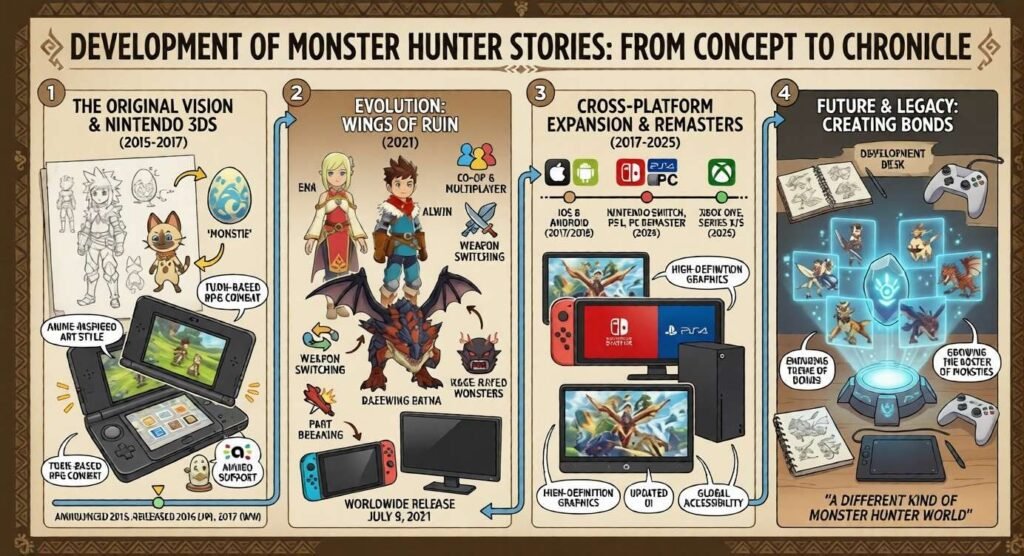
Looking beyond gameplay and story, the series’ direction becomes clear. The executive producer, Ryozo Tsujimoto, shaped this role-playing video game with a different mindset. Instead of only action, the Monster Hunter universe was expanded with care. I can feel that shift even now while playing.
The design feels like a direct response to players and their interests. The focus shifted to the world, its setting, and the monsters’ livelihood. These concepts were not random; they date back to 2010. That long planning shows in how natural everything feels. The key reasoning was the bold switch from Hunter to Rider.
This change gave more spotlight to creatures instead of just combat. Simple actions like petting them support that core idea. As someone who studies game design, I notice how rare that clarity is. It is a quiet but smart decision. Even in 2026, it still feels intentional and fresh.
Release
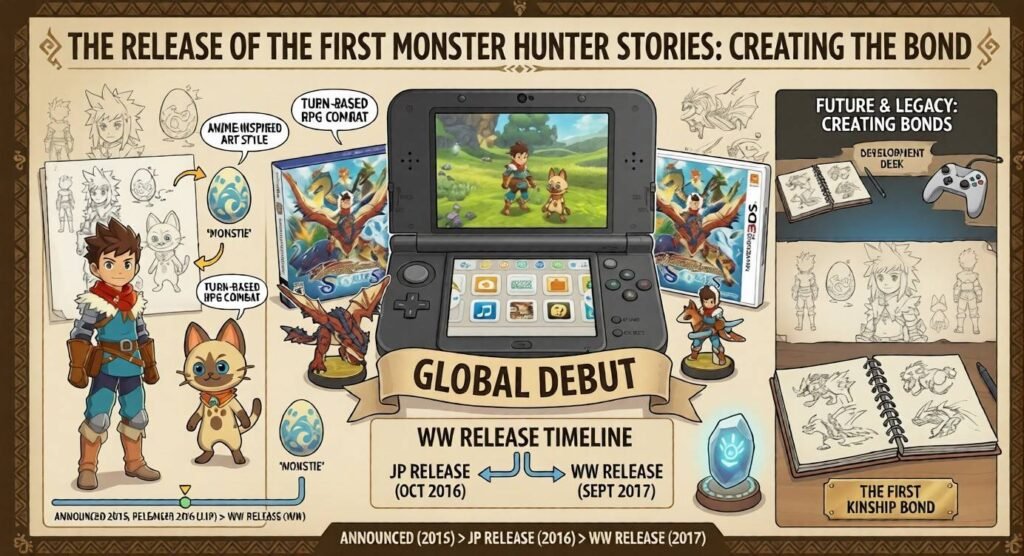
In the earlier context, the rollout of Monster Hunter Stories still feels deliberate. It was announced in Japan in April 2015 at Monster Hunter Fest 15 Finals. Capcom set clear expectations before the full release in 2016. That early timing helped shape how players saw it.
The demo was released digitally on September 20 via the eShop. It included Quest Mode and Tournament Mode, both focused on Rider battles. I first tried it on Nintendo Switch, then later on Nintendo 3DS. The full launch followed on October 8 and moved internationally soon after.
Ports to iOS and Android improved graphics and the overall interface. This mobile step around 2017 helped reach a wider Western audience. By September 2018, the game felt easier to access and replay. That flexibility still matters in 2026.
Later releases on Windows, PlayStation Vita, and Switch refined the experience. The updated version arrived on June 14, 2024, and ran smoothly in my testing. An Xbox One launch is planned for November 2025. That long release cycle shows how well the game has held up.
Reception
| Recaption | |||
| Aggregate Scores | Review Scores | ||
| Aggregator | Score | Publication | Score |
| Metacritic | 3DS: 79/100 | Destructoid | 7/10 |
| OpenCritic | 77% recommend (Remaster) | Game Informer | 8/10 |
| IGN | 8.9/10 | ||
| Nintendo Life | 9/10 | ||
| Nintendo World Report | 8/10 | ||
| TouchArcade | ⭐⭐⭐⭐½ (4.5/5) | ||
Looking back, the Monster Hunter Stories game had a strong launch in its first week. Data from 4Gamer and Media Create showed it sold 140,603 copies, becoming a top-selling title. This happened between October 3 and 9, 2016, which still stands out to me today.
As someone revisiting it in 2026, I can see why the sales and ranking were high. The mix of RPG systems and charm made it fit well on the 3DS. Even now, the release feels polished, and its category placement among handheld games makes sense.
The industry clearly noticed it too. The game was nominated for several Awards in 2017, including Best Handheld Game. I remember following those nominations, especially from IGN and other outlets.
It also appeared in the Best 3DS and Best RPG category lists at IGN’s Annual Awards. On top of that, the DICE Awards gave it a nod for Handheld Game of the Year at the 21st event, adding more recognition.
Playing it now, I understand that early week performance and long-term recognition. The industry response, steady sales, and multiple nominations show it was more than just a good release; it earned its place.
Gaming Overview Table:
| Category | Details |
| Genre | Turn-Based RPG |
| Platform(s) | Nintendo 3DS, iOS, Android, Nintendo Switch (remastered version) |
| Core Gameplay | Monster collecting, turn-based battles, exploration, egg hatching |
| Story Focus | Become a Rider, bond with monsters (Monsties), and uncover world mysteries |
| Unique Feature | Rock-Paper-Scissors combat system (Power, Speed, Technical attacks) |
FAQ’s
Q. Is Monster Hunter Stories still worth playing in 2026?
Ans: Yes, its calm pace, strong design, and unique Rider system still feel fresh and enjoyable.
Q. What makes the gameplay different from the main Monster Hunter games?
Ans: It uses a turn-based system and focuses on bonding with monsters instead of fast action combat.
Q. Can you still play it on modern platforms?
Ans: Yes, it is available on Nintendo 3DS, mobile devices, and newer updated versions on recent platforms.
Q. What is the core gameplay loop?
Ans: You explore areas, collect eggs, hatch Monsties, and fight in turn-based battles.
Q. Is the story still engaging today?
Ans: Yes, the simple but emotional story with Ratha and the Black Blight still holds up well.
Q. How does character progression work?
Ans: You gain experience, complete subquests, and upgrade weapons and abilities over time.
Q. What are Monsties in the game?
Ans: Monsties are monsters you befriend, raise, and fight alongside during your journey.
Q. How was the game received at launch?
Ans: It had strong first-week sales and received multiple award nominations and industry recognition.
Q. Does the game have replay value?
Ans: Yes, different monsters, builds, and exploration paths make each playthrough feel unique.
Q. What makes Monster Hunter Stories stand out overall?
Ans: It’s a mix of RPG mechanics, monster bonding, and relaxed gameplay that gives it a distinct identity.
