

Starting this review, I want you to see what shaped my opinion before I go deeper. I received a copy for purposes of early testing, but it did not affect how I feel. From the first time, I knew Arc Seed had something strong in its core.
In early access, the big question is whether it is worth your time. The answer is not straightforward, and reaching a clear conclusion felt difficult. On one hand, I love the gameplay and aesthetics, and how they pull you in.
On the other hand, there are areas lacking polish that may stop some players. This makes recommending it tricky right now. I will explain these elements as I keep going through what the game offers.
The systems allow creative play, but they won’t fully hide rough edges. The game needs more work ahead. Still, there is enough here to keep me interested.
So, as we move on, keep it in mind that this is not a finished product. I will break down each part so you understand both sides and why I feel this way.
Let’s Talk About “Arc Seed”:
Your Mission in Arc Seed
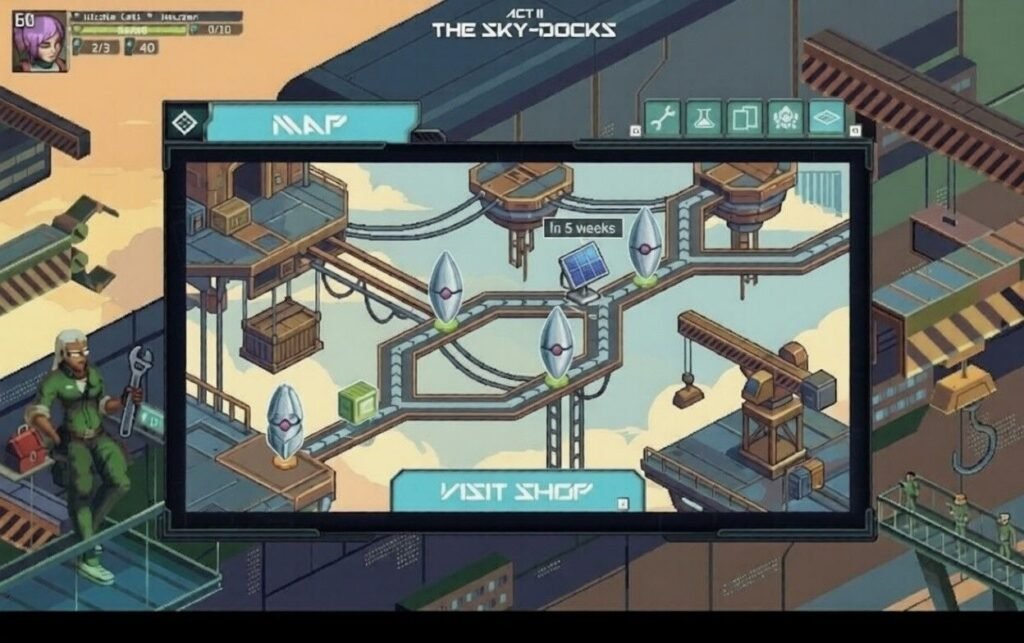
In this part, I shift from my first thoughts to the real loop of Arc Seed. You pilot different types of mechs and defend the Earth from alien threats. These invaders are called Angels, and they shape how each run feels.
The game combines deck-building strategy with deep mech customization. Each tactical move matters in this roguelike experience. From my time with it, the mix feels exciting and fresh.
What stands out is the unique concept and mostly strong execution. Some areas still need polish, which is expected in early access. The current status shows promise, but also clear gaps.
As I kept playing, switching between different builds and types of mechs felt rewarding. The system pushes you to think, adapt, and refine your strategy. That balance is where the game starts to shine.
Gameplay: A Slow Build That Pays Off
The early hours of Arc Seed feel slow, and that shapes your first impression. You begin with a weaker mech, a limited deck, and rough levels that feel like a slog. But if you stay patient, the hidden depth starts to shine.
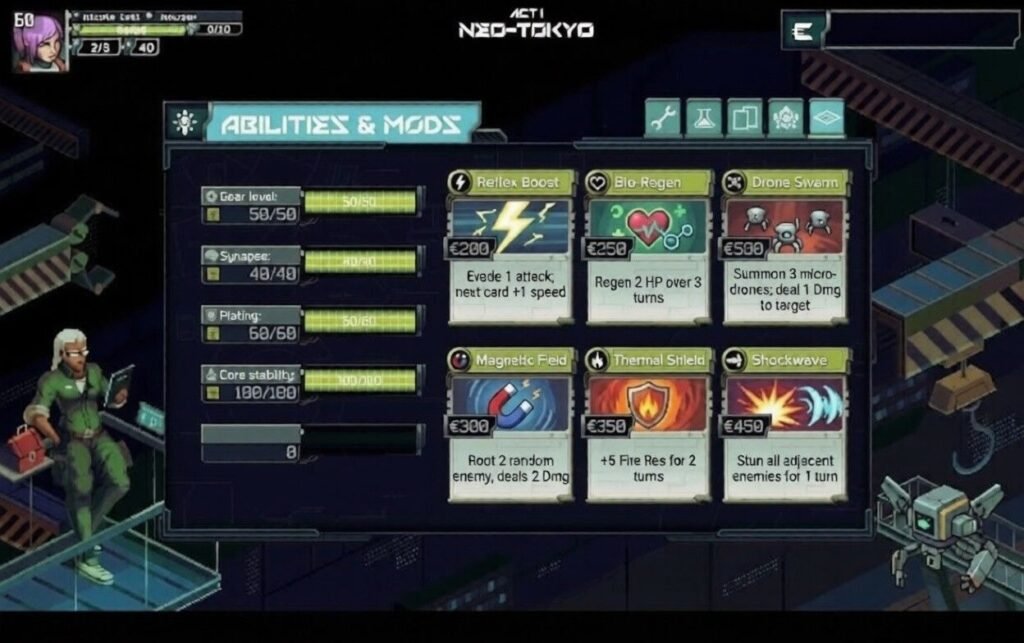
Each encounter gives you a new card, and that choice shapes your plan. From my experience, every pick has real impacts, even if there is an optimal path. Learning how cards synergize with your stats becomes key over time.
As you upgrade, systems like HP, health, and healing support survival. Shield adds both defense and offense, especially when tied to damage. Managing Battery and power is critical, since running out leads to quick defeat.
The real shift comes when Energy and each stat improve your play per turn. You start clearing enemies faster, and battles gain speed and excitement. That is when the game feels truly rewarding, and at times almost unstoppable.
Still, the roguelike reset brings tension, and it can feel frustrating. Losing progress in a long run makes each level harder to revisit. Even when you unlock new perks, the progress can feel uneven.
Setting: Fighting for a Dying World
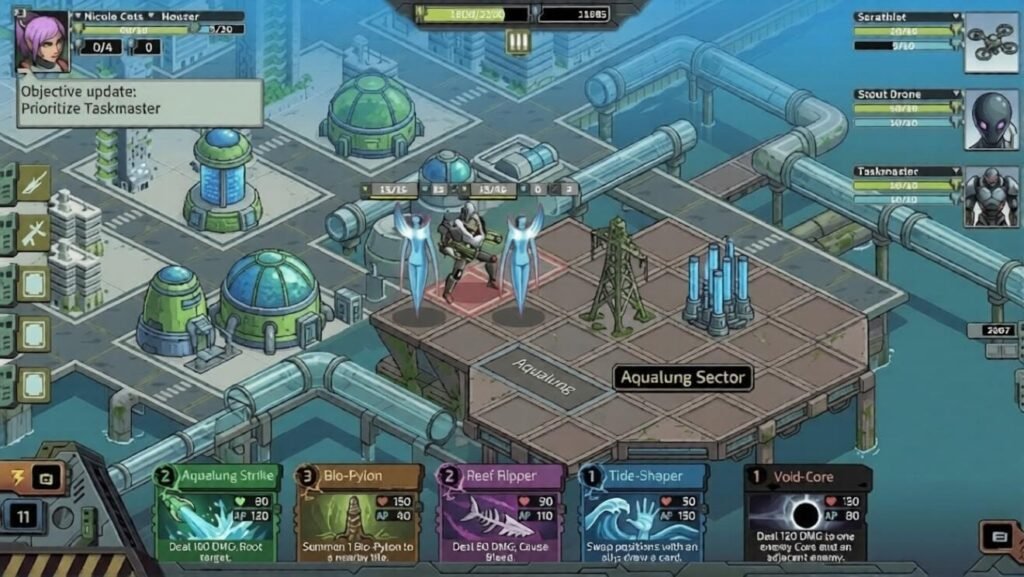
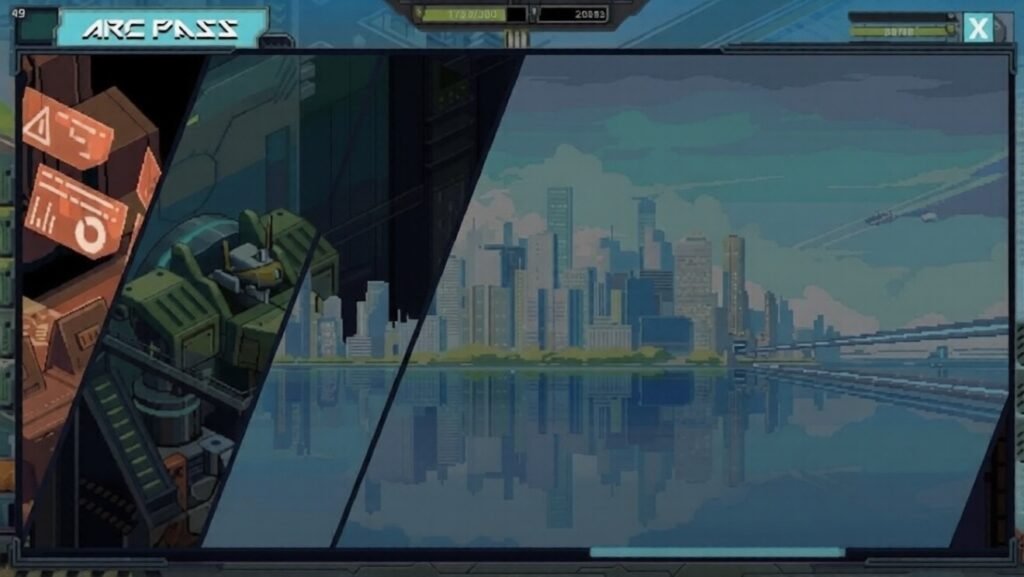
The world of Arc Seed shifts the focus from systems to survival. Each battle happens on a grid, where every battlefield feels like a living cityscape. The detailed pixel art, especially Nova-Lisbon, adds a quiet weight to each moment.
You are not just fighting Angels in a building, you are protecting citizens. If they are not evacuated each turn, you may kill them by mistake. That risk can place a junk card in your hand, limiting your options.
At times, destroying parts of the map becomes a smart strategy. This creates real tension, especially in more difficult levels. Every move matters when your goal is to defeat each enemy on the map.
Your deck and cards define how you act, since every move costs energy. Even movement drains resources, while some enemies waste your batteries. It can feel frustrating, so using long-range attack tools helps you counter them.
As you reach the Act end, a Boss fight awaits with a strong cutscene. Beating it lets you progress to the next phase, though I have not yet reached the end. Each step forward makes every battle feel more meaningful.
Is Arc Seed Worth It?
For fans of tactical roguelikes, this is where my view becomes clearer. If you enjoy deep systems like Evangelion-style themes, Arc Seed is absolutely worth checking. Even in early access, there is enough here to stay engaged.
Still, you need to be mindful of the early level slog. It can slow your momentum, but if you push through, you will definitely have a blast. That balance shaped my overall review.
Furthermore, the game will keep getting updates, which matters a lot. The team is adding new cards, maps, and levels, along with more features. These frequent changes keep making me feel hopeful about long-term growth.
I also feel grateful I received a code from the Portuguese Gaming Studio, Massive Galaxy Studios. I had the chance to meet the developers at a gaming convention in my hometown. It was a wonderful experience that gave me more insight into their vision.
Gaming Overview Table:
| Category | Details |
| Title | Arc Seed |
| Genre | Tactical Roguelike, Deck-Building |
| Developer | Massive Galaxy Studios |
| Release Status | Early Access |
| Core Gameplay | Mech combat, grid tactics, card strategy |
FAQ’s
Q. What is Arc Seed about?
Ans: Arc Seed is a tactical roguelike where you pilot customizable mechs and use deck-building mechanics to defend Earth from alien threats called Angels.
Q. Is Arc Seed worth playing in early access?
Ans: Yes, if you enjoy deep strategy systems, but it still has rough edges that may affect some players.
Q. What makes Arc Seed unique?
Ans: Its blend of mech customization, grid-based combat, and card-driven strategy creates a fresh and engaging gameplay experience.
Q. How does the gameplay progression feel?
Ans: It starts slow but becomes more rewarding as you unlock upgrades, improve stats, and build stronger card synergies.
Q. Are there any frustrations in the game?
Ans: Yes, early-game pacing and roguelike resets can feel repetitive and sometimes frustrating.
Q. What role do cards play in combat?
Ans: Cards determine your actions, and choosing the right ones is key to building effective strategies and surviving battles.
Q. How important is resource management?
Ans: Very important, as managing energy, battery, and shields is crucial for both offense and defense.
Q. What is the setting of Arc Seed like?
Ans: The game features detailed pixel-art cityscapes where you must protect civilians while fighting enemies on a grid.
Q. Does the game encourage strategic thinking?
Ans: Yes, every move, upgrade, and card choice impacts your success, requiring careful planning and adaptation.
Q. Will Arc Seed improve over time?
Ans: Likely yes, as the developers are actively adding new content, features, and updates during early access.
