
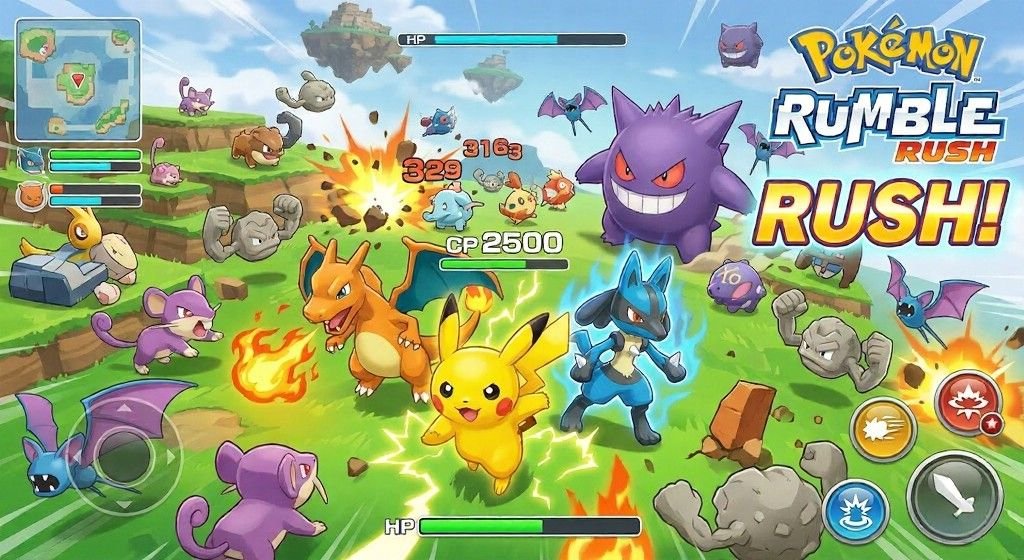
I first noticed testing before the official launch. In Japan, Pokéland and ポケランド came earlier. May 31 2017, to June 9 2017, were alpha tests. October 17 2017, to October 27 2017, tested again.
The planned iOS alpha test felt important to me. It was scheduled for the first half of 2018. That plan did not occur, which changed expectations. Even then, the mobile idea still looked promising.
Later, Pokémon Rumble Rush was officially released on iOS. It also arrived on Android as a Pokémon game. In Japanese, it was ポケモンスクランブルSP, Pokémon Scramble SP. That marked a spin-off and the fifth entry.
It belonged to the Pokémon Rumble series worldwide. Australia got it on May 15 2019, first. Then Japan followed on May 22 2019. The world received it on July 23 2019, on devices.
This online service needed an internet connection. So availability always depended on servers staying active. Nintendo announced on April 15 2020, that one-year online services would end. By July 22 2020, 1:59 pm UTC, it ended.
After the shutdown, it was no longer played anywhere. That short timeline still feels revealing to me. The adventure stayed interesting, though its service vanished. Its brief life makes this Pokémon game memorable.
Gameplay
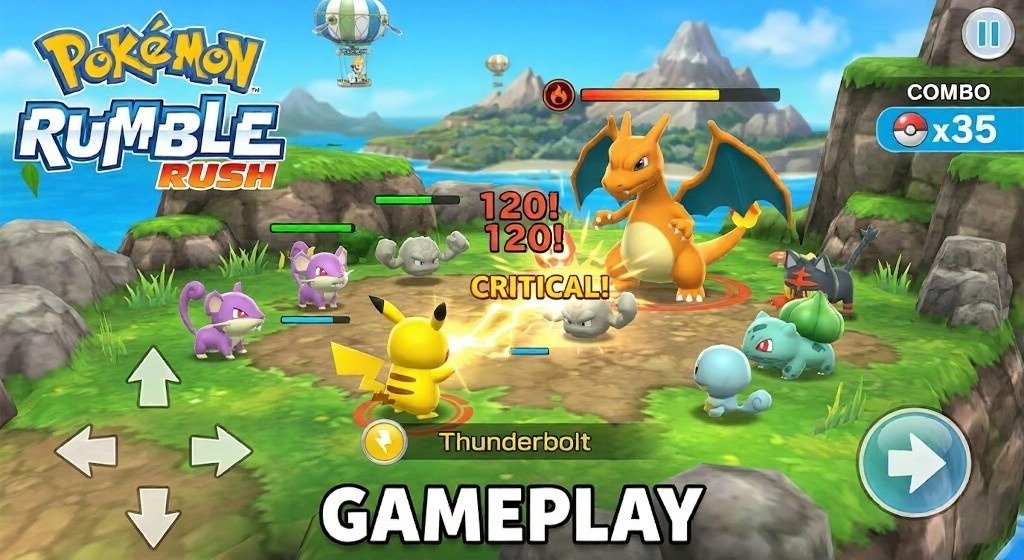
With story context, Callie frames research without slowing progression. In Pokémon Rumble Rush, each adventurer learns movement quickly. The Tutorial is brief, clear, and professionally structured. That early clarity kept my attention on stages.
Across islands, I swipe, dodge, and tap constantly. The auto-attack helps, but positioning still feels important. A saved Charged Attack changes pressure against wild Pokémon. Later, Boss Pokémon demand sharper timing and awareness.
I liked how the Adventurers Club supported momentum subtly. It made repeated stages feel connected, not empty. From experience, that structure respects short-session mobile design. It stays light, yet the islands still feel worth revisiting.
Catching
In gameplay, I find catching more exciting than movement. When sparkles appear, a dazed target shows yellow stars. That cue tells me to throw a capsule fast. I have seen red, blue, and gold ones feel rewarding.
From a design view, rarity links clearly to 1 star, 2 star, 3 star, 4 star, and 5 star. Higher ranks usually suggest higher CP with stronger HP. They also improve Defence, Critical Rate, and Attack stat. In my experience, that makes catching simple to read but still satisfying.
Guide Feather
After battles, Guide Feather adds smart direction fast. Dex support and map flow keep progress readable. sightings help track each species with less guesswork. That shift kept exploration focused during my sessions.
Catch Bonus Level rewards each species over time. When 10 Pokémon and 100 Pokémon unlock +1 CP. That boost matters against Bosses and Super Bosses. Clear gains make repeated hunts feel worth doing.
In 1.3.0, balloons lasted 60 minutes for Buddy Pokémon. They covered three stages and a saved stage. Then 1.3.1 improved Daily Stages with five tries. That made 10 Poké Diamonds feel more useful.
Ores
After battles, Ore systems shape progression more clearly. That deeper layer supports action without replacing momentum. I noticed Unusual Ore mattered once routes stabilised. Then Rare Ore made upgrades feel properly earned.
Inside the refinery, Magnemite turns drops into useful gains. Version 1.2.0 made the loop easier to value. Managing six ores gave each run a better purpose. From experience, that economy stayed simple yet smart.
Gears
Beyond movement basics, Power Gears shape smarter battles. I noticed loadouts feel cleaner with focused effects. Each choice supports rhythm without slowing progression much. That design keeps earlier action systems in context.
Summon Gears add flair, especially Dazzling Gleam Gear. With Cutiefly, the effect feels light but useful. At Lv. 1, upgrades already show clear value. An Upgrade Kit makes growth feel immediately practical.
Adventurer Rank
After combat clicks, Adventurer Rank shapes progression meaningfully. It extends goals while earlier systems keep context. From experience, that layer makes grinding feel purposeful. It also supports cleaner pacing across repeated sessions.
Each increase improves storage capacity in practical ways. That benefit matters when collections start growing quickly. I noticed 20 slots cost 100 Poké Diamonds. Professionally, that trade feels simple, clear, and fair.
Challenges
After core systems settle, daily challenges sharpen engagement. I liked the limited-time and permanent goals there most. That structure supports routine play without feeling forced. From experience, clear tasks improve retention in mobile.
Bi-weekly updates kept Coin Rush rewards feeling fresh. Tasks like Catch 3 Pokémon fit short sessions. Meanwhile, obtaining 1 ore and Refine ore helped. Even 3 Poké Diamonds can motivate steady check-ins.
Plot
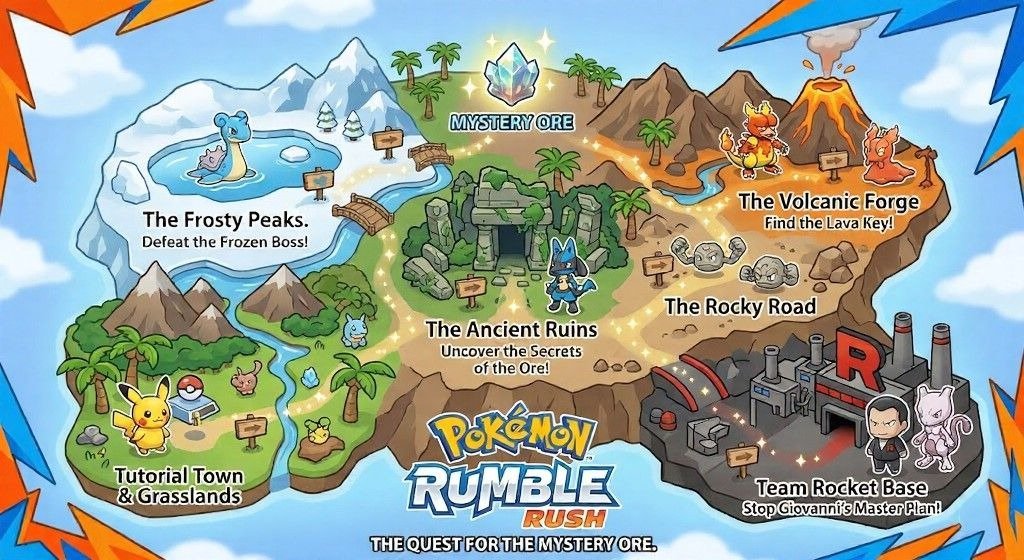
I care more about the flow after the setup. The early idea stays in view, but the plot works later. For me, that shift made the game feel cleaner. It starts simple, then grows progressively more focused.
The main push comes when a Boss appears. Soon, Super Boss Pokémon make each battle feel heavier. They are clearly stronger, more powerful, and less forgiving. That change adds pressure without breaking the light tone.
Each fight also works under a time limit. That small rule shapes the requirements for moving forward. Once a target is defeated, the next step feels earned. New paths are unlocked, and the area rank slowly increases.
I liked how wild fights still support this structure. They give room to catch units before harder walls appear. In my experience, that keeps the pace fair. You prepare through play, not through heavy story text.
Later, update 1.3.1 made some parts feel smoother. A rebattled stage, Goals, and optional tasks helped clear runs. The added rewards, including 3 Poké Diamonds, felt well placed. From a design view, that made repetition easier to accept.
Tutorial
Within the plot, Tutorial guides pacing before bigger turns. The Map frames the context, while gameplay starts simply. It introduces the main game through careful cues. From experience, good onboarding protects the story rhythm well.
Once completed, the early route feels more natural. Each location reveals where Move Gear is found. The system opens a list without slowing the flow. That balance helped me trust its design instantly.
Later, Super Bosses feel earned, not suddenly inserted. They matter more because threats were already encountered. This structure keeps the plot light, but never empty. Professionally, that is smart for a mobile adventure.
Event
After setup, bi-weekly events gave the plot more movement. Each event lets players explore a new island. That shift made the world feel less static. From experience, rotating content helps light stories breathe.
These routes asked you to defeat threats differently. Across multiple seas, even previous islands felt better used. Places like Charizard Sea and Rowlet Sea stood out. Their structure felt default, then gradually altered.
By update 1.3.1, more paths felt clearly unlocked. The number of players often stayed visibly ranked. That order came from the sum of CP. Usually, three powerful Pokémon from different species mattered.
The event cycle stayed refreshed until June 10 2020. Then came the end of service, which changed everything. Before that, prizes and Poké Diamond rewards felt fair. Professionally, that pacing kept attention active for longer.
Tournaments
Super Boss Rush
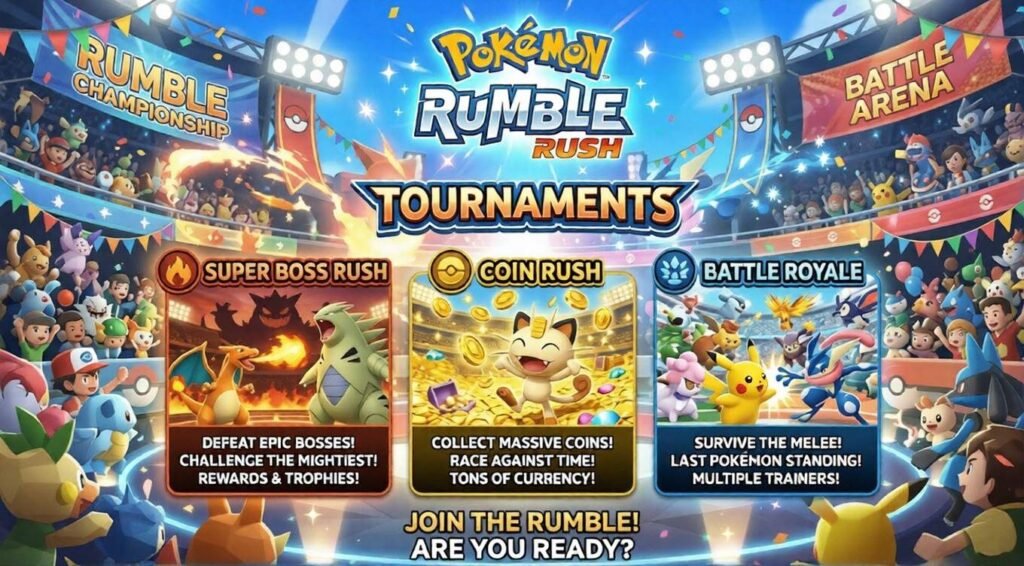
In tournament play, Super Boss Rush feels intense. Here, players battled multiple Super Bosses in sequence. A certain period of time controls every attempt. Each stage ends before the next stage appears.
Progress stays unlocked only through clean defeats there. That rule ties Bosses tightly to each stage. In version 1.2.0, this mode became widely available. From experience, that structure made pressure feel well-shaped.
Coin Rush
Within tournaments, Coin Rush shifted the competitive mood. It replaced Super Boss Rush after the balance changed. In version 1.2.0, this switch felt surprisingly natural. The broader tournament context still stayed clearly visible.
Each stage ran under a strict time limit. You had only 60 seconds to maximise gains. From experience, that pace rewarded cleaner mobile decisions. Professionally, I think brevity improves pressure and clarity.
Battle Royale
Battle Royale changed the competitive rhythm. This feature felt fresh while prior modes mattered. It was introduced in version 1.5.0 for variety. From experience, players adapted quickly to its structure.
Each team brought three Pokémon into every battle. They faced three other teams within one boxing ring. That setup made spacing, pressure, and timing feel sharper. Professionally, I liked how clear the format stayed.
Wins earned Points that pushed progress with purpose. The Swap Shop gave rewards beyond simple rank. I found useful items and gear upgrade kits valuable. Even Poké Glam added style without hurting balance.
Shop
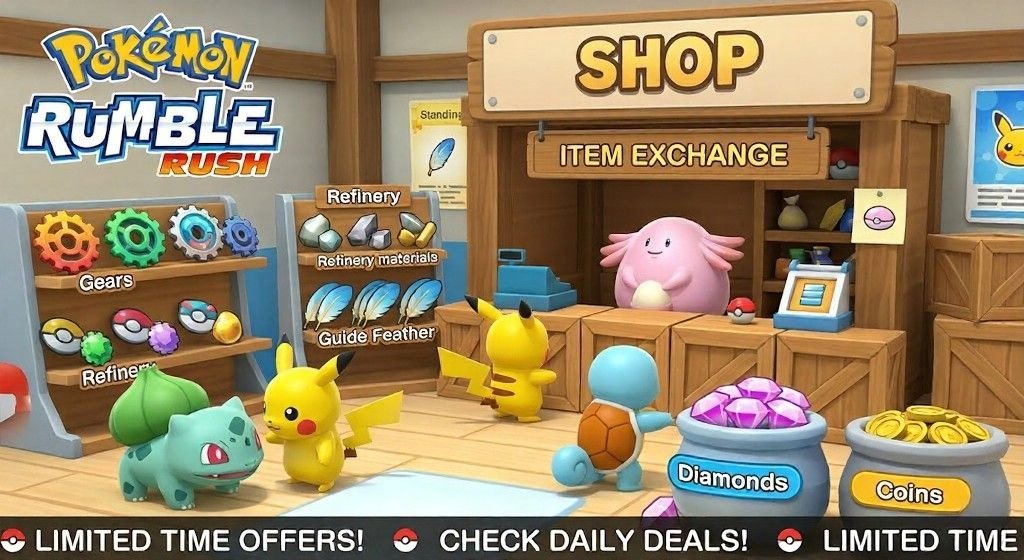
After the core play loop, the Shop says more. It shows how the game values time and progress. In my experience, this part feels simple but revealing. That matters when judging the full game honestly.
Most items are easy to understand at first. They can be purchased fast, without much friction. Some choices clearly point toward real money spending. From a design view, that keeps access smooth.
What I notice most is how the rates feel. They shape whether the Shop seems fair or pushy. As a player, I prefer when items stay practical. That balance affects how warmly I remember it.
My Nintendo
In the wider shop system, My Nintendo adds another layer. It lets Players connect the game to an account. That step matters because it changes how rewards feel. From my experience, this keeps the shop context practical.
By enabling this link, the player gets a Mii. It also supports a clearer game profile over time. That small identity touch makes progress feel more personal. As a reviewer, I think that choice was smart.
These are tied to in-game actions, not empty waiting. That is different from regular Platinum Points in tone. It gives the reward flow a more direct purpose.
Those points can help you purchase useful items. This links the reward side back to the shop. I like it when a system closes that loop clearly. Professionally, it makes the design easier to respect.
Gaming Overview Table
| Aspect | Overview |
| Genre | Action-adventure mobile game with hack-and-slash style gameplay. |
| Platform | Released for iOS and Android as a mobile title. |
| Gameplay | Players control toy-like Pokémon, battle through short stages, defeat bosses, and collect more Pokémon. |
| Core Progression | Progress comes from gathering stronger Pokémon, using gear and power items, and clearing new islands and seas. |
| What Stands Out | Its simple controls, quick sessions, and collectable Pokémon focus made it easy to pick up for casual players. |
FAQ’s
Q. What is Pokémon Rumble Rush?
Ans: It is a mobile Pokémon spin-off game. It focuses on fast action and island stages.
Q. When was Pokémon Rumble Rush released worldwide?
Ans: It launched first in Australia in May 2019. The worldwide release came on July 23, 2019.
Q. Why did Pokémon Rumble Rush shut down?
Ans: The game relied fully on online service. Once servers ended, the game became unplayable.
Q. How does the gameplay feel in Pokémon Rumble Rush?
Ans: The gameplay feels quick and easy to learn. Players tap, swipe, dodge, and attack often.
Q. What makes catching Pokémon enjoyable in the game?
Ans: Catching feels exciting after stunning Pokémon. Capsule colours and star ranks add reward.
Q. What is the role of Guide Feather in the game?
Ans: Guide Feather makes progress easier to follow. It helps track maps, species, and goals.
Q. How do ores help progression in Pokémon Rumble Rush?
Ans: Ores support upgrades after each battle. They give runs more purpose and value.
Q. Why are Power Gears important in battles?
Ans: Power Gears improve battles with useful effects. They strengthen loadouts without slowing the action.
Q. What do events add to Pokémon Rumble Rush?
Ans: Events add new islands and rotating tasks. They keep the game feeling fresh and active.
Q. How does the blog describe the overall legacy of Pokémon Rumble Rush?
Ans: The blog sees it as brief but memorable. Its short life still left a strong impression.
Conclusion
Pokémon Rumble Rush felt simple, fast, and enjoyable to me. Its gameplay stayed clear without losing variety or charm. Catching, upgrading, and exploring kept the experience rewarding. That balance made its short journey feel worth remembering.
Even with its shutdown, the game left a clear impression. Its brief lifespan made it feel more unique than lesser mobile titles. I see it as a light spin-off with real personality. For me, Pokémon Rumble Rush remains small, memorable, and meaningful.

Welcome to Gaming Station! I’m Hussain Umer, an AI-Powered SEO and Content Writer with 4 years of experience. I help websites rank higher, grow traffic, and look amazing. My goal is to make SEO and web design simple and effective for everyone.
Let’s achieve more together!