
What stands out most is Noctis Lucis Caelum and his party. Their journey across Eos still gives players a strong reason to care. The story, side quests, and ten chapters help simplify the deeper mechanics. That makes it easier for a casual audience on mobile platforms.
The development side also adds value to the game. Its Production history connects to 2015, Episode Duscae, and the momentum built in 2016. Hajime Tabata, co-producer Kosei Ito, XPEC Entertainment, and SummerTimeStudio helped shape that direction.
I also respect how the Unity engine supports both graphics and gameplay. The game was made for mobile devices like Android and iOS, but also reached Windows 10 through the Microsoft Store. It later appeared on Xbox One and Nintendo Switch, while PlayStation Vita often came up in platform talk.
The reception was largely positive, and I can see why. Many saw it as a faithful translation of the original game, not a lazy cut-down version. In some ways, like Before Crisis and Final Fantasy VII, it proves a young team can rethink familiar ideas well.
Story
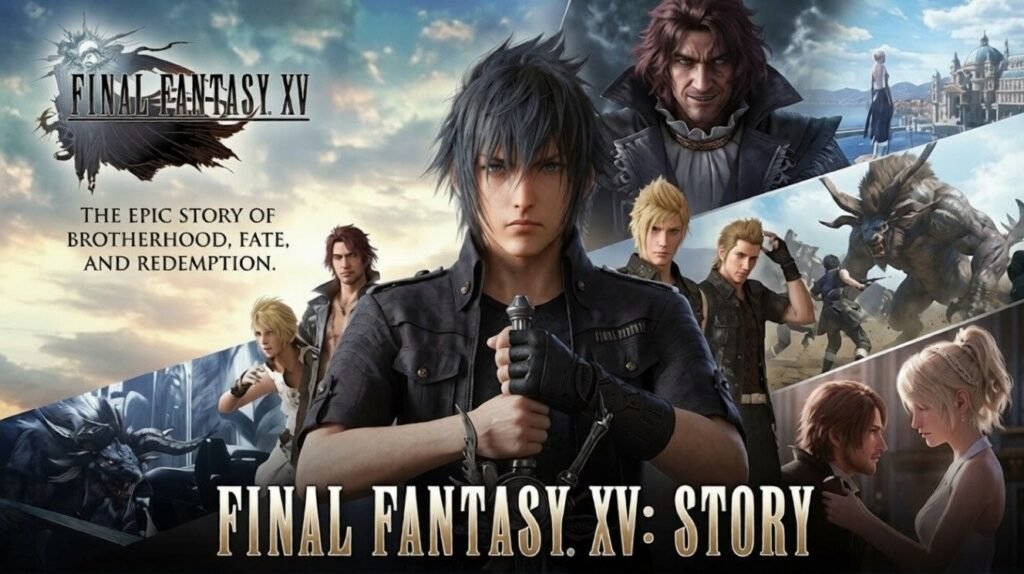
Keeping the first topic in view, I see Square Enix using Final Fantasy XV to build Pocket Edition HD around a compact story. It follows the original shape, but in a truncated and bite-sized form. That smaller frame changes the pace, yet it still carries the same emotional pull. As a reviewer, I think that choice helps the portable format.
At the center is Noctis Lucis Caelum, a prince of the kingdom of Lucis. He starts a road trip with his three best friends and plans to be married to a princess from a neighbouring kingdom. That shift sends him on a quest tied to his bloodline.
His goal is to save his people, but the stronger layer is the human one. The game leans on love, loss, friendship, and the bond between companions. These heroes spend so much time bantering and chatting that their link feels lived in. For me, that is where the writing works best.
That daily talk creates a believable and natural rapport. It gives the group the heart and soul the wider narrative often needs. I also think the game does well in characterizing each lead for the player. Even small exchanges carry real warmth.
Still, the plot can feel too broad in aim than in control. Some scenes are deeply touching, full of beauty and strong feeling, but others weaken the flow. A sudden choice, a scene where the empire captures, or a turn gone awry can feel uneven. That tension defines my response to this section.
Gameplay
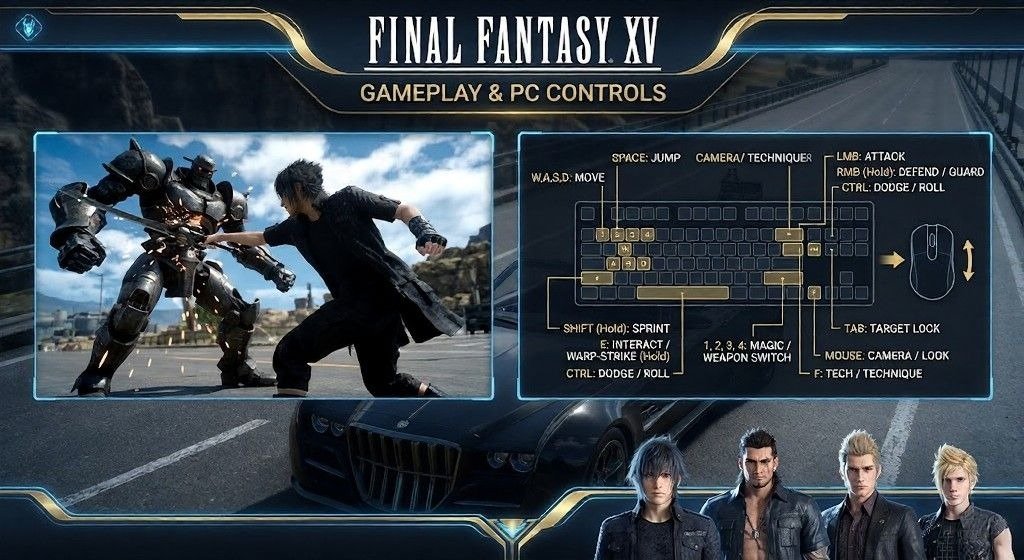
From there, Gameplay in Pocket Edition HD takes an admirable path by shrinking the original design. It is often surprising in how much it removes from Final Fantasy XV. Some of those answers old criticism about scale and focus. As someone who studies game flow, I found that interesting.
The core design pulls back the open world and pushes a tighter direction. There is little real semblance of an open-ended structure now. Instead, you move through small levels linearly. That makes the game easier to read, though less free.
I found it fascinating how smartly some locales become cutesy spaces. Still, the claustrophobic feel of the environment can stand out. Too many invisible walls and bits of environmental clutter are funnelling you into specific paths. That limits discovery more than I like.
There are bright moments, especially in dungeons or while exploring a brief side path. You may find a potion, some junk, or a store, which adds a little leeway to the experience. That small reward loop keeps movement active. It also softens the strict structure a little.
Even so, the streamlined cut leaves mixed results. Less side content helps the storytelling approach feel more tolerable, and the extraneous cuts do improve pacing. That is why I admire the edit more than I love it.
Combat is impressively close
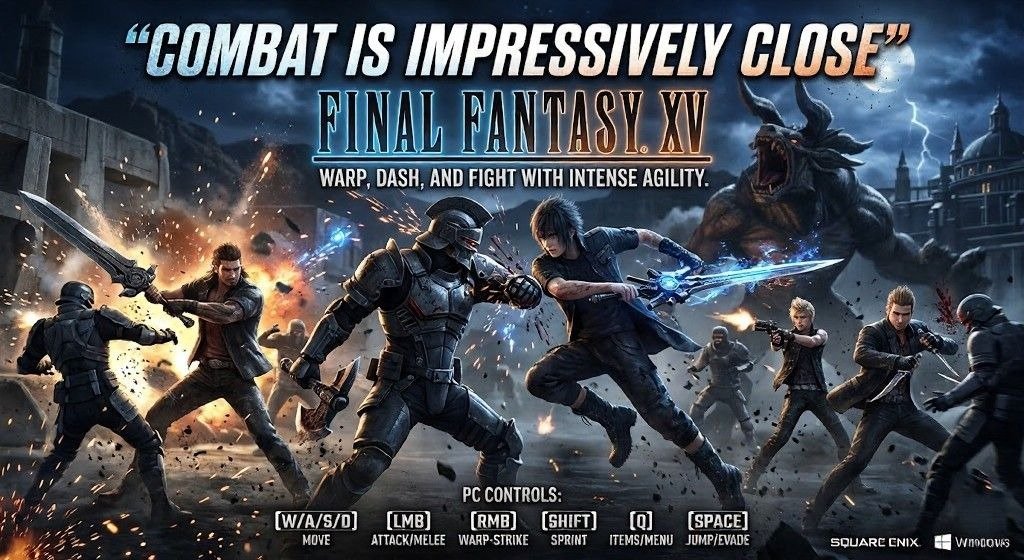
The first thing I noticed is how Combat stays impressively close to the original style. It works by eschewing turn-based systems for direct action. That more hands-on approach fits the smaller version well. It also keeps the feel of the main game alive.
Each party member supports the fight, while the attack button lets Noctis strike automatically. You lock onto an enemy, manage targeting, and react to on-screen prompts. At times, a special attack from your teammates adds flair and speed. Those small bursts help the system feel active.
The best trick is the warp-strike, which lets Noctis cross the field fast at the cost of MP. Some QTEs open a brief window when an incoming attack can be dodged or parried. These ideas keep the moment-to-moment pace lively.
My main issue is not the look of the battle system, but how little it pushes the player. Very little feels truly difficult, and the game often strips away challenges. After a while, fights become a chore, especially in extended play. That weakens the long-term rhythm.
Most enemies offer low pressure, and only a rare event drops your health enough to matter. Even in boss fights, hi-potions arrive in generous supply, turning foes into damage sponges. That is the biggest limit of this section for me.
Progression System Extension
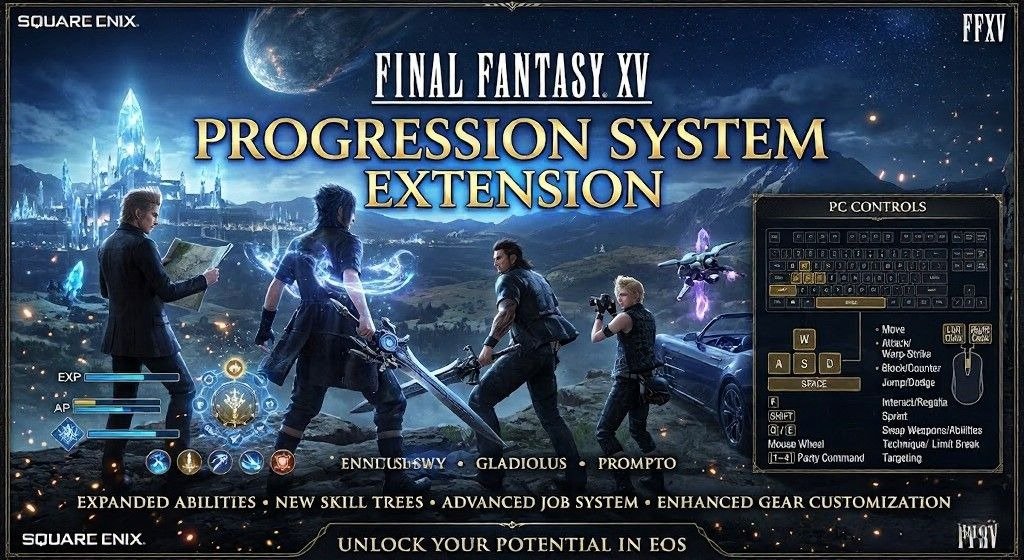
This extends somewhat to the progression system, which feels useful but also very basic. The loop is easy to read, and that helps casual play. Still, it never feels very rich. From a design view, it favors clarity over depth.
Your characters acquire XP after each battle. That XP is applied at the end of a story mission, which means steady growth. You keep bumping stats and generating AP at a regular rate. That constant reward keeps the game moving.
That AP is invested in a skill tree, but there is not much meat in it. Rather than speccing the party toward a specific playstyle, you are mostly unlocking the next node. The whole thing feels like a close-to-linear set of abilities. It works, but it rarely surprises.
There are noticeable improvements, and some upgrades feel good at first. Still, they can seem like overkill because many foes are weak enemies when set relative to your team. After dozens in supply of easy wins, the sense of progress starts to flatten.
The same problem circles back to the combat system. It is smartly built for quick sessions, but the challenge often feels like an illusion against the same basic enemies with little real threat. That is why this system lands as fine, not memorable.
In terms of presentation
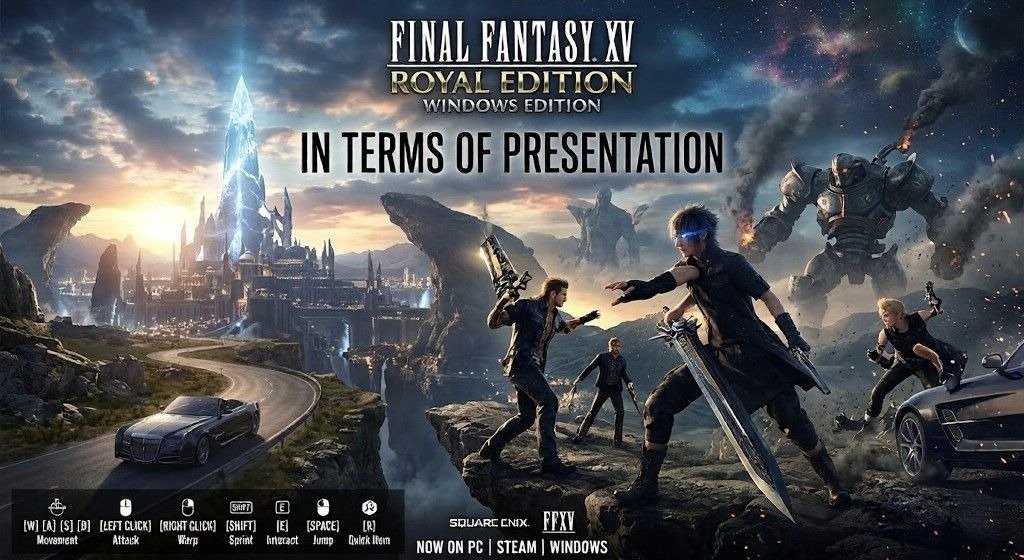
In terms of presentation, the game has a clear identity. The overall presentation of Pocket Edition HD uses a low-poly, chibi visual style. You can see clear cues from Bravely Default and that broader series tradition. It gives the game instant charm.
The environments are built from chunky objects and simple buildings. The characters are cute, big-headed creations with fixed facial expressions. In regular gameplay, that art style is easy to accept. It matches the lighter scale of the project.
The trouble appears in cutscenes. A serious voice may carry deep emotion or visible pain, while the model keeps the same facial expression. That gap feels weird, and it can break dramatic scenes. I noticed it more the longer I played.
There are also technical issues. The most disappointing one is pop-in in wider environments, and the performance can chug despite the simple look. That is strange for such a basic art style, especially when framerate drops show up in docked mode.
I noticed, oddly enough, that Tabletop felt more stable, often near 60fps. From a visual and performance standpoint, the game is not hard on the eyes, but it still leaves something desired. That leaves a mixed final impression, because it happens most in bigger areas where the image feels less stable in docked mode.
Gaming Overview Table:
| Aspect | Details |
| Release | 2016 |
| Platforms | PlayStation 4, Xbox One, Windows |
| Main Character | Noctis Lucis Caelum |
| Setting | The world of Eos, featuring large open regions and modern-fantasy cities |
| Main Appeal | Brotherhood-driven story, flashy combat, road-trip atmosphere |
FAQ’s
Q. What is Final Fantasy XV Pocket about?
Ans: It is a compact, mobile-friendly version of Final Fantasy XV that follows Noctis and his friends on an emotional journey across Eos.
Q. Who is the main character in the game?
Ans: Noctis Lucis Caelum is the main character, a prince of Lucis who travels with his three close friends.
Q. Why does the story still work well in Pocket Edition?
Ans: The story keeps the emotional core of the original game while making it easier to follow in a shorter format.
Q. What makes the characters stand out?
Ans: The friendship, banter, and natural conversations between the party members give the game its heart.
Q. How is the gameplay different from the original Final Fantasy XV?
Ans: It removes much of the open-world structure and uses smaller, more linear levels for quicker play sessions.
Q. Is the combat system still enjoyable?
Ans: Yes, it stays close to the original action style, especially with features like warp-strikes and team attacks.
Q. What is the biggest weakness of combat?
Ans: The battles are often too easy, so they can start to feel repetitive over time.
Q. How does the progression system work?
Ans: Characters gain XP after battles and use AP in a simple skill tree, though it feels more basic than deep.
Q. What does the game look like visually?
Ans: It uses a low-poly, chibi art style that gives it charm and makes it feel distinct on portable platforms.
Q. Is Final Fantasy XV Pocket worth playing in 2026?
Ans: Yes, especially for casual players who want a lighter, faithful version of the original with strong characters and a simpler format.
Conclusion:
Final Fantasy XV becomes Pocket Edition HD. It is a game capturing the spirit in several ways. Still, it drops the ball. It feels like an inferior facsimile of a rough gem.
That is the main reason I would not give it strong praise. I had already seen better work before. I still wonder why it should exist in exactly this form. There is little reason to go back if you have played it.

Welcome to Gaming Station! I’m Hussain Umer, an AI-Powered SEO and Content Writer with 4 years of experience. I help websites rank higher, grow traffic, and look amazing. My goal is to make SEO and web design simple and effective for everyone.
Let’s achieve more together!