
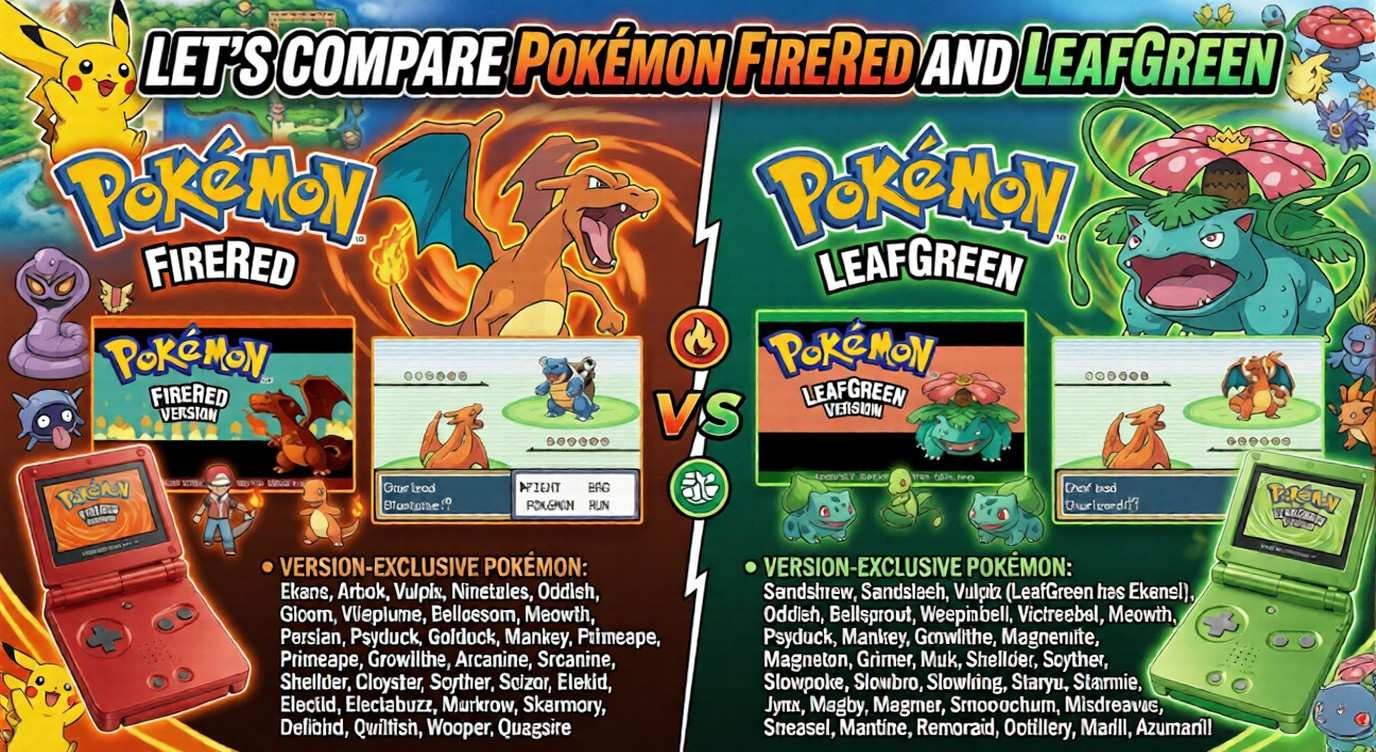
When I return to old Pokémon Games, I look beyond simple nostalgia first. I notice how FireRed and LeafGreen preserve the spirit of Red and Blue. These 2004 remakes of the 1996 role-playing video games feel carefully rebuilt. With Game Freak, The Pokémon Company, and Nintendo, each Version still feels like Pokémon.
For the player, the design stays clear, direct, and easy to enjoy. Your character moves through the world from an overhead perspective with purpose. Then the action shifts into turn-based battles, where planning shapes every battle. The trainer captures, raises, and grows stronger across the Kanto Region through focused gameplay.
These titles feel enhanced, not copied, and that matters in this series. The contextual help menu supports new players without interrupting the adventure at all. The Sevii Islands also expand the journey after the Elite Four victory. That added content follows the Pokémon Champion and deepens the overall experience.
Their release path shows how widely these games were positioned and valued. They launched in Japan in January, then reached North America and Europe later. Those releases came in September and October, during the third generation era. Alongside Ruby and Sapphire, they gave the franchise a different but familiar strength.
They earned positive reviews, including an aggregate score of 81 percent on Metacritic. Some critics questioned the graphics and audio, but the core remained strong. The games sold around 12 million copies, which reflects a lasting commercial appeal. Their later move to Nintendo Switch proves their value has continued.
Let’s Talk About Their Features:
Gameplay
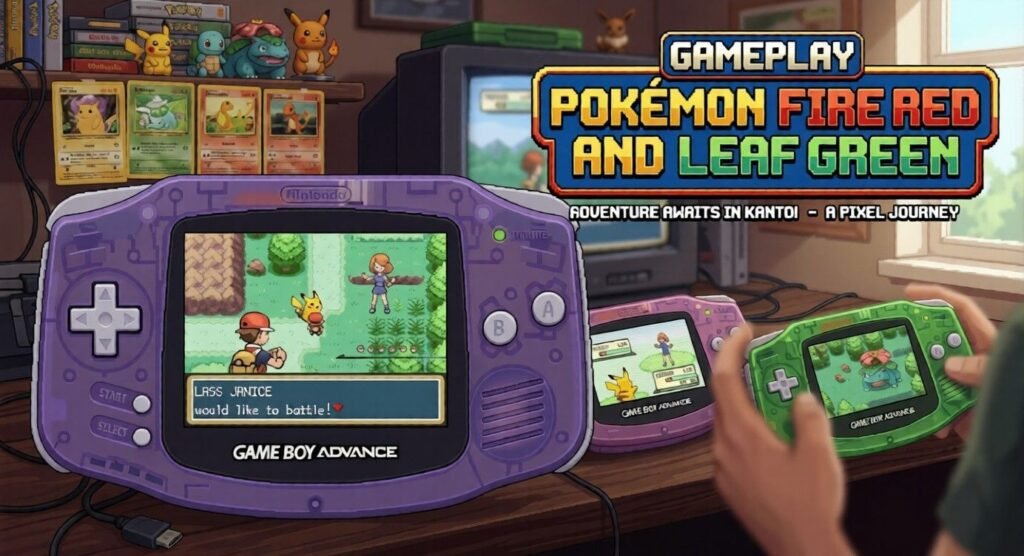
After the early history of Pokémon, the real test begins in play. In FireRed and LeafGreen, the role-playing design feels smooth on handheld consoles. From a third-person, overhead perspective, the player guides the protagonist across the overworld. A clean menu interface helps manage items and other gameplay settings without slowing the pace.
What still works so well, in my view, is the flow of each encounter. A wild Pokémon or a trainer can trigger a turn-based battle, and every move matters. Power points or PP limit each action, while hit points or HP decide who stays standing. If one faints, it must be revived, while winners gain experience points or EXP and then level up.
The catching system is where the rhythm gets even better. Capturing is part of the essential gameplay, and each Poké Ball creates a sense of risk and reward. Once a catch works, ownership shifts to the trainer, but the success rate depends on the target Pokémon and its condition. I always liked how that simple idea made every low-HP moment feel tense.
These versions also improve older ideas with small but smart changes. The contextual tutorial helps at the right time, and the select button makes checking help fast during a saved game. Those usability enhancements matter more than many players notice at first. On Game Boy Advance, the Game Link Cable made trade easy, while links with Ruby, Sapphire, Colosseum, GameCube, and Pokémon Box widened the experience.
The social side also gave these games extra life. The Wireless Adapter freshly opened local play, and the Union Room made meeting others feel more active. With Nintendo supporting features like JoySpots in Japan, the games felt built for connection as much as progress. From a gameplay angle, that shared energy is one reason FireRed and LeafGreen still feel carefully made.
Development
When I study Pokémon FireRed and LeafGreen, I like to begin with structure, not nostalgia. Their world design gives the old Red and Blue journey a cleaner shape. The Kanto fictional region still feels central to the wider Pokémon world. Its geographical habitats, species, towns, cities, and routes feel natural and easy to follow.
What helps the design feel stronger is how progress opens in layers. New accessible areas often depend on a special item or a special ability, which keeps the path controlled without feeling narrow. The protagonist later reaches the Sevii Islands, and that shift adds welcome space beyond the familiar map. Inspired by the Izu Islands, this archipelago of seven islands links the main quest to the Johto region, post-game missions, Ruby, Sapphire, and even Hoenn-exclusive Pokémon.
The character setup is simple, but it is built with purpose. A silent protagonist who is still a child starts from Pallet Town in the Kanto Region, then steps into tall grass and meets Professor Samuel Oak. As a Pokémon researcher, Oak works from his laboratory, where his grandson becomes an early rival. That opening quickly frames the player as an aspiring Pokémon Trainer choosing a Starter Pokémon before the first Pokémon battle.
From there, the pacing stays smart and steady. A small parcel task leads back to Oak and then to the Pokédex, an encyclopedia built around captured Pokémon. Soon, the world opens through Pokémon Gyms, where Gym Leaders test progress, and each Gym Badge marks real growth. In practice, that chain is one reason the push toward the Pokémon League and Indigo Plateau still feels well measured.
The latter conflict gives the adventure more shape without making it too heavy. The road to the Elite Four stays personal because Team Rocket keeps interrupting the journey at the right moments. Their pressure gives the region stakes, and Giovanni works well as a clear threat. From a design view, that balance between place, progression, and conflict is why these remakes still feel carefully made.
Release
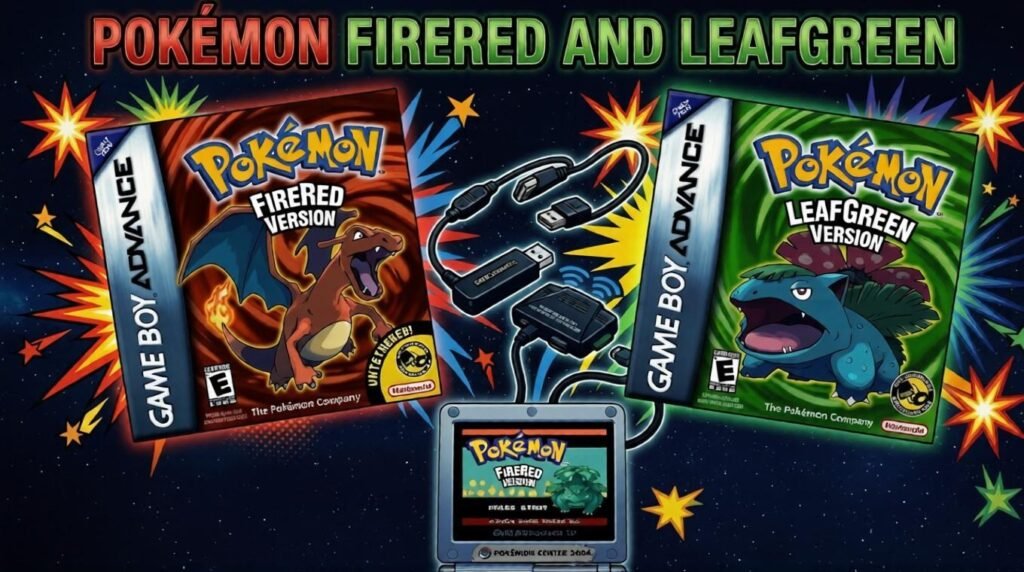
When older games return, the method of return matters a lot. For this release, Nintendo rereleased FireRed and LeafGreen with care. The timing linked the 30th anniversary to the original Pocket Monsters Red. It also tied back to Green in Japan with a purpose.
That moment became official on 27 February 2026 after Pokémon Presents. The full presentation helped frame the comeback as more than nostalgia. From my experience, smart timing can raise interest before players judge quality. That is exactly what happened when these classics returned to modern audiences.
The move to Nintendo Switch and Nintendo Switch 2 changed access fast. These ports reached modern systems through digital purchase on Nintendo eShop. Still, early criticism focused on the high price point for older titles. The lack of online features also made some players question the update.
In Japan, the Special Edition physical release targeted collectors very directly. It included reproduction Game Boy Advance boxes and a download code inside. Buyers also received laser-engraved glass Poké balls with Charmander, Squirtle, and Bulbasaur. The red, blue, and green light-up stands matched the display case well.
The added items gave the package more weight for longtime fans. Aurora Ticket and Mystic Ticket returned as special event items once again. That meant access to mythical Pokemon Deoxys and legendary Pokémon like Lugia. It also included Ho-Oh, which made the content feel more complete.
Even so, the limits are hard to ignore in practice. trading remains limited to local wireless, which feels surprisingly narrow today. The option to transfer Pokémon into Pokémon Home is not fully available. That missing support keeps this rerelease from feeling fully finished to me.
Reception
| Reception | |||
| Aggregate scores | Review scores | ||
| Aggregator | Score | Publication | Score |
| GameRankings | 82.14% (FireRed) | Game Informer | 8/10 |
| Metacritic | 81/100 (FireRed) | GameSpot | 8.4/10 (FireRed) |
| GameSpy | 4/5 (FireRed) | ||
| IGN | 9.0/10 (FireRed) | ||
| Nintendo Power | 4.5/5 | ||
Looking past development, the real story is how FireRed and LeafGreen were received. They earned positive reviews and reached an aggregate score of 81 percent on Metacritic. That result shows steady respect, not just fan nostalgia for familiar monsters. From my view, that kind of response usually reflects strong design choices.
Writers also judged these remakes from different but useful angles. Jon Minife of The New Zealand Herald noted the old connectivity issues around Ruby and Sapphire. Craig Harris at IGN gave an Outstanding 9.0/10 and praised the handheld market fit. He liked the core, though he felt the graphics stayed fairly basic.
Other critics saw extra charm in the details and overall rhythm. At GameSpot, Greg Kasavin scored them 8.4 out of 10 and praised these role-playing games. He highlighted the addictive gameplay, colorful graphics, and warm character designs throughout. Later, LeafGreen became the best Game Boy Advance game of September 2004.
A few reviews were more balanced, but still leaned in favor. Game Informer called them Very Good with an 8/10 score overall. Phil Theobald of GameSpy gave four out of five stars and liked the battle loop. He also valued the contextual tutorial, saved game support, and multiplayer capabilities through the Wireless Adapter.
Sales confirmed that the response was not only critical but commercial. In Japan, the games opened with 885,039 copies, and then passed 150,000 pre-orders in the United States. Soon they crossed one million copies, and later joined Player’s Choice in North America on 2 October 2006 at $19.99.
Gaming Overview Table:
| Aspect | Pokémon FireRed | Pokémon LeafGreen |
| Region | Kanto | Kanto |
| Platform | Game Boy Advance | Game Boy Advance |
| Main Difference | Version-exclusive Pokémon | Version-exclusive Pokémon |
| Legendary Focus | Same main legendaries, but some exclusives differ | Same main legendaries, but some exclusives differ |
| Goal | Become Champion, complete Pokédex, stop Team Rocket | Become Champion, complete Pokédex, stop Team Rocket |
FAQ’s
Q. What are Pokémon FireRed and LeafGreen?
Ans: They are 2004 remakes of Pokémon Red and Blue, rebuilt for the Game Boy Advance with updated features and smoother gameplay.
Q. What region do FireRed and LeafGreen take place in?
Ans: Both games take place in the Kanto region, the same classic setting from the original Pokémon adventures.
Q. How does gameplay work in FireRed and LeafGreen?
Ans: Players explore the world, catch Pokémon, train them, and battle other trainers in turn-based combat.
Q. What makes these remakes different from the original games?
Ans: They add better visuals, a contextual help system, improved connectivity features, and post-game content like the Sevii Islands.
Q. What is the role of the Sevii Islands in the games?
Ans: The Sevii Islands expand the adventure after the Elite Four and add more areas, missions, and Pokémon content.
Q. Who does the player meet at the beginning of the game?
Ans: The player starts in Pallet Town, meets Professor Oak, chooses a starter Pokémon, and begins the journey as a trainer.
Q. What is the main goal in FireRed and LeafGreen?
Ans: The main goal is to become Pokémon League Champion, complete the Pokédex, and defeat Team Rocket.
Q. How were FireRed and LeafGreen received by critics?
Ans: The games received positive reviews, with praise for their addictive gameplay, strong remake design, and overall Pokémon experience.
Q. What are the main differences between FireRed and LeafGreen?
Ans: The biggest difference is the selection of version-exclusive Pokémon, while the core story and region remain the same.
Q. Why do FireRed and LeafGreen still matter today?
Ans: They remain important because they successfully preserved the spirit of the originals while improving accessibility, content, and replay value.
Conclusion:
Pokémon FireRed and LeafGreen are still loved because they keep the magic of the original games while making the journey feel more fun and complete. Exploring Kanto, battling trainers, and catching Pokémon still feel just as exciting, but the extra features make the experience even better.
The help system, improved connectivity, and the Sevii Islands add more value without taking away the charm that made these games special in the first place. In the end, these remakes show that a classic game can return in a way that feels both comforting and new for every kind of player.

Welcome to Gaming Station! I’m Hussain Umer, an AI-Powered SEO and Content Writer with 4 years of experience. I help websites rank higher, grow traffic, and look amazing. My goal is to make SEO and web design simple and effective for everyone.
Let’s achieve more together!